
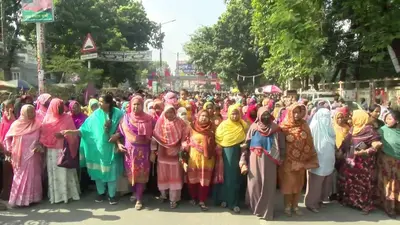

Child Marriage Decline Too Slow: UNFPA Warning

According to the United Nations Population Fund (UNFPA), the pace at which child marriage is declining in Bangladesh is currently extremely slow, and at this rate it may take more than two hundred years to fully eliminate the practice. Against this backdrop, Bangladesh observed World Children’s Day on Thursday (20 November) with the theme “My Day, My Rights.” The message highlights that millions of girls around the world are still deprived of safety, education, and the right to make their own decisions.
According to the preliminary findings of the Bangladesh Bureau of Statistics (BBS) Multiple Indicator Cluster Survey (MICS) 2025, the rate of women aged 20–24 who were married before the age of 18 has dropped from 51.4 percent in 2019 to 47.2 percent. But what is alarming is the rate of married girls aged 15–19, which was 32.9 percent in 2019 and has risen to 38.9 percent in 2025. This contrast shows that although the overall rate has fallen compared to older generations, child marriage is increasing among current adolescent girls.
The survey shows that the rate of decline in child marriage is only 2.1 percent per year. At this pace, the practice will not be eradicated quickly. The MICS also reported improvements in some indicators of child mortality and maternal health; institutional deliveries and access to skilled support have increased. However, weaknesses in family planning and contraception services are pushing adolescent girls toward early pregnancy, and the adolescent birth rate (ABR) has risen from 83 to 92, meaning the number of adolescent mothers per thousand girls aged 15–19 has increased.
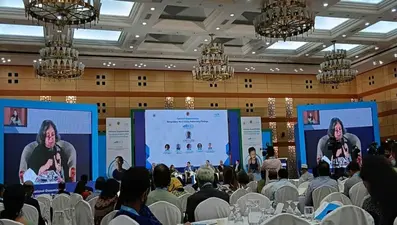
In the context of achieving global health, human rights and development goals, the warnings from UNFPA and UNICEF are clear—without ensuring girls’ health, education, and rights, Bangladesh may fail to meet its 2031 upper-middle-income and SDG targets. UNFPA representative Kartrin Bryhn Kangkung stated that without investment, achieving the goals is not possible. UNICEF’s Sheema Sena (Rana Flowers) warned that child marriage is a form of violence against children and women and is a major obstacle to national development.
Health workers say that early pregnancy increases physical and mental complications; it increases the risk of anemia, preeclampsia, childbirth complications, and low birth weight among newborns. Socially, the cessation of education, psychological distress, and lack of self-reliance shrink the future of adolescent girls. Experts say poverty reduction, the creation of opportunities for girls in vocational education, transforming the role of local leadership, and expanding family planning services are essential. Organizations must deliver family planning services and introduce sexuality education and rights-based curricula in schools.
Analysts believe that rapid progress is possible if civil society, religious leaders, and local administration work together. Alongside this, data-driven monitoring and timely policy implementation are necessary. Without coordinated care at every level of society, it is not possible to guarantee the safety and potential of future generations.