

Child killings outnumber deaths caused by political violence and mob violence
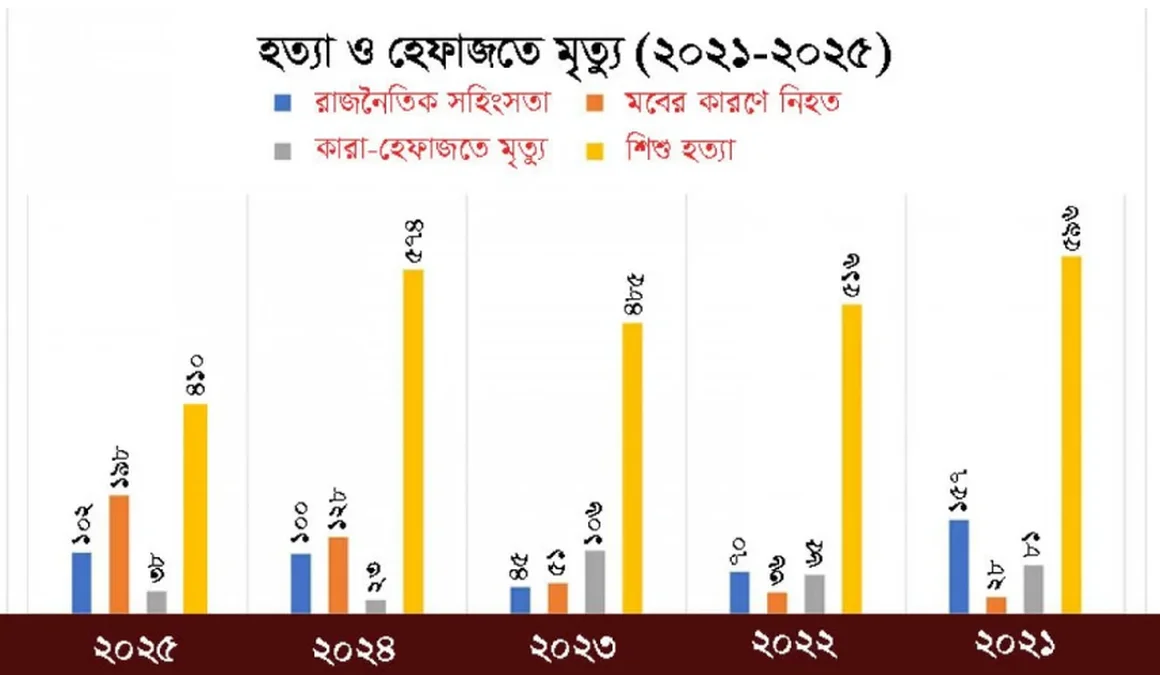
While political violence, mob justice, and deaths in custody are regularly discussed in the country, statistics show that child killings are occurring at an even more alarming rate. Every year, hundreds of children fall victim to rape, abduction, and brutal torture before being murdered, presenting a grave picture of a human rights crisis in Bangladesh.
On March 13 last year, a child named Achia died. According to allegations in the case statement, she was subjected to horrific abuse while visiting her sister’s house. The allegations state that her sister’s father-in-law raped her, with assistance from the child’s brother-in-law. After the incident came to light, several family members attempted to cover it up and tried to kill the child. Although she was taken from Faridpur Medical College Hospital to Dhaka Medical College Hospital and later to the Combined Military Hospital, Achia died after suffering multiple cardiac arrests.
The previous year, the murder of five-year-old child Muntaha in Sylhet shocked the entire country. After being abducted, she was killed and her body was dumped in a pond. The investigation revealed that a neighbouring private tutor had planned and carried out the murder.
According to data from Ain o Salish Kendra (ASK), the number of political killings in the country in 2021 was 157, mob violence incidents were 28, and deaths in custody were 81. In contrast, the number of child killings in the same year was 596. In 2022, 516 children were killed; in 2023, the number was 485; in 2024, it rose to 575; and in 2025 (so far), the number stands at 410—while political killings numbered 102. ASK compiled these statistics based on reports published in national daily newspapers.
Human rights activists say that incidents of rape followed by murder, abduction followed by murder, and child abuse within family settings are increasing. According to Abu Ahmed Faizul Kabir, these are not isolated crimes; rather, they are the result of a culture of impunity, social degradation, and a weak child protection system. Due to the absence of swift and exemplary justice, perpetrators repeatedly engage in the same forms of violence.
Dhaka University associate professor Sazzad Hossain Siddiqui believes that child killings are increasingly occurring within families and among relatives, indicating deep social contradictions and a regression of civilisation. When the state effectively declares children unsafe yet fails to take effective measures, it reflects a failure of the state itself.
Rights activist Gawhar Naeem Wara said that society does not place sufficient importance on child killings. In many cases, even proper registration of a child’s death does not occur, allowing perpetrators to escape severe punishment.
Experts say that preventing child killings now demands a strong child protection framework, speedy trials, active monitoring by families and communities, and the assurance of a safe social and digital environment. Protecting children’s lives is a constitutional and moral responsibility of the state—there is no room to retreat from this obligation.