

Are we living in the ‘Last Days of Pompeii’?
Dhaka in Dire Need of Earthquake Preparedness
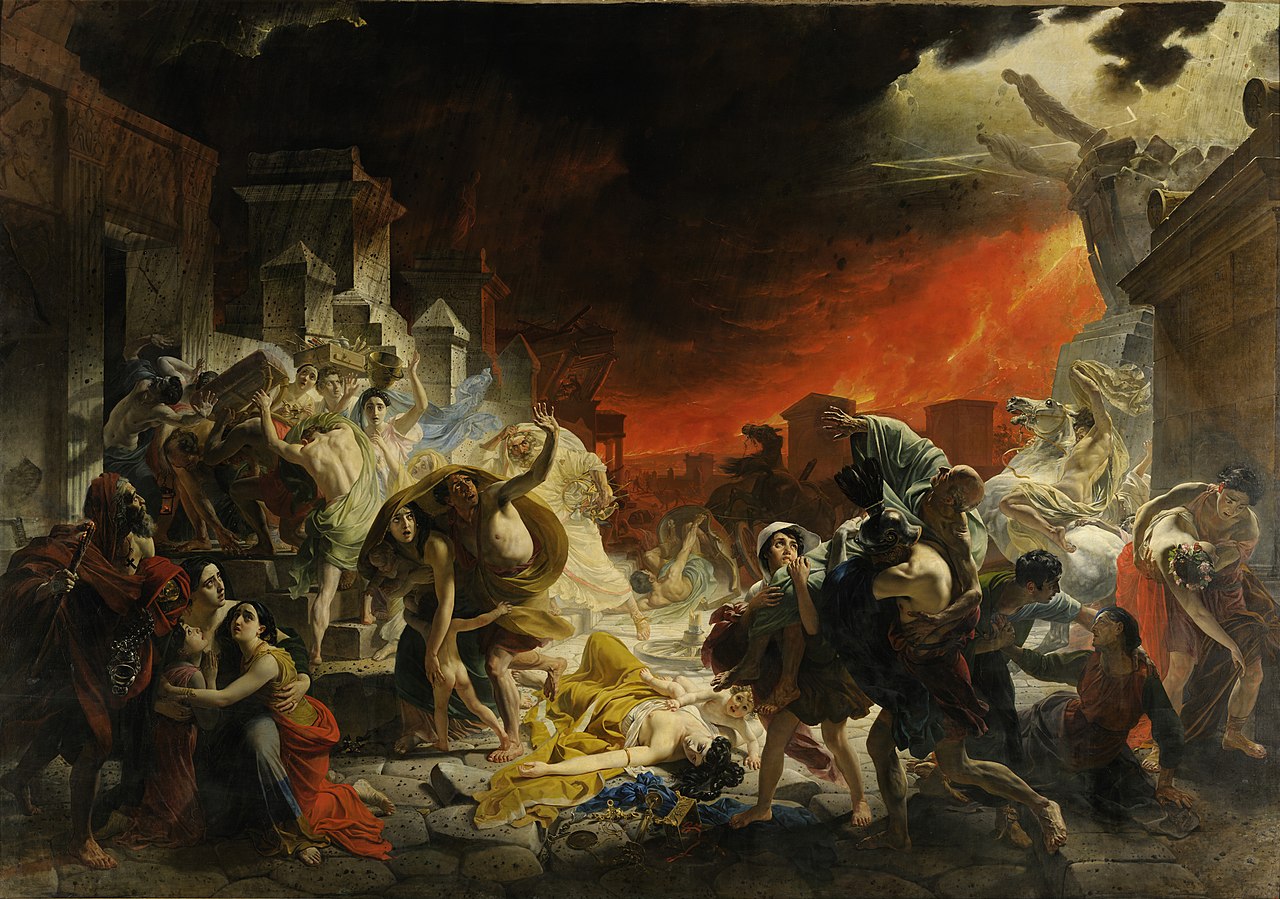
“Then there arose on high the universal shrieks of women; the men stared at each other, but were dumb. At that moment they felt the earth shake beneath their feet; the walls of the theatre trembled: and, beyond in the distance, they heard the crash of falling roofs; an instant more and the mountain-cloud seemed to roll towards them, dark and rapid, like a torrent; at the same time, it cast forth from its bosom a shower of ashes mixed with vast fragments of burning stone! Over the crushing vines—over the desolate streets—over the amphitheatre itself—far and wide—with many a mighty splash in the agitated sea—fell that awful shower!’’
(The Last Days of Pompeii: Book V, Chapter IV by Edward Bulwer-Lytton in 1834.).
When this afternoon (Thursday) I just began feeling relieved that probably we will not have to face any serious earthquake very soon, a little tremor shake of 3.6 magnitude was again felt in Dhaka and different other parts of Bangladesh at around 4:15:47 pm. This time also the epicenter of the earthquake was in Ghorashal of Narsingdi, just 31 kilometers away at north-east from the capital city, according to European Mediterranean Seismological Center (EMSC) and Volcano Discovery.
Since the colossal tremor shake of 5.7 magnitude on last Friday (i.e., on 21st November), Bangladesh has gone through a number of earthquake tremors. Already we witnessed three mid to mid-level earthquake tremors in last 13 hours. Of those, the first one took place last night by 3:39 am at 118 kilometers away from Teknaf and its magnitude was 4. It originated in the Bay of Bengal which shocked the entire Teknaf township of the Cox’s Bazar district. Then another earthquake tremor shocked Sylhet for 49 seconds though its magnitude was as mild as only 3.4-magnitude. This afternoon we went through another tremor of 3.6 magnitude.
Large earthquake tremor of last Friday morning: How much prepared are we for quake?
It was 10:38 AM of last Friday (i.e., 21st November) morning. Every family in the city was passing a calm and quiet, weekly holiday morning. But suddenly a frightening shock tarnished the peaceful morning into a living nightmare as a 5.7-magnitude earthquake on the Reichter scale attacked our city. The epicenter of the 26-seconds long earthquake was in Madhabdi, Narsingdi, according to the sources in the Bangladesh Meteorological Department (BMD).
The quake, gone through over several areas of Bangladesh, caused 10 deaths- four in Dhaka, five in Narsingdi and one in Narayanganj. More than 600 people succumbed to injuries.
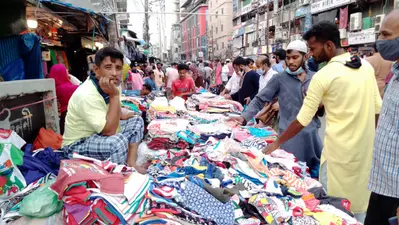
Dhaka, though not too large in terms of space, is esteemed as one of the megacities of the world for its population above 10 million in number. Specialists are concerned that this high density of population can turn our beloved city into a hotbed for quake haplessness.
Although the last intense earthquake in Bangladesh took place in the island of Maheshkhali in 1999 and the death toll was just 6. Hundreds were, however, wounded in the disaster.
But last Friday’s tremor shock just turned 10 million of citizens in the capital city mere ‘dumb’ as most of our buildings do not adhere to required building codes and other environmental legislation. Hence another shock of a bit higher magnitude can make our city into a death well, a hell of infinite darkness and thousands of corpses overnight.
Series of tremor shocks:
No sooner had the sudden wave of human helplessness of last Friday eroded a little, another 3.3.-magnitude earthquake on the Richter scale, took place in Narsingdi’s Palash Upazila on last Saturday (i.e., on 22nd November), according to Bangladesh Meteorological Department (BMD). The epicenter, to be appropriate, was approximately 29 km west of the BMD Seismic Centre in Agargaon.
Many of the citizens in this unplanned megacity were feeling psychologically collapsed on last Saturday evening, when a third tremor within the span of mere 32 hours took place as a second aftershock of Friday’s quake. This one on Saturday evening was about 4.3-magnitude on the Richter scale, according to the United States Geological Survey (USGS).
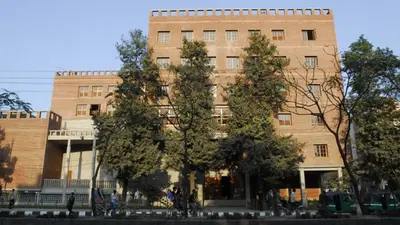
Although considerable casualties are yet to be registered from any of the two aftershocks, the series of quake tremors have intensified tension within the citizens. A minimum number of 14 buildings were marred from the quake of Friday, according to the Dhaka district administration though the Rajdhani Unnayan Kartripakhkha (RAJUK) consider the number to be more than 50.
Today each and every citizen of Dhaka is being paranoid. Even the Dhaka University (DU) authority has closed the campus till December 6 after four students got severely wounded while jumping from the residential dormitory buildings of DU in sudden panic on last Friday morning.
How far we are from an apocalypse?
From the viewpoint of the earthquake history of our origin, estimates indicate that 7.0 magnitude earthquakes revive in our region in every century and the last apocalyptical earthquake took place a century ago. This is why a BUET professor has opined that the geological clock of our region has begun ticking. A significant fissure can rake one-third of Dhaka city and cause thousands of deaths.
How much earthquake prepared is our city?
Since last Friday’s earthquake, revisiting the condition of our earthquake preparedness is a must. RAJUK prepared a list of unsafe buildings in the old Dhaka in 2010 and updated the list in 2016. At present, Dhaka possesses 321 highly risky building and majority of those are located in old Dhaka. In 2024, RAJUK marked another list of 30 parlous buildings in 21 educational institutions.

But apart from those highly risky buildings, another RAJUK survey carried out under the Urban Resilience Project (2018-2022) revealed that around 865,000 buildings in Dhaka could crumble if a 6.9-magnitude earthquake did hit the Madhupur Fault near Tangail. Such a situation could lead up to 210,000 deaths and 229,000 injuries particularly if it takes place at day.
Moreover, cities of Bangladesh and specially two megacities including Dhaka and Chittagong, appear to be the highest susceptible to quakes for our unethical practices like non-adherence to building codes, master plans and land-use zoning, according to the Institute for Planning and Development (IPD). Again, mid-rise buildings like four to eight-storied, residential buildings get worst affected by such tremors, according to various news reports.
In last couple of decades, we have filled-up almost all the waterbodies like ponds, canals, lakes and rivers to install high-rise buildings or skyscrapers, chopped the trees and cleaned the forests and violated building regulations. In most of the cases, scantiest space between buildings is often obliterated from the final plans of the buildings.
According to geologists, small tremors often indicate the imminence of a higher magnitude earthquake. Scientific statistics further reveal that Bangladesh—specially Dhaka and the adjoining region—is seismically functioning for the elemental tectonics, with the Indian plate hustling into the Eurasian plate and the existence of operating fault systems. Against this backdrop, the utter absence of earthquake preparedness on our part amounts to criminal negligence. It seems that implementing the Bangladesh National Building Code (BNBC) 2020 is almost zero, when recent amendments to Dhaka's Detailed Area Plan permit construction of even more high-rise buildings and thus aggravating our vulnerabilities before any large-scale earthquake.
Bangladesh, however, can be divided into three seismic zones according to the extent of earthquake risk. Of them, the high-risk areas belong to Zone-1, medium-risk areas belong to Zone-2 and the lowest-risk areas belong to Zone-3. To be more specific, around nine districts of the Sylhet and Mymensingh divisions, parts of Tangail, Gazipur and Narsingdi in the Dhaka division, Kishoreganj district, Brahmanbaria in the Cumilla division and vast areas of the hill districts of Khagrachari and Rangamati are marked as high-risk zones.
What mitigation measures can be adopted?
When a 9.1-magnitude earthquake attacked Japan in 2011, in buildings equipped with a newly innovated technique called ‘base isolation’, not even a glass or a cup fell from the shelves.
It is a construction technique in which the building is not strongly annexed to the ground. Rather hundreds of special rubber–lead bearings are instated underneath it. When an earthquake strikes, the ground may jerk terribly, but the building above shifts softly gently — moving slowly rather than jerking tough. Consequentially, people, furniture, equipment, and interior structures generally do not get affected.
Now-a-days in Japan, approximately all new towers, buildings, hospitals, schools, and data centers are needed to have this system. Under the auspices of the Bangladesh National Building Code-2020 (BNBC-2020), crucial structures in Dhaka and Chittagong have already started adopting base-isolation systems. The Rooppur Nuclear Power Plant, several metro rail stations, and a few new towers are already translating this building technique into translation.
Statistics reveal that between 1976 and 2015, Bangladesh witnessed at least five major earthquakes. Almost all of these took place in Sylhet, Moulvibazar, Rangamati, Bandarban, and Cox’s Bazar. Although Dhaka seems to be historically a safer place regarding frequency of earthquakes, but skyrocketing, unplanned growth of this city has been exacerbated through its rapid and unplanned development of centrally located Dhaka city in the period since independence, and its propinquity to the epicenter of the weekend’s tremors and alarming all of us over the fate that may fall on us.
Save for a few major roads, majority areas of Dhaka seem to be very congested with narrow lanes, generally 10 to 12 feet wide or less, according to a report in The Business Standard.
The report, however, cites several quake preparedness measures as undertaken by a number of countries passing through large earthquakes.
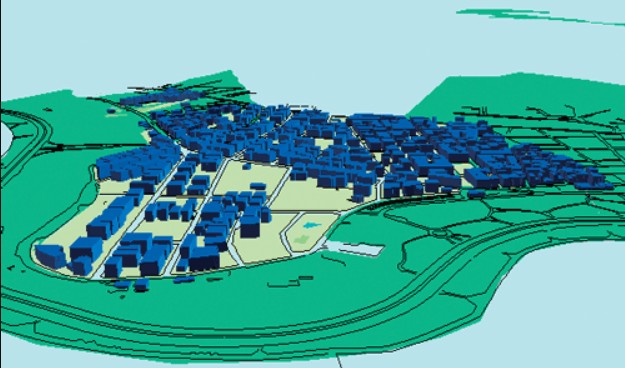
‘After the 2008 Wenchuan earthquake in China, parks became essential recovery centers, providing temporary shelter and basic services. In Nepal, following the 2015 earthquake, survivors gathered in temple squares and fields; in response, authorities later identified and planned 83 safe open spaces across the Kathmandu Valley for future emergencies,’ the report mentioned.
‘Japanese planning guidelines also recommend that designated seismic shelters be located within walking distance of residential areas. Cities such as Nagoya have built systems where parks and public squares act as immediate evacuation points after an earthquake or tsunami warning,’ the report added.
But the cities lacking open spaces, like Port-au-Prince in 2010, have gone through high casualties because of impoverished building structures and inadequate evacuation space.
A handful of densely populated vicinities in Istanbul and Manila reflect a number of the vulnerabilities witnessed in Dhaka on last Friday.
Conclusion:
As we see a number of volcanic eruptions taking place serially across the planet in last couple of days, probability of a sudden, largescale earthquake gets just multiplied in Bangladesh too.
For example, a volcano in Ethiopia erupted for the first time in at least 12,000 years on Sunday, sending a cloud of ash and smoke northeast across the Red Sea, according to a report in the ‘Live Science.’
It was learnt from the ‘Live Science’ report that ‘Hayli Gubbi, a volcano in the Afar region of northern Ethiopia, erupted at around 8:30 a.m. UTC (3:30 a.m. EST) on Nov. 23. By 8 p.m. UTC (3 p.m. EST), the explosive phase of the eruption had stopped, according to the Toulouse Volcanic Ash Advisory Center (VAAC) in France.’
This is the first time Hayli Gubbi is known to have erupted in the Holocene — the present geological epoch that began at the end of the last ice age, around 11,700 years ago, the report added.
It is against the backdrop of this sudden geological change across the continents, that must our government, media, political parties and civil society work hand in hand to ensure a better earthquake preparedness. Political parties, who will appear in the probable national Parliament election in February 2026, need to incorporate their vision regarding earthquake preparedness on an emergency basis. So that the citizens of Dhaka don’t have to embrace the fate of the inhabitants of Pompei, an ancient city of Italy which got buried under 4 to 6 m (13 to 20 ft) of volcanic ash and pumice in the eruption of Mount Vesuvius in 79 AD.