



BNP’s Overwhelming Win: Should It Raise Alarm?
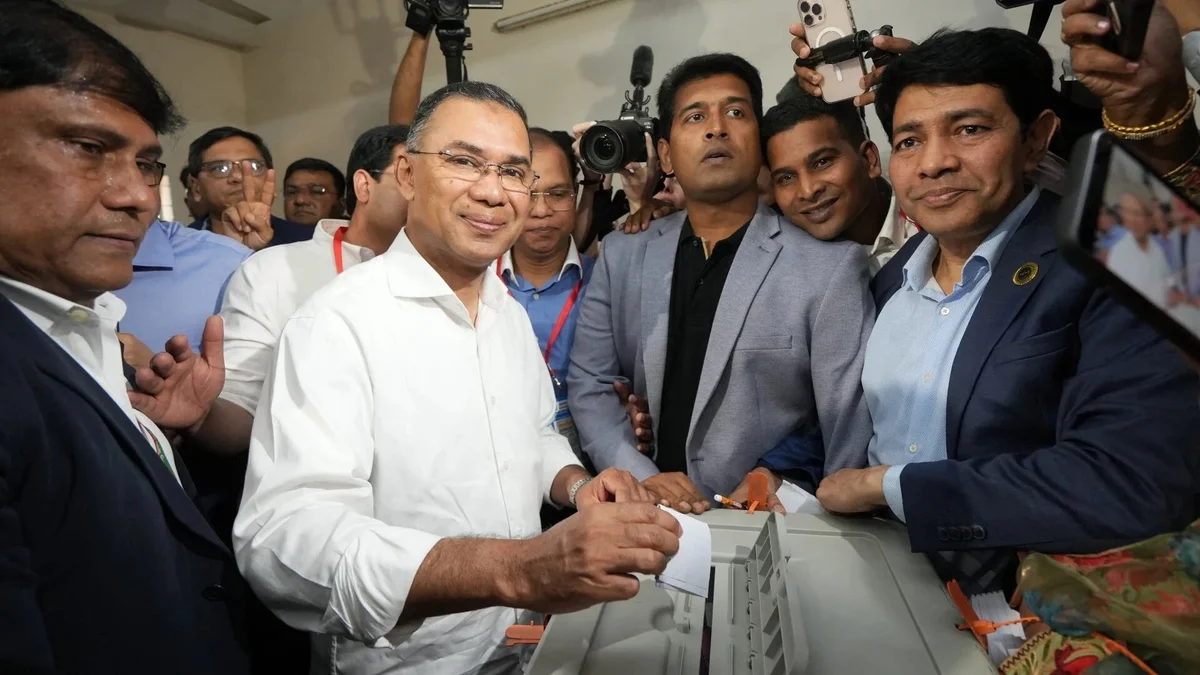
The landslide victory of the Bangladesh Nationalist Party (BNP) in the 13th Parliamentary election raises serious questions about the legitimacy and future stability of Bangladesh’s democratic process.
Some observers note the symbolism of the “13th” Parliament, often associated in many cultures with misfortune, betrayal, bad omen, ill luck or instability. While such symbolism is largely superstitious, the circumstances surrounding this election, not numerology, have fueled concerns about whether the outcome signals political uncertainty ahead.
A Controversial Electoral Process:
The election took place under highly unusual conditions. Such never ever happened in Bangladesh before. The country’s largest political party that spearheaded its independence and contributed immensely to its economic success, the Awami League (AL), was barred from participating. As a result, a substantial portion of the electorate, almost 60% was effectively disenfranchised.
With the main opposition excluded, polling stations remained largely quiet. Reports from various constituencies suggested low voter turnout, raising doubts about whether the results reflected the popular will. Although voter turnout was low yet the Dr. Yunus government jerked up the numbers to a comfortable level through fraudulent means , deceits and deception.
Serious allegations of irregularities also emerged.
Critics claimed that ballot stuffing occurred prior to the official opening of polls, and that voting figures in some constituencies appeared statistically implausible. For example, in one constituency, in Rajshahi-4 constituency, although total voters were 3,19,909 only yet the number of ballots cast was 7,81,253, more than double of total voters or over 244% — that means votes cast exceeded the number of registered voters by a wide margin—an anomaly that, if accurate, would indicate severe procedural failures.
Not only that. Official turnout figures also drew scrutiny. Rapid increases in reported participation within short time intervals led analysts to question whether such voting rates were operationally and technically feasible under normal conditions. As per Election Commission, 12 people voted per minute in each centers which is technically impossible. it normally takes 3 minutes for each voter to cast a vote from beginning to end.
Exclusion of Major Political Parties
The banning of a major political party from a national election would be considered unacceptable in most established democracies. In the United States, for instance, an election excluding either the Democratic or Republican Party would not be regarded as free or fair. Similarly, in the United Kingdom, an election without participation of a principal party, Labor or Conservative Party would lack democratic credibility.
The exclusion of the Awami League therefore raises fundamental concerns about pluralism, representation, and legitimacy in Bangladesh’s electoral system under the Yunus government. In this sense, it is the worst election in history of Bangladesh as it negates the basic principle of democracy, representation, fairness and legitimacy.
Peaceful but Not Credible
Although the election was largely free of violence, peaceful conduct alone does not ensure democratic integrity. Elections must also be competitive, inclusive, and transparent. Without meaningful participation from all major stakeholders, the outcome risks being perceived as neither credible nor representative. Such a lopsided victory may fail to deliver the political stability or economic confidence that Bangladesh urgently needs.
Mixed Reactions Among Awami League Supporters
Despite grievances, some supporters of the Awami League reportedly expressed cautious optimism about the outcome for two reasons.
First, the departure of the interim administration led by Nobel laureate Muhammad Yunus was viewed by critics as an opportunity to reset governance. Second, concerns that extremist groups like Jamaat Islame and NCP might gain power did not materialize, easing fears among secular and minority communities.
Many therefore welcomed the leadership of BNP figure Tarique Rahman, hoping he would pursue reconciliation and institutional restoration.
The Urgent Need for National Unity and Rule of Law
Bangladesh today faces deep political polarization. Rebuilding trust among citizens, strengthening the rule of law, and ensuring judicial independence must be top priorities for the new government. The Yunus government abused judiciary so much so that it virtually became a vehicle of corruption and extortion.
Observers hope that the incoming leadership will curb political violence, end extrajudicial practices, protect minority rights, and restore democratic norms. Like Nazi Hitler who persuaded to annihilate Jews, the Yunus administration systematically tried to annihilate 3 groups of people namely (1) the AL supporters, (2) the believers of ideals of 1971 independence, and (3) the Hindu minority. The new government must stop such heinous crimes and must withdraw bans from all political parties plus release all political prisoners and journalists, and drop all politically motivated fraudulent cases. Without these steps, divisions could deepen, undermining long-term stability. The national unity depends withdrawal of bans from political parties and withdrawal of politically motivated cases.
Challenges Ahead for the New Government
The new administration inherits significant economic, political, and diplomatic challenges. Governing effectively will require broad national support and unity including engagement with opposition forces particularly the Awami League.
The Awami League remains one of Bangladesh’s largest and most historically significant political parties. Sustainable governance may depend on inclusive dialogue rather than exclusion. Pluralism in governance is not a luxury, rather essential for good governance and sustainability.
If the government fails to address legitimacy concerns or economic pressures, political uncertainty could intensify. Conversely, a commitment to reconciliation and institutional reform could restore confidence at home and abroad.
Conclusion
The BNP’s overwhelming victory may appear decisive, but the circumstances surrounding the election cast a long shadow over its mandate. Democratic stability depends not only on electoral outcomes but on the fairness, inclusiveness, and credibility of the process itself.
Bangladesh now stands at a crossroads. Whether this moment becomes a turning point toward stability or a prelude to further turmoil or misery will depend on the choices made in the months ahead.
Professor Dr. A. K. Abdul Momen
Former Foreign Minister of Bangladesh