

Exports Down 7.43% in October: Bangladesh Faces Deepening Trade and Currency Crisis
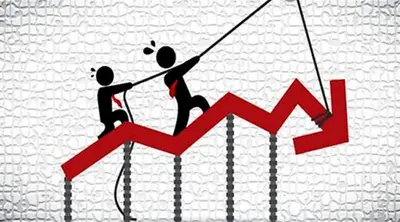
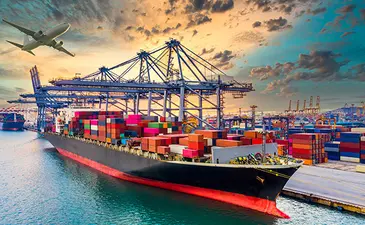
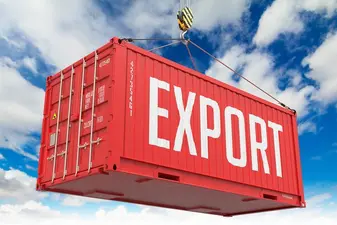
The downward trend in Bangladesh’s export earnings continues, creating fresh concerns for the economy. According to the latest data from the Export Promotion Bureau (EPB), the country’s total exports in October fell by 7.43 percent, dropping to 3.63 billion USD. This marks the continuation of a two-month decline, heightening fears among exporters of further contraction. Meanwhile, import volumes are also gradually decreasing — a reflection of the ongoing foreign currency crisis and growing economic uncertainty.
According to Bangladesh Bank data up to August, the country’s imports fell to 4.84 billion USD, compared to 5.8 billion USD in July — a significant decrease. The Bangladesh Bureau of Statistics (BBS) reported that over the past five years, the trade deficit has been steadily widening, a clear indication of the imbalance between exports and imports.
The fall in exports is even more alarming. Before the 7.43 percent drop in October, exports had fallen by 5.2 percent in September, with a similar trend observed in August. Although exports rose temporarily to 4.04 billion USD in July, compared to 3.40 billion USD in June, the momentum did not last. The World Bank’s April 2025 report noted that the slowdown in export growth and lack of investment during the 2024 fiscal year have reduced overall economic momentum — signaling more challenges ahead in 2025.
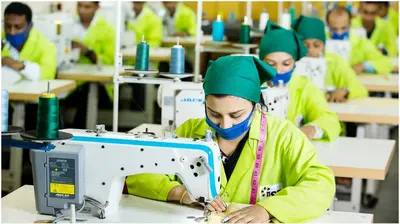
Exporters now fear a deeper slump. Members of the Bangladesh Garment Manufacturers and Exporters Association (BGMEA) say political instability, rising raw-material costs, and competitive market pressures could further weaken exports. Former BGMEA Chairperson Rubina Khan said, “If this decline continues, hundreds of thousands of workers’ jobs will be at risk. The government must take immediate steps such as tax cuts and export-incentive packages.”
The drop in imports is also a double-edged sword for the economy. On one hand, it helps boost foreign-exchange reserves; on the other, it raises production costs for industries dependent on imported raw materials. According to Trading Economics, imports have declined consistently by 8.82 percent since 2020, aligning with the current crisis. Economists suggest that to correct the export-import imbalance, the government must introduce policy reforms and expand access to foreign markets.
In the South Asian economic context, Bangladesh’s current trajectory is particularly concerning. The World Bank projects the region’s average growth rate to fall to 5.8 percent in 2025, with Bangladesh’s contribution likely to be lower. Exporters warn that without immediate government intervention, the downturn will deepen, obstructing the nation’s economic recovery.
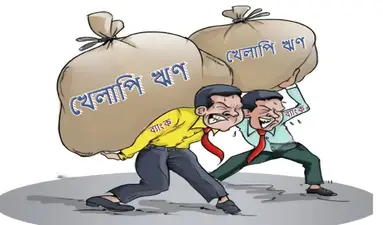
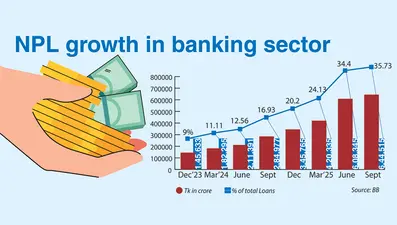
Analysts say that under the Yunus administration, uncertainty in policymaking, a lack of business-friendly reforms, and a weak banking sector are collectively driving the economy toward collapse. Exports, investment, and employment have all stagnated.
Where once Bangladesh’s growth was fueled by ready-made garments and private investment, both sectors now stand on the brink of crisis.
As one economist put it, “The economy is now in life-support mode. Without swift and realistic measures, the coming days could become even more difficult.”