


World Bank Report: 62 Million People in Bangladesh at Risk of Falling into Poverty

A new World Bank assessment states that nearly 62 million people in Bangladesh—about one-third of the total population—are at risk of falling back below the poverty line due to illness, natural disasters, or any sudden shock. The report titled “Poverty and Inequality Assessment 2025: Bangladesh” was released on Tuesday (25 November) at an event in the capital.
According to the report, Bangladesh made significant progress in reducing poverty between 2010 and 2022. During this period, 22 million people came out of poverty, while 9 million escaped extreme poverty. Their living standards improved, with increased access to basic services such as electricity, education, and sanitation.
However, since 2016, the pace of poverty reduction has slowed, and economic growth has become less inclusive, with benefits going disproportionately to the wealthy. As a result, income inequality has risen.
Between 2010 and 2022, extreme poverty fell from 12.2% to 5.6%, and moderate poverty declined from 37.1% to 18.7%.
During the same period, poverty in rural areas fell rapidly due to rising agricultural income, but the pace was slower in urban areas. In 2022, one in every four people in the country began living in cities.
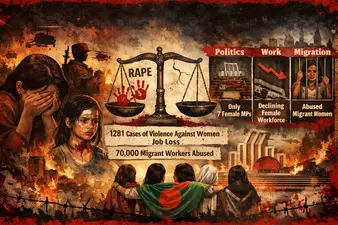
According to the report, the creation of new jobs in productive sectors has stagnated. Meanwhile, employment has somewhat increased in less productive sectors, weakening overall economic growth. Women and young people are the most affected. One in every five women is unemployed.
Among educated women, the unemployment rate is even higher — one in four does not have a job. Outside Dhaka, job creation in urban areas has nearly stalled. Nearly half of young people aged 15–29 are engaged in low-paid work, indicating a mismatch between skills and labour market demand.
The report notes that although migration has reduced poverty, challenges remain.
Both internal and international migration have helped many families escape poverty, with remittances being particularly beneficial for poorer households.
However, internal migrants often live in cramped and low-quality urban settlements.
Because of the high cost of going abroad, relatively well-off families are more likely to access overseas migration opportunities.
According to World Bank data, 35% of social safety net beneficiaries in 2022 belonged to wealthy households, while even half of extremely poor households did not receive such benefits. A large share of subsidies, especially those for electricity, fuel, and fertiliser, also went to richer families.
Jean-Pascal Mém, the World Bank Country Director for Bangladesh and Bhutan, said that employment generation is the most effective means of accelerating poverty reduction. In particular, he emphasised the need to increase job opportunities for youth, women, and vulnerable populations. He also stressed adopting inclusive, climate-resilient, and employment-oriented development strategies.