
Bangladesh Education Sector Ends 2025 in Turmoil
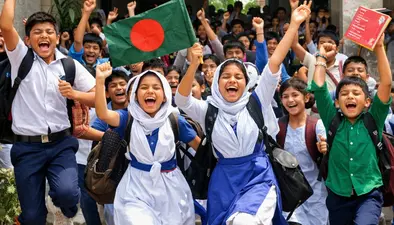
The education sector experienced another turbulent year in 2025, marked by uncertainty, repeated movements by teachers and students over various demands, and the continued absence of comprehensive reform and development plans.
Throughout the year, students struggled with persistent learning loss, while tensions between teachers and students, confusion over the national curriculum, delays in the distribution of free textbooks, and poor outcomes in public examinations remained major challenges.
Educationists and researchers observed that successive governments had long neglected the education sector, a trend that continued under the interim government, which assumed power in August 2024 following the ouster of the Awami League government amid a mass uprising.
They, along with government officials, noted that the future direction of the sector now largely depends on the government to be elected in the national election scheduled for February.
Following the student-led uprising that removed the Sheikh Hasina–led government, the education sector has struggled to regain stability. Unrest at educational institutions and learning loss at all levels continued to affect academic activities throughout 2025.
Although the interim government formed 11 reform commissions, no commission was established specifically to reform the education sector.
BRAC University professor emeritus Manzoor Ahmed described 2025 as a disappointing year, saying that none of the expectations for reform or development in education had been fulfilled. He remarked that neglect of the sector by successive governments persisted during the interim administration.
Dhaka University’s Institute of Education and Research professor Mohammad Ali Zinnah said that after the July uprising, there was hope for an updated and relevant education policy and the formation of an education reform commission, but those expectations were not met. He added that the past year failed to provide a healthy learning environment or satisfactory academic outcomes.
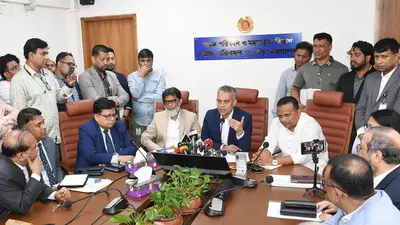
The interim government’s adviser to the primary and mass education ministry, Professor Bidhan Ranjan Roy Podder, acknowledged that overall instability in the country had affected the education sector. He said unrest continued due to various issues, including repeated teacher movements.
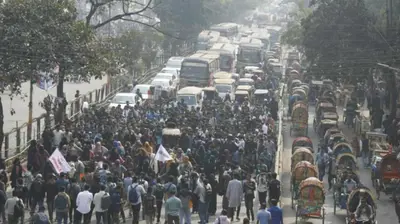
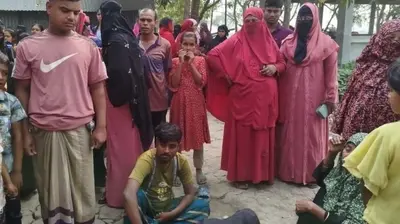
The year saw frequent demonstrations by teachers and students, particularly in Dhaka, with police intervening on several occasions.
In January, ibtedayi madrassah teachers launched a month-long protest in the capital demanding nationalisation of their institutions, while government primary school teachers protested for a 10th-grade salary scale for assistant teachers. In February, teachers of non-government primary schools began a similar movement demanding nationalisation, while teachers under the monthly payment order scheme at non-government secondary schools demanded salary increases and state takeover.
These protests continued throughout the year, contributing to learning disruptions for students. In December, some teachers boycotted annual examinations at government primary and secondary schools, demanding salary hikes and promotions. In several areas, head teachers conducted exams with the support of guardians and school staff.
On December 23, the government issued a gazette notification upgrading the salaries of government primary school head teachers to the 10th grade. However, out of approximately 65,567 government primary schools, around 32,000 still lack appointed head teachers. Although the government announced upgrading assistant teachers’ salaries to the 11th grade from the 13th grade, no gazette notification has yet been issued.
Bidhan Ranjan claimed that primary-level institutions were less affected compared to tertiary institutions and that not all primary schools were equally disrupted.
At the tertiary level, students of seven government colleges formerly affiliated with Dhaka University continued protests since January, demanding the establishment of the proposed Dhaka Central University. Meanwhile, other groups of teachers and students opposed the proposed structure of the university and held demonstrations throughout the year.
Clashes among students of Dhaka College, Ideal College, and City College over minor issues repeatedly disrupted traffic in busy areas of the capital, causing significant public suffering.
At Rajshahi University, six deans were relieved of their duties on December 22 following protests sparked by a social media call accusing the administration of protecting teachers loyal to the banned Awami League.
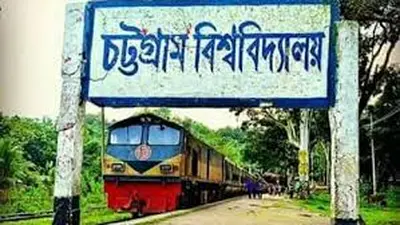
Students of polytechnic institutes staged nationwide demonstrations in April by blocking roads, highways, and railway tracks, demanding employment opportunities, promotions, and quality higher education. In September, students of Bangladesh Agricultural University blocked roads and rail lines in Mymensingh for several days following an attack on them by outsiders.
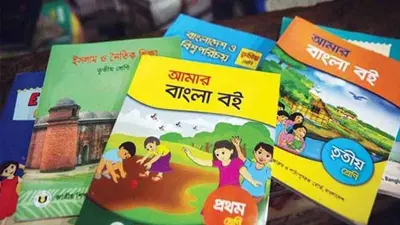
The National Curriculum and Textbook Board faced severe criticism in early 2025 for failing to distribute textbooks on time. Although students eventually received books by April—four months after classes began—the board failed to ensure full distribution by January 1, 2026. To reduce learning loss, digital versions of the 2026 textbooks were released online on December 28.
After the July uprising, the education ministry reverted to the 2012 curriculum by scrapping the 2022 version and announced plans to introduce a revised curriculum. The government later stated that a new curriculum would be implemented from 2027.
NCTB chief editor and curriculum member (additional duty) Muhammod Fatihul Kadir said curriculum development requires a lengthy process, including surveys and analysis, and that it would not be feasible to fully implement a new curriculum by 2027 with all textbooks prepared. He added that foundational work for the proposed curriculum is still underway and future progress would depend on directives from the incoming political government.
Professor Zinnah pointed to ongoing movements at the seven colleges, delays in textbook distribution, teacher salary disparities, infrastructural weaknesses, and deteriorating teacher-student relations as key unresolved issues. He also warned that mob culture emerging after the uprising continued to destabilize campuses.
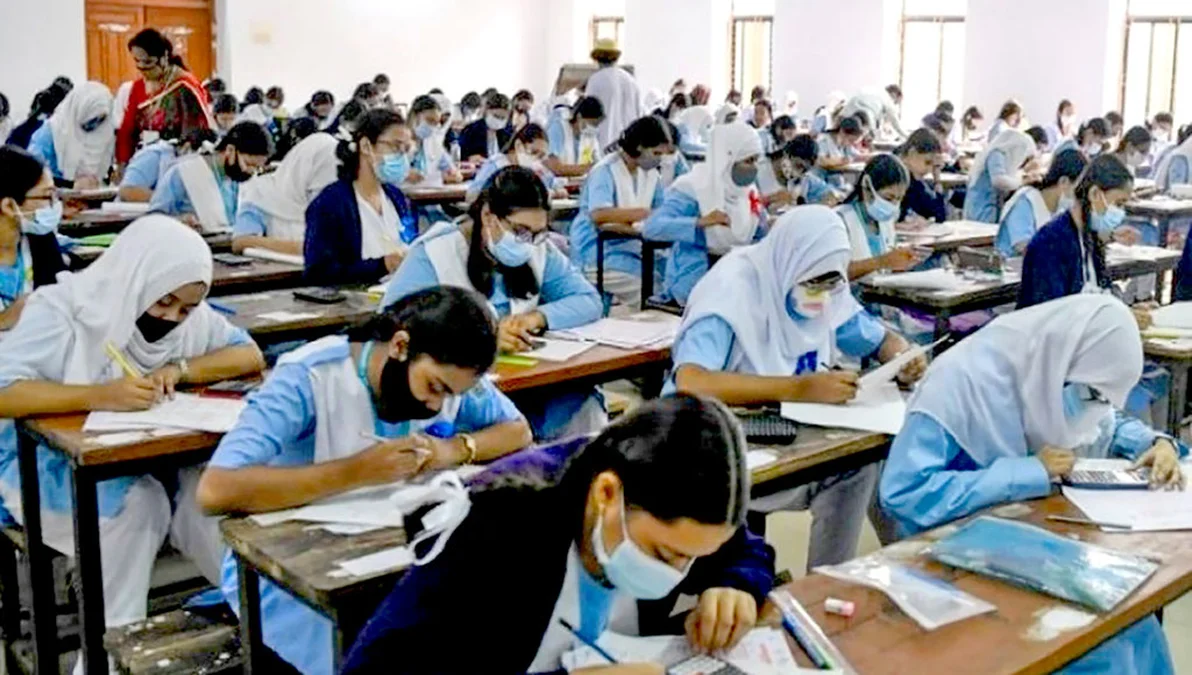
Academic results reflected the sector’s struggles. The combined pass rate in the Secondary School Certificate and equivalent examinations in 2025 dropped to 68.45 per cent, the lowest in 15 years. The Higher Secondary Certificate and equivalent examinations recorded a combined pass rate of 58.83 per cent, highlighting persistent disparities between urban and rural areas. Candidates from metropolitan and district towns outperformed those from suburban and rural regions. The pass rate under the nine general boards was the lowest since 2005.
A government-formed consultation committee on improving the quality of primary and non-formal education submitted recommendations in February 2025, but they were never implemented, alleged committee head Manzoor Ahmed. Another consultation committee for secondary education was later formed but has yet to submit its report.
Manzoor expressed little optimism, stressing the need for a holistic approach to education. He recalled that a permanent education commission and a master plan were proposed in 2010 and urged the next government to revisit those ideas.
Bidhan Ranjan said the interim government had taken initiatives such as reintroducing mid-day meals and special assessments to reduce learning loss. He added that ensuring primary-level literacy was now the main priority, noting that the actual literacy rate remains below 50 per cent, despite official figures showing 77.9 per cent literacy among those aged over seven.
Source: New Age