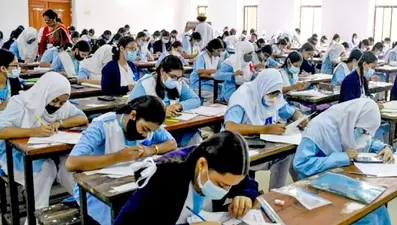

Lowest HSC Pass Rate Leaves 1.1 Million Vacant Seats in Higher Education
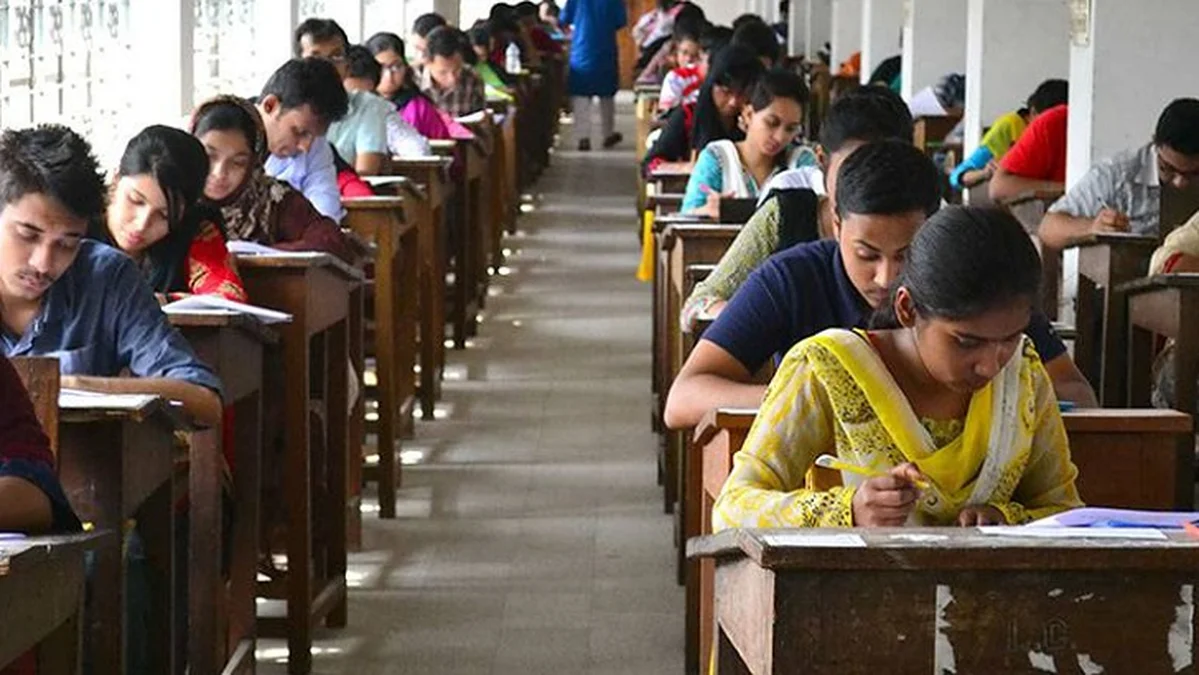
Because the pass rate in the HSC examination is the lowest in the past 21 years and nearly 1.1 million seats will remain vacant in higher education for the 2025-26 academic year despite all students getting admitted to undergraduate programmes. It is found that without proper planning the number of seats in higher education has doubled over the past decade.
Every year a significant number of seats remain empty. However this time, even some colleges affiliated with National University and some under-privileged private universities will not get even a single student without minimum one enrolment.
The most worrying fact is that even though all HSC examinees passed, about 600 thousand seats in higher education remained vacant. Experts say that the creation of universities and the large increase of seats without screening and planning has led to this situation, and they recommend a redistribution of seat numbers.
Currently, across the country combining public and private universities, medical-dental, engineering universities, Islamic Arabic universities and the National University affiliated colleges, there are 180,756 seats for students to gain admission into honours and equivalent level in undergraduate. However this time among 1,251,111 students who took the HSC and equivalent examination, 726,960 students passed. Among them 69,097 students obtained GPA 5. Most of them will join the competition for university admission. Alongside, students who received GPA 4 and 3.5 will be able to sit for admission tests. The number of students who got GPA 4 is 159,000 and those who got GPA 3.5 is 139,000. According to educationists, GPA is only an indicator of academic success. The key determinant for university admission is the admission test result. So even if one scores well academically, admission into every desired university is not guaranteed. Last year it was seen that many students who received GPA 5 failed in the admission test and faced disillusionment.
Some students with GPA 4 or 3.5 succeeded by performing well in the test. Preparation, technique and somewhat luck also play important roles in the race for admission. As in previous years, this time too many students who received GPA 5 will not get to enter public universities. However, competition will be somewhat lower than previous years since fewer students received GPA 5 this year. It is learned that this year in the medical, engineering and top public universities 400 thousand – approx students will contest for about 40,000 seats. That means on average about 12 students will contest for each seat. Therefore even with a good HSC result many will definitely fall behind in the admission race. Currently at 36 government medical colleges and five engineering universities there are a total of 13,500 seats. The first-tier five public universities (Dhaka, Jahangirnagar, Chittagong, Rajshahi and Islamic University) have about 22,000 seats. Especially medical, BUET, Dhaka University, Jahangirnagar, Chittagong, Jagannath and Rajshahi universities are very attractive to students. Students are now preparing to gain admission into these institutions. According to educationists, where students want to go, seats are extremely limited. And where seats are more, interest is comparatively lower. This time too intense competition may centre around Dhaka, Rajshahi, Chittagong, Jahangirnagar, BUET and the medical universities. In previous years about 20 applicants per seat applied on average in those institutions.
A professor at the Institute of Education & Research at University of Dhaka said that without considering the country’s demand, the establishment of too many universities without screening has increased seats in higher education. Therefore beyond seat redistribution, he recommends the option of not everyone pursuing conventional higher education but rather pursuing vocational education, entrepreneurship or other work. Higher education is for those who are interested and capable, he said. Up to HSC it is fine. But after that not everyone needs to get a Bachelor’s and then a Master’s degree. Some may go into vocational studies, some become entrepreneurs, others go into different work. Some go into technical education, others into independent professions — that is possible. The challenge is not just the number of seats in higher education but creating human resources in line with industry demand and ensuring quality education.
Last resort: National University
For those who cannot get admitted into public universities, their last hope is the National University. In colleges affiliated with the National University at Bachelor (Pass), Bachelor (Honours) and Bachelor Technical/Equivalent levels there are 946,095 seats in government and private colleges. Besides, at the seven government colleges in Dhaka there are 23,630 seats, under the Islamic Arabic University there are 64,529 seats, in the Open University there are 87,593 seats, in nursing & mid-wifery 5,600 seats and in textile & engineering colleges 1,440 seats. That means alternative paths are open for students. The Vice-Chancellor of National University, Professor Dr A S M Amanullah said that since last year we have introduced admission tests. This creates opportunities for merit-based selection, thus qualified students will get admission.