


Cold Wave Grips the Country, Temperatures May Drop to 4 Degrees Celsius
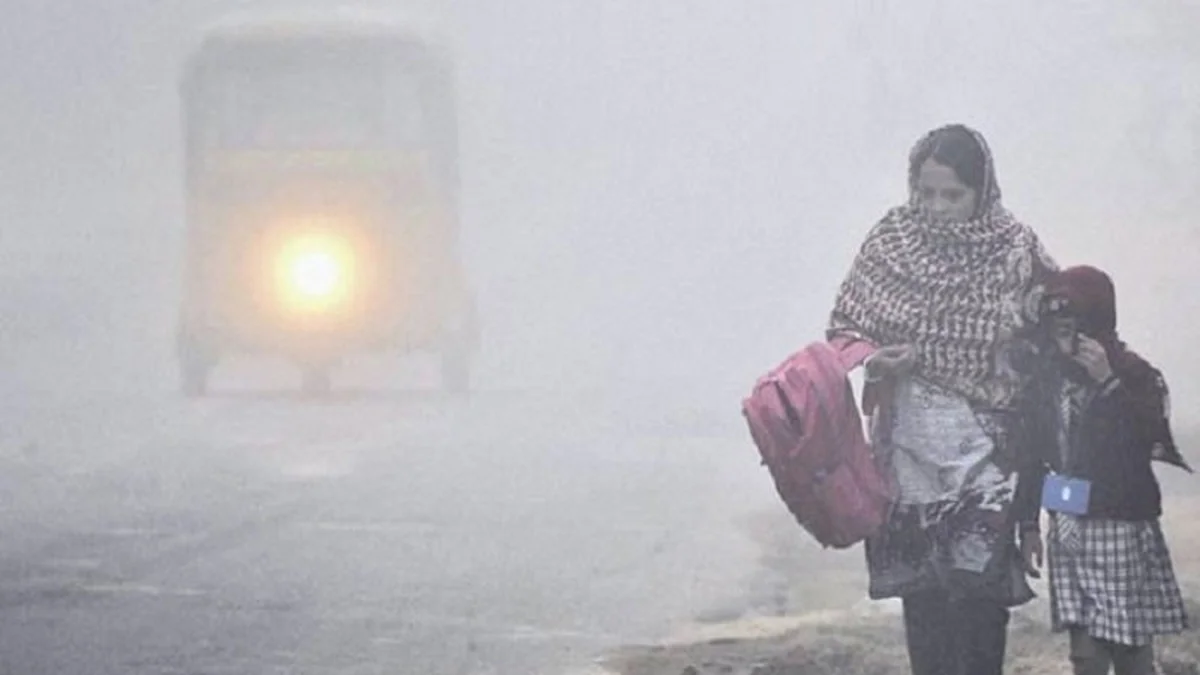
At the very beginning of the new year, cold weather has firmly set in across the country, including the capital Dhaka. The intensity of the cold has increased due to chilly winds and moderate to dense fog. On Saturday (3 January) morning, the minimum temperature in Dhaka dropped to 12.7 degrees Celsius. According to the Bangladesh Meteorological Department, at 6:00 am the temperature in Dhaka was 13 degrees Celsius, while humidity in the air was around 99 percent, which further intensified the feeling of cold.
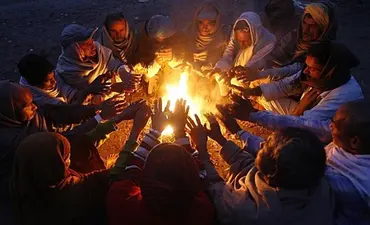
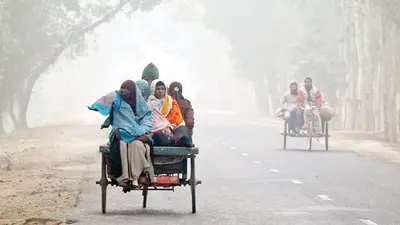
The situation is more severe in the northern region. In Naogaon, the minimum temperature dropped to 9 degrees Celsius at 9:00 am on Saturday. According to the Badalgachhi weather observation center, the sun was not seen from Wednesday midnight to Friday evening. Dense fog and cold winds have disrupted daily life in the district. Children, the elderly, and day laborers have suffered the most. Due to the severe cold, people are not going outside unless necessary, but rickshaw, van, and auto-rickshaw drivers are forced to venture out into the fog for their livelihoods. This has reduced their income and increased health risks.
According to the six-hour forecast of the Bangladesh Meteorological Department, the weather in Dhaka and surrounding areas may remain almost unchanged until noon. The sky will be temporarily partly cloudy, the weather will remain dry, and there is a possibility of moderate to dense fog. Light winds may blow from the west and northwest at speeds of 6 to 12 kilometers per hour.
Meanwhile, the expert committee of the Meteorological Department has stated that four to five cold waves may sweep across the country throughout January. Of these, two to three are expected to be mild to moderate, and one to two moderate to severe cold waves. During severe cold waves, temperatures in some parts of the country may drop to between 4 and 6 degrees Celsius. The intensity of cold is likely to be felt more strongly in the northern region and river basin districts.
Meteorologist Md. Mominul Islam said that although the average daytime and nighttime temperatures in January are expected to remain near normal, daily life may come to a standstill during cold wave periods. From midnight to morning, moderate to dense fog may occur across the country, which sometimes persists until noon. Due to fog, the difference between day and night temperatures decreases, making the cold feel more intense.
Currently, cold waves have affected several districts of the country. In Jashore, the minimum temperature has dropped to 8 degrees Celsius. Cold wave conditions have also been felt in Gopalganj, Rajshahi, Pabna, Panchagarh, Kushtia, and Chuadanga. Meteorologist Shahnaz Sultana said that although temperatures may rise slightly on Saturday, they could drop again from Sunday.
According to the Meteorological Department’s definition, a mild cold wave occurs when temperatures range from 8.1 to 10 degrees Celsius, a moderate cold wave from 6.1 to 8 degrees Celsius, and a severe cold wave from 4.1 to 6 degrees Celsius. When temperatures fall below 4 degrees Celsius, it is considered an extreme cold wave.
History shows that winter temperatures in Bangladesh have dropped below 3 degrees Celsius on several occasions. According to records from the Meteorological Department, the minimum temperature in Srimangal, Sylhet, was 3.3 degrees Celsius in 1964. In February 1968, the temperature at the same location dropped to 2.8 degrees Celsius. After independence, the lowest temperature on record occurred in January 2018, when the mercury dropped to 2.6 degrees Celsius in Tetulia, Panchagarh—still the lowest temperature ever recorded in the country.
Meteorologists say the northern region experiences harsher cold because it is the main entry point for cold waves. Cold air enters Bangladesh through the Rajshahi–Jashore belt from northern India, passing through Delhi, Kashmir, Bihar, and West Bengal. In addition, dense fog in the northern region prevents sunlight from reaching the ground, keeping daytime temperatures low. At night, rapid heat radiation from open fields intensifies the cold further.
Experts believe that fog is the main reason behind the severe feeling of cold. When fog persists for a long time, the ground cannot warm up. Meteorologist Abul Kalam Mallik said that fog dissipates when wind speeds reach 8 to 15 kilometers per hour. However, in recent years, fog has become denser due to pollution and smog, increasing the intensity of cold.
There has also been discussion about the impact of climate change. Experts say that although the duration of winter is gradually shortening, the occurrence of intense cold waves at specific intervals means it cannot be described solely as a result of climate change. Nevertheless, dense fog, pollution, and abnormal weather patterns are creating new challenges for daily life.