



how big is the quake risk?
Bangladesh’s plate is shifting northeast and hitting the Myanmar plate
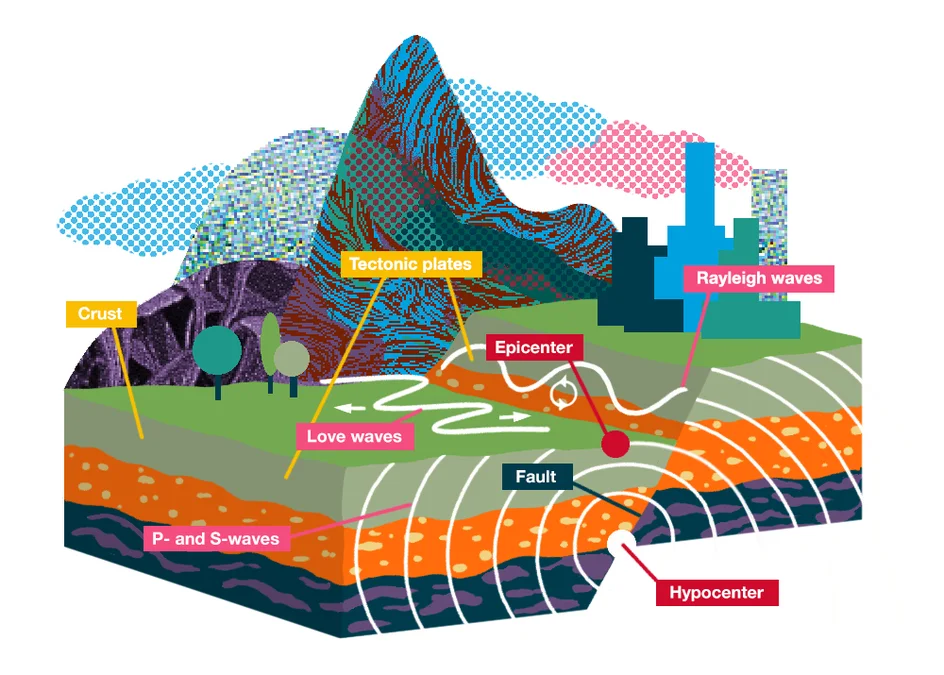
A 5.7-magnitude earthquake struck Bangladesh, with its epicenter 10 kilometers beneath the surface. Despite being moderately strong, it caused severe devastation in the country. Ten people have died, and more than six hundred have been injured. The damage has also been extensive. Scientists, however, are not surprised by these numbers. According to them, Bangladesh’s geographical and geological conditions are responsible for this earthquake. They also warn that the region faces the possibility of even larger quakes in the future.
A team of geologists from Columbia University, led by Michael Steckler, has been studying Bangladesh’s geology. They have been working in Bangladesh since 2003. By staying on the ground and conducting field studies, they placed specialized GPS instruments in various parts of the country, as well as in neighboring regions. These devices capture minor changes in tectonic plates. The data revealed that the positions of the fixed GPS stations were gradually shifting. Analyzing these shifts, the researchers reached important conclusions about Bangladesh’s landmass.
According to Steckler and his team, the land on which Bangladesh stands is slowly moving northeast. The rate of movement is very small—only two inches per year—but it is significant. The tectonic plate Bangladesh sits on is not just moving; it is also colliding with a section of the Earth’s crust beneath Myanmar. This collision is causing occasional earthquakes. The scientists found that the shifting of the Bangladeshi plate and its collision with the Myanmar plate are creating deep underground pressure. This growing pressure is concerning. If it is released all at once someday, it could trigger an extremely powerful earthquake in Bangladesh, potentially turning major cities, including Dhaka, into ruins.
How destructive could such an earthquake be? Steckler says, “It is difficult to say exactly how destructive it could be, because we do not know how long this pressure has been building underground. But it has been accumulating for years.” Is an estimate possible? According to him, “We can make one assumption. We know that in the past four hundred years, there has been no major, extremely powerful earthquake in Bangladesh. No record of catastrophic damage exists. That means the pressure has been building since then. For at least four centuries, that underground pressure has not been released through a major rupture.”
In the journal Nature Geoscience, Steckler and his colleagues described Bangladesh’s geological situation. They reported that due to the ongoing collision beneath the surface, if the plates suddenly slip or rupture, an earthquake of magnitude 8.2 could strike the region. Ground collapse is also possible. They even fear that the magnitude could reach 9, a level never recorded there.
However, the researchers are not claiming that such a devastating earthquake will strike Bangladesh immediately. They say it may take several years—or even several hundred years—for such an event to occur. The boundary between the Bangladesh and Myanmar plates stretches 150 miles. No one can say which part of this zone could become the epicenter. But Dhaka lies within this high-risk region.
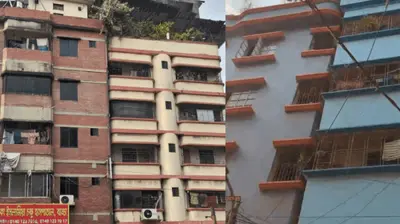
One of the major reasons Bangladesh is vulnerable to earthquakes is its soil. The land is made of centuries’ worth of sediment carried by the Ganges and Brahmaputra rivers. The country is crisscrossed by numerous rivers, resulting in sediment-rich, loosely packed soil. According to Steckler’s team, this type of soil increases Bangladesh’s risk during earthquakes, potentially amplifying shaking and causing extensive destruction. The scientists also questioned Dhaka’s urban planning. They claim that many high-rise buildings were constructed without following proper regulations. In and around Dhaka, some areas have very fragile soil, making the situation even more dangerous. Steckler said, “Dhaka is built on a bowl of jelly.”
Friday’s earthquake had its epicenter 14 kilometers west-southwest of Narsingdi in Bangladesh. According to India’s National Centre for Seismology, the magnitude was 5.7 on the Richter scale. The tremors were felt in Kolkata and across various parts of North and South Bengal. In Dhaka, a railing of a high-rise building collapsed due to the shock, killing three pedestrians who were crushed underneath. Elsewhere in the country, people died when walls collapsed or mud houses caved in. Scientists warn that if a stronger earthquake occurs in the future, Kolkata and other parts of India may also feel the impact.