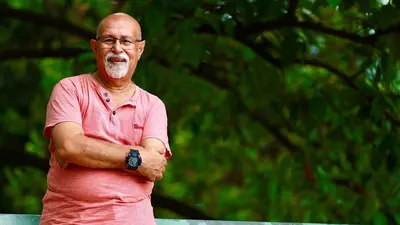





Journalism in Bangladesh Is Going Through an All-Pervasive Climate of Fear: Mahfuz Anam to Al Jazeera
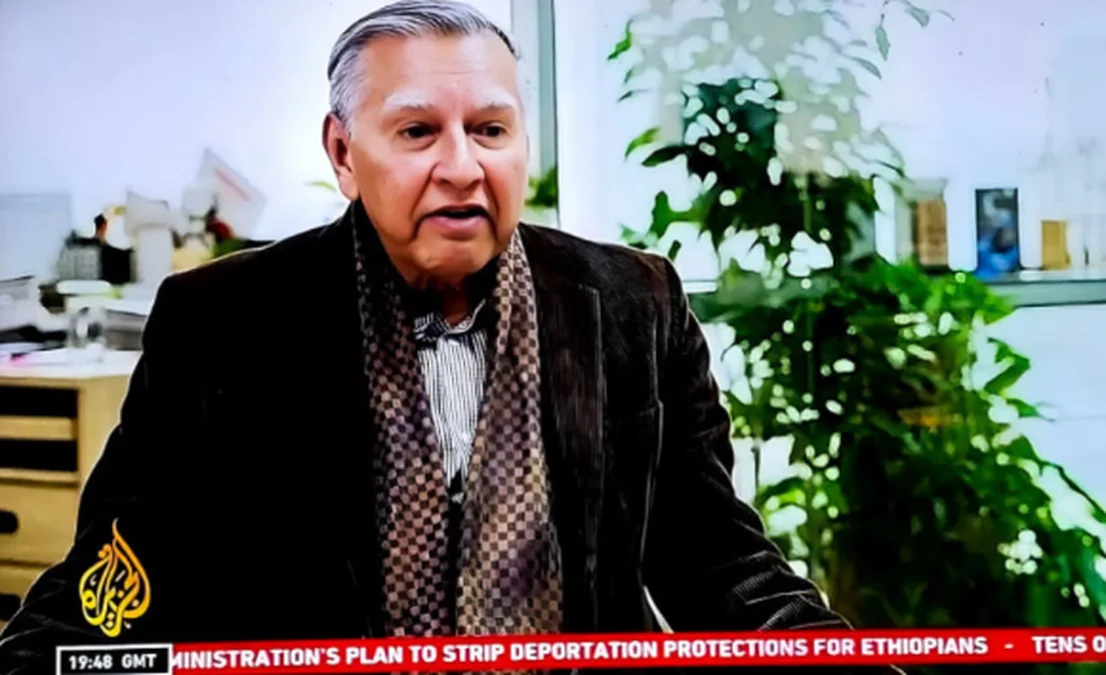
The Editor and Publisher of The Daily Star, Mahfuz Anam, has said that journalism in Bangladesh is going through a kind of all-pervasive fear—where even the slightest deviation from a mindset imposed by certain groups carries the risk of being attacked.
Speaking on Al Jazeera’s The Listening Post, Mahfuz Anam said, “At present, our mainstream media are much more independent, and there is more investigative reporting. Independent thinking in the media is more visible than at any previous time. But at the same time, there is that all-consuming fear—that if I deviate even slightly from a mindset imposed by a group, I could be attacked.”
He said, “To be honest, many times we are extremely cautious even about word choices—we think whether to use this word or that one. Although this mindset goes against a culture of free media, this is what we are being forced to do now.”
Referring to the attack on The Daily Star, Mahfuz Anam said that those who directly carried out the attack and set fire to the building were probably not readers of The Daily Star.
“So why did they do it?” he asked, adding, “My assumption is that it was well planned. They had political and financial motivations. At the same time, they also intended to destroy, on a broader scale, the liberal journalistic tradition that supports democracy, pluralism, and dissent.”
He said, “If there is any mistake in our reporting, you can point it out, you can criticize us. But attempting to burn us down—this, in my view, is extremely unfortunate.”
Describing the night of the attack on The Daily Star building as a “night of extreme terror,” he said, “They (the staff trapped inside the building) were struggling even to breathe. I was on the phone with the newsroom. They were saying, ‘Mahfuz bhai, maybe we will not see each other again.’ They were calling their fathers, mothers, wives, and friends, saying that they might never meet again.”
Mahfuz Anam noted that many people in Bangladesh use social media to express their opinions. However, as a consequence of this freedom—just like in any other country in the world—there has also been the creation of “a huge amount of fake news, hate speech, and baseless allegations.”
He said it is also “a reality in Bangladesh” that social media is used to attack and humiliate individuals or institutions. Some political parties have formed separate teams and have “taken full advantage” of this.
Mahfuz Anam said, “If you say something against a particular political party, suddenly you will see hundreds of people start abusing you. If you say something positive, hundreds of people will start praising you. Such political use of social media has now become a very common phenomenon.”
He said, “Anyone who followed social media on that night (of the attack on The Daily Star building) knows that an influencer said, ‘Prothom Alo is on the right, come to The Daily Star.’”
Mahfuz Anam said, “They tried to destroy us as an institution. What is even more significant is that none of the allegations made against us have been proven. Many times, our statements were taken completely out of context. Altogether, this was a very deliberate, extremely powerful, and—sadly to say—an effective method of discrediting two influential mainstream media outlets in Bangladesh.”
Speaking about how the politicization of the media has eroded public trust, he said that over the years journalists have become politically divided—some aligned with one party, others with another.
He said, “Imagine a journalist whose job is to tell the truth being affiliated with a political party. When people see this, the trust of newspaper readers or television viewers in that media outlet is severely damaged. This is the result of political division within the journalistic community.”
Mahfuz Anam said that after being deprived of voting rights in three elections, the public is now moving toward a fourth. Expectations this time are very high, and everyone is eager to see an election that truly reflects the will of the people.
He said, “Whoever gets elected will remember the reason for Hasina’s downfall. One of the main reasons for her fall was the repressive nature of her government and the way her government treated the media.”
Mahfuz Anam told Al Jazeera that the last 15 years of Hasina’s rule can be summed up “through a single instrument, and that is the Digital Security Act.”
He said, “It clearly shows the government’s complete control over dissent. There were 20 punitive provisions, 14 of which were non-bailable. This was done to create an atmosphere of fear, as a result of which society fell completely silent.”
He explained that the government spared no one—from arresting cartoonists and teachers in late-night raids for minor social media posts to carrying out planned judicial harassment against the country’s leading editorial voices.
Mahfuz Anam said, “Hasina filed 83 cases against me. Murder charges were brought against Prothom Alo editor Matiur Rahman. Our advertisements were stopped, which reduced our revenue by nearly 40 to 45 percent. None of my reporters were ever allowed to cover any event of the prime minister. She stood in parliament and personally attacked me.”
He expressed hope that future governments would learn from these experiences and help build a bright future for free media in Bangladesh.
Source: The Daily Star