
Study finds journalists expect rising threats ahead of Bangladesh’s upcoming elections

Journalists across Bangladesh fear heightened physical and digital threats ahead of the national election scheduled for February 2026, according to a new study by Digitally Right.
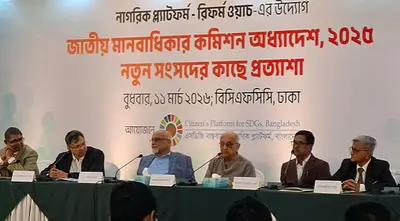
“An overwhelming 89% of respondents expect physical assault or beatings while covering election-related events,” said Miraj Ahmed Chowdhury, managing director of Digitally Right, at a roundtable held in Dhaka where he shared key findings from the study.
He added that 76% anticipate verbal harassment, while 71% fear intimidation. The risks are notably higher for women journalists: 50% fear sexual harassment, and 40% fear sexual assault.
The research—conducted under the Media Safety in the Digital Age initiative with support from the Fojo Media Institute, Sweden, and the Swedish International Development Cooperation Agency—shows that most journalists expect violence and intimidation during what is likely to be a highly polarized and volatile election period.
The study, titled “High Risks, Low Preparedness: Journalist Safety in the 2026 Elections,” is based on a survey of 201 journalists from 19 districts and 10 in-depth interviews.
Digital threats are also expected to intensify, with 75% anticipating disinformation campaigns targeting them or their newsrooms, and 65% fearing hacking attempts. Miraj noted that women face significantly higher risks of online harassment and surveillance, with over half of all respondents fearing smear campaigns that could damage their credibility.
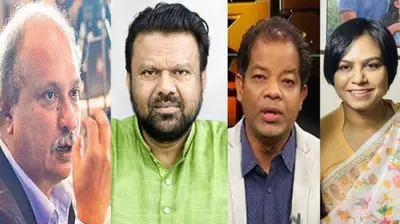
Senior journalists, including editors and newsroom leaders, attended the event. Dhaka Tribune editor Reaz Ahmed said media owners remain largely unconcerned about the physical safety of reporters. “They are aware of the risks but unwilling to invest in protection. As a result, journalists must safeguard themselves through self-regulation and personal safety measures,” he said.
Roksana Anzuman Nicole, Assignment Editor at Jamuna Television, noted that threats toward journalists are routine. Samakal Associate Editor Zakir Hossain pointed out that perpetrators of violence or harassment are often shielded by political parties. “If political parties publicly commit to allowing journalists to work freely during the election without obstruction or threats, it would be a positive step toward ensuring safety,” he said.
The study found that most newsrooms lack a designated person or system for managing safety concerns, and fewer than one in four journalists reported receiving safety gear or training from their employers. Male journalists were nearly three times more likely than women to have a personal safety plan.
More than 90% of respondents identified political actors as the main source of violence or harassment, while law enforcement agencies and extremist religious groups were also cited as major threats—particularly by women and regional correspondents.
Journalists linked the rising risks to political labeling, declining public trust in the media, extremism, mob violence, weak law enforcement response, and targeted disinformation campaigns.
Among others, the discussion was attended by M Abul Kalam Azad, editor of Times of Bangladesh; Sheikh Sabiha Alam, AFP bureau chief; Mustafizur Rahman, chief of correspondents at New Age; Jahidul Kabir, chief reporter at BD News; Elias Hossain, chief news editor of RTV; and Shahnaz Sharmeen, special correspondent of Ekattor Television.
Source: New Age