

Violence Against Journalists Soars in 2025: 381 Targeted, Three Killed, Major Media Houses Attacked

This year, 381 journalists have been subjected to violence and harassment. During this period, three journalists were killed by criminals, and the bodies of four others were mysteriously recovered from different parts of the country.
On Wednesday (December 31), the Law and Salish Kendra (ASK) released its annual report, which highlighted these figures. The report was prepared based on news on human rights violations as well as ASK’s own observations and field investigations.
According to ASK, in 2025, incidents of violence, intimidation, and legal persecution against journalists reached an alarming level. While freedom of expression and the right to information form the foundation of any democratic state, this year’s experiences of journalists indicate a very different reality. Journalists performing their professional duties were targeted by both state and non-state actors, threatening not only personal safety but also media freedom and democratic space.
ASK’s data shows that from January to December 2025, at least 381 journalists were subjected to harassment or violence. Among them, 23 journalists faced torture, harassment, or threats by law enforcement agencies, 20 journalists received death threats, and at least 123 were sued over published news or opinions. During the course of their professional duties, 118 journalists faced direct attacks, three were killed by criminals, and four were mysteriously found dead in different parts of the country.
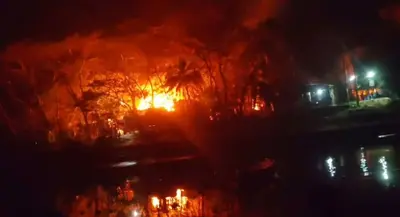
In addition to these individual attacks, the offices of two of the country’s leading newspapers, Prothom Alo and The Daily Star, were violently attacked, vandalised, and set on fire by mobs in December 2025, forcing temporary suspension of their operations and trapping journalists and staff inside during the violence. These assaults on major media institutions marked a severe escalation in threats to press freedom. Jagonews24+1
According to ASK statistics, the highest number of affected journalists were in Dhaka (92), followed by Chattogram (53), Gazipur (20), Rangpur (21), Comilla (21), and Barishal (12). The remaining 162 journalists were spread across other districts.
The report cites a significant example of legal persecution in 2025: the arrest of journalist Anis Alamgir. He was detained overnight at the Dhaka Detective Branch office and later formally arrested under the Anti-Terrorism Act, receiving a five-day remand. The charges alleged that he propagated messages aimed at “restoring the Awami League” through social media and television talk shows. Notably, he had recently been openly critical of interim government activities. Following his arrest, the incident raised questions among journalists and citizens about whether government criticism is being treated as a crime. ASK expressed concern and termed the arrest a dangerous precedent for suppressing dissent.
The report also mentions another notable incident on December 7, when former National Press Club president and senior journalist Shawkat Mahmud was taken into custody by the Detective Branch (DB) police. He was reportedly detained from the Malibagh area in Dhaka. Later, it was revealed that he had been charged under the Anti-Terrorism Act in September in a case initially filed against Bangladeshi-American citizen Anayet Karim Chowdhury, alleging a conspiracy to overthrow the interim government. Shawkat Mahmud, being both a journalist and politically active, raised concerns about media freedom and freedom of political expression.
ASK reported that on April 28, during a press conference at the Office of the Cultural Affairs Advisor, journalists questioned the UNESCO recognition of the Mangal procession renamed as the Boishakh Celebration Parade, the use of masks resembling the former Prime Minister, and the casualties of the July-August coup attempts. The Q&A session turned into a heated debate. Subsequently, a social media post called for action against three television journalists, threatening that if no action was taken within 24 hours, they would be forced off-air from Dipto TV, Channel i, and ATN Bangla. Soon after, the three journalists were reportedly dismissed.
Additionally, during the July coup, at least 137 journalists were named as defendants in 32 criminal cases filed in Dhaka, Chattogram, Bogura, and Rajshahi, some even under the Explosives Act. Although an eight-member committee had been formed in early October 2024 to monitor harassing cases against media personnel, such cases continued even after the committee’s formation.
Together, these incidents indicate that in 2025, violence and legal persecution against journalists were not isolated events; rather, they were part of a structural trend. Harassment of journalists by state institutions and political forces poses a direct threat to democracy, transparency, and accountability. To ensure free flow of information and public-interest journalism, it is now crucial to guarantee journalists’ safety, legal protection, and tolerance of dissent by the state.