2025 Marks a Year of Deep Crisis for Women’s Rights, Safety and Freedom in Bangladesh
In the history of Bangladesh, the year 2025 will be remembered as a year of deep contradiction and conflict regarding women’s rights, freedom, and security. On the one hand, initiatives for women’s rights reform, women’s visible presence, and protests became stronger; on the other hand, violence, hatred, harassment, and conservative pressure reached alarming levels. Across various layers of the state, society, religion, and politics, the question of women remained at the centre of intense debate throughout the year.
Conflict Surrounding the Women’s Reform Commission
In November 2024, the interim government formed a 10-member “Women’s Reform Commission” under the leadership of Shirin Parvin Haque. The commission aimed to review existing discrimination against women in law, society, the economy, and politics and to propose reforms. In April 2025, the commission presented recommendations including a uniform family law, equal inheritance rights, workplace protection, and measures to prevent gender-based violence.
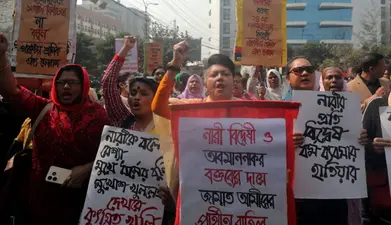
However, following the publication of these recommendations, members of the commission faced hate campaigns, threats, and social attacks. Women’s rights activists alleged that despite public harassment of commission members, the government did not take visible steps to ensure their protection or provide clear support. Rallies and threats by Hefazat-e-Islam demanding the commission’s dissolution further escalated tensions.
Anger Over Decisions on Women’s Parliamentary Seats
The decision of the “National Consensus Commission” regarding women’s seats in the national parliament triggered strong resentment among women’s rights activists. The commission’s refusal to accept recommendations to increase reserved seats for women and introduce direct elections drew criticism from members of the Women’s Reform Commission and various women’s organisations. They argued that despite women constituting half of the population, there was no female representation in the consensus commission, and decisions were taken without meaningful consultation with women.
A Grim Picture of Violence
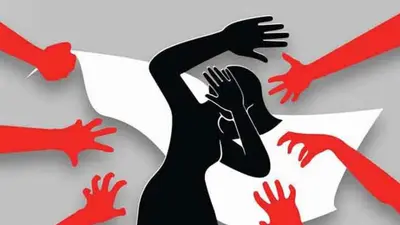
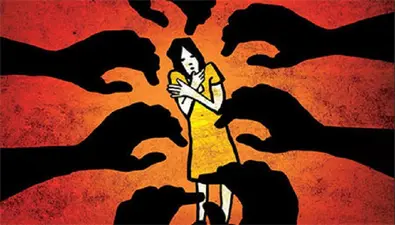
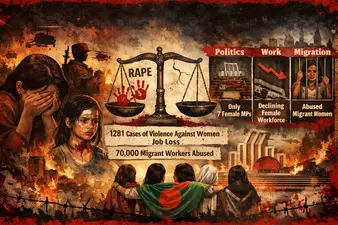
From the beginning of 2025, statistics on violence against women and children became deeply alarming. According to Police Headquarters data, 1,440 cases were filed under the Women and Children Repression Prevention Act in January alone. Data from human rights organisation Ain o Salish Kendra (ASK) shows that between January and November, 532 women suffered physical abuse, 207 women were killed by their husbands, and 711 women were raped, including 176 victims of gang rape.
The rape and murder of an eight-year-old child in Magura sparked nationwide outrage. Even on International Women’s Day on March 8, incidents of rape were reported in Gazipur, Thakurgaon, and Keraniganj. Public trust in the justice system was further eroded when a convict sentenced to life imprisonment for child rape in 2016 was released on bail and seen moving freely.
Culture of Impunity
Experts argue that the long-standing culture of impunity is the primary reason behind the rise in violence against women and children. Research indicates that the conviction rate in cases of violence against women and children stands at only 0.42 percent. Delays in investigations, late DNA reports, and the granting of bail even in serious crimes have severely undermined women’s sense of security.
Politics of Control Over Clothing and Bodies
In 2025, multiple incidents centred on women’s clothing and bodies exposed the stark reality of social conservatism. Incidents such as women being humiliated on buses over their clothing, offensive remarks by university teachers, public harassment through questions like “Where is your scarf?”, and the circulation of a video showing shoes being thrown at a female portrait at the Dhaka University TSC became symbolic examples of misogyny.
Double Vulnerability of Marginalised Women
Indigenous and marginalised women faced the highest levels of risk. Attacks on a Santal woman in Gaibandha and violence in Khagrachhari following allegations of rape of a Marma teenage girl demonstrated how gender discrimination intersected with ethnic and political oppression.
History will remember 2025 as a year of an intense struggle to protect women’s dignity, rights, and existence in Bangladesh.