
From Classrooms to Boardrooms: The Unfinished Journey of Bangladeshi Women
Bangladesh has achieved significant progress in women's education and economic participation compared to many countries in South Asia. Currently, the female literacy rate has reached about 72 percent, and gender parity in primary and secondary education has almost been ensured. About 60 percent of the workers in the country's ready-made garment sector, one of the main driving forces of the economy, are women, which forms an important foundation of the country’s more than 50 billion dollars in export earnings. According to recent data from the World Bank, the female labor force participation rate in Bangladesh is around 42 percent, which is higher than that of India, Pakistan, and Sri Lanka.
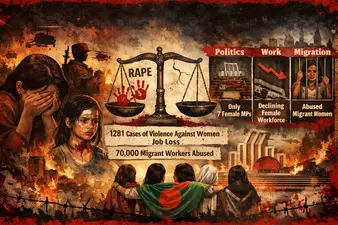
However, when we look at the structure of power, a different reality emerges. In the recent national election, among nearly two thousand candidates, only 81 were women, which is about 4 percent of the total. The number of women who won through direct elections was also very small, and most of them were members of political families. This indicates symbolic participation rather than real empowerment.
A similar picture can be seen in the corporate sector. According to data from the International Labour Organization, while women hold about one-quarter of management positions globally, in Bangladesh women’s presence at the top corporate or board level is less than 15 percent. Although women are present in education, health, banking, and public services, their representation is still limited in capital-intensive and high-growth sectors.
In the middle of their careers, many women are forced to leave their professions due to the pressure of motherhood and family responsibilities. Although the country provides 16 weeks of maternity leave, the lack of support for rejoining the workplace, childcare services, and flexible working arrangements pushes many talented women away from the workforce.
Religious interpretations are often mentioned in discussions about women's empowerment. However, the experiences of Muslim-majority countries such as Indonesia and Malaysia show that there is no fundamental conflict between faith and women's leadership. The real issue lies in social attitudes and the perspectives of institutions.
If Bangladesh wants to move toward genuine empowerment, several important steps are necessary. Educational institutions must ensure greater participation of girls in science, technology, debate, entrepreneurship education, and leadership-oriented activities. Political parties need to move beyond family-based politics and create open nomination opportunities and training for women.
At the same time, clear policies and accountability are required to increase women's representation at leadership levels in the corporate sector. It is also essential to ensure flexible working hours, childcare services, and opportunities for women to rejoin the workforce after career breaks.
Nearly half of Bangladesh’s population is female. A country can never achieve sustainable development goals while ignoring their leadership, skills, and talents. Therefore, the real message of Women’s Day should not be symbolic progress, but moving forward toward genuine empowerment.