
Can Afghan Women Ever Dance Among the Red Tulips?
‘Sister, You and I will let our hair fly,
Wear red dresses,
And intoxicate the birds
Of our vast deserts
With our laughter.
We will dance among the red tulips of Mazar.
In memory of Rabia.’
: ‘A Better Day Will Come’ by Hosnia Mohseni.
Thus writes Hosnia Mohseni, a female poet of Afghanistan, to commemorate the death of 10th-century author cum first recognized woman Persian poet, who was murdered by her brother for writing poems and falling in love of a man.
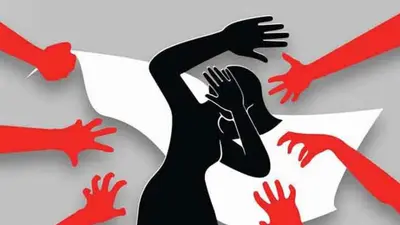
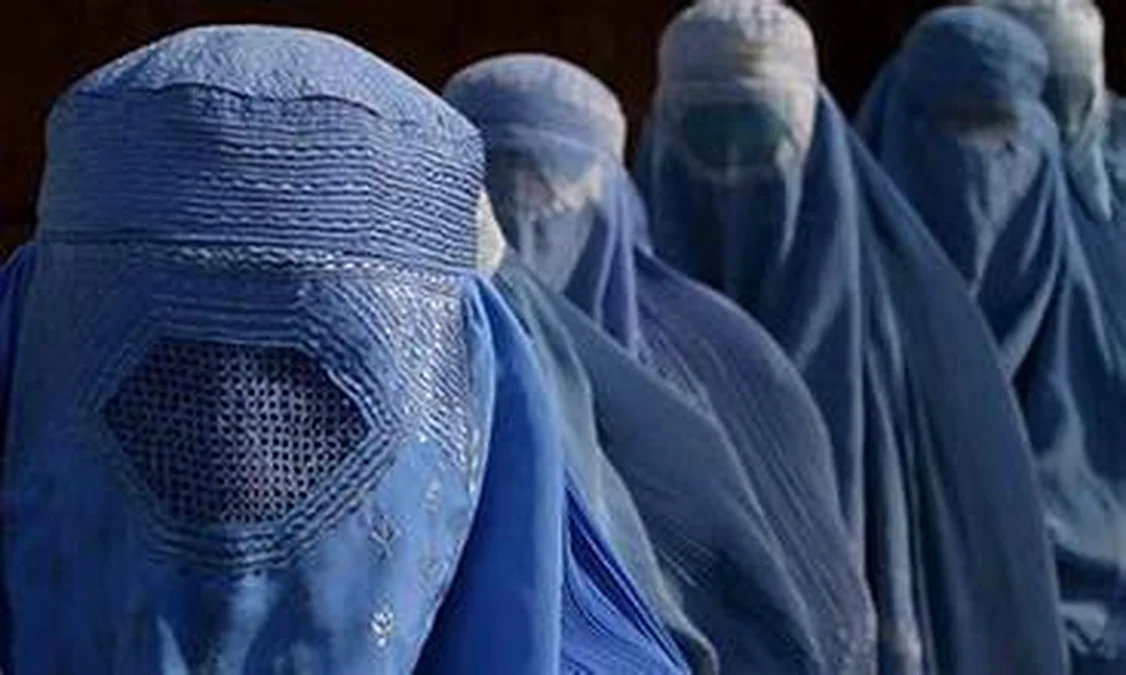
Despite passage of ten centuries since the assassination of Rabia, writing poems has again been banned in Afghanistan since the Taliban gained control of the land in August 2021. Poems? Women cannot now even walk without being accompanied by a mahram or a male member of her family. Writing poems by women is considered as something to be ashamed of and it may result in public beating or even to death.
But Afghan women are no less resilient than women in any other area on the planet. Just imagine how another female poet Somaia Ramish utters in her ‘Load Poems Like Guns’:
‘Load poems like guns —
war’s geography calls you
to arms.
The enemy has no signs,
counter-signs,
colors
signals
symbols!’
Okay. This article is not all about women’s poetry in Afghanistan and rather in last week, entire world has been shocked at two policy decisions of the Afghan government towards the womenfolk of their own land.
Earthquake: When ‘cultural chasm’ shakes the Reichter scale
UN News (Global perspective Human stories: 19th September, 2025) highlights: ‘’Women and girls still reeling from Afghanistan's deadly earthquake face even greater suffering rebuilding their lives and livelihoods.’’
“While the major aftershocks have passed, or have mostly passed, women in affected areas are facing a long-term disaster without more urgent assistance,” the report quoted Susan Ferguson, UN Women Special Representative in Afghanistan.
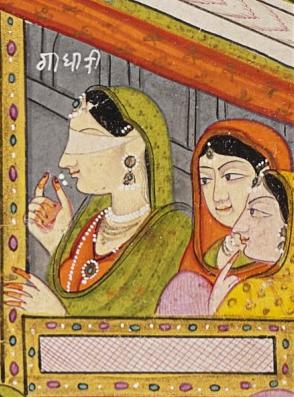
Ferguson conveyed her helplessness to the press in Geneva that ‘there had been no other channel for women to share their needs and concerns, as they are restricted from speaking to men. The humanitarian response to the 6.0 magnitude earthquake has been impeded by the Taliban prohibition on Afghan women staff members and contractors from entering UN compounds in Kabul, operative since 5 September.
Although the earthquake has already taken a huge toll of 2,200 deaths, extending healthcare to the earthquake survivors becomes difficult for the prevailing cultural norms of Afghanistan.
“What I heard from health workers and from some women was that there was a particular area in the earthquake-affected zone where there were cultural norms that meant that women themselves didn't want men to touch them and that men also didn't want to touch women as they were trying to rescue them,” Ms. Ferguson elaborated.
This news acted like a shock wave within the netizens across the globe and no sooner the first shock wave had passed, another shock wave did hit us even harder! What’s that news? Guess!
Books by women authors banned and women’s plight being exacerbated in Afghanistan
A report by Ali Hussaini in BBC Afghan (18th September 2025) informs us, ‘The Taliban government has removed books written by women from the university teaching system in Afghanistan as part of a new ban which has also outlawed the teaching of human rights and sexual harassment.’
Some 140 books by women - including titles like ‘Safety in the Chemical Laboratory’ - were among 680 books found to be of ‘concern’ due to ‘anti-Sharia and Taliban policies’, according to the report.
Earlier in the very week that fibre-optic internet was declared to be banned in at least 10 provinces of the country.
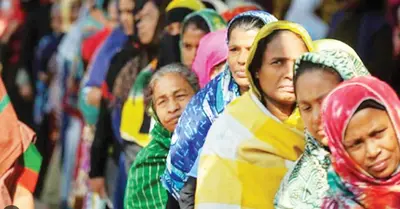
Since the taking over of state power by the Talibans, women and girls have been worst affected as they are prohibited from having access to education over the sixth grade and even midwifery courses were quietly cached.
The Taliban authority have, in addition, banned 18 disciplines to be studied in the Universities and six of those are particularly about women, including Gender and Development, The Role of Women in Communication, and Women's Sociology, according to the BBC Afghan report.
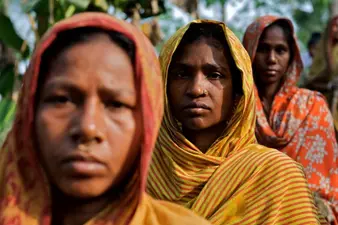
Afghan women today: Since taking of power by the Talibans in 2021
(Source: UN Women).
|
Afghanistan: A land not too close yet not too far!
Today’s Afghanistan is acknowledged in the great Indian epic ‘Mahabharat’ as ‘Gandhar’ and the princess of Gandhar or ‘Gandhari’ got married to the Indian blind king Dhritorashtra.
Wikipedia suggests: ‘Human habitation in Afghanistan dates to the Middle Paleolithic era. Popularly referred to as the graveyard of empires, the land has witnessed numerous military campaigns, including those by the Persians, Alexander the Great, the Maurya Empire, Arab Muslims, the Mongols, the British, the Soviet Union, and a US-led coalition.’
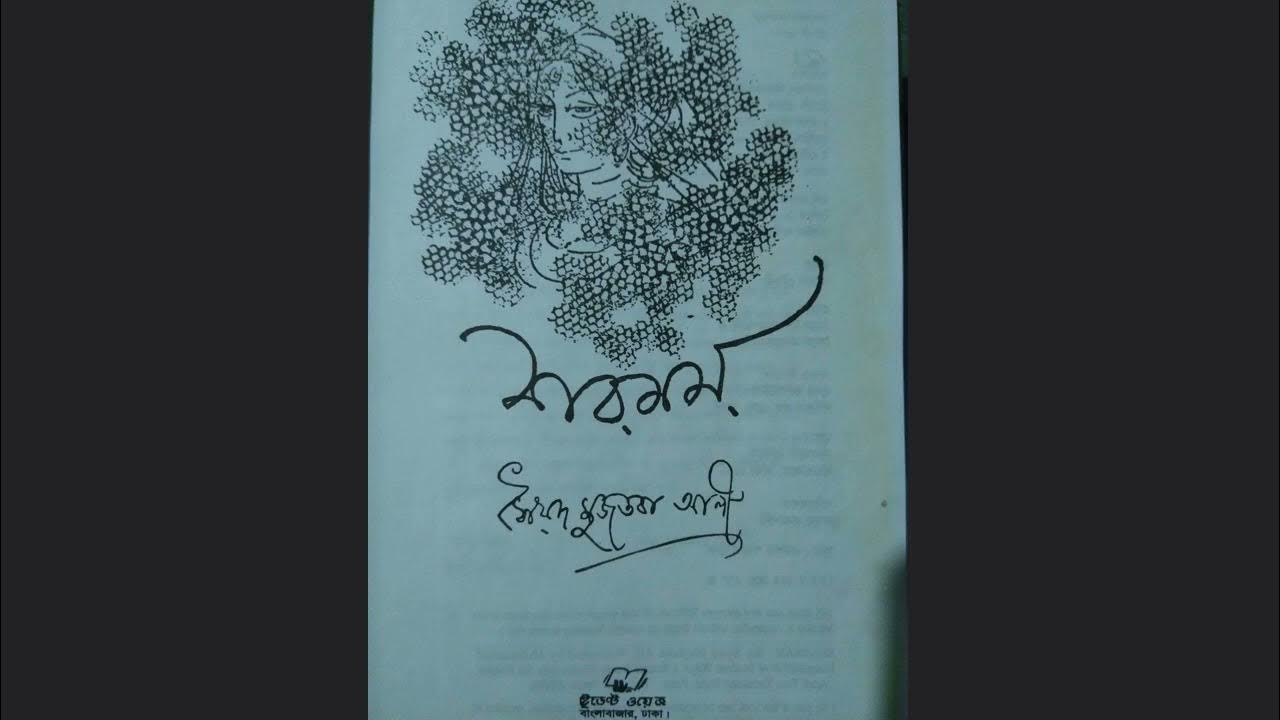
Rabindranath Tagore’s heart wrenching short story ‘Kabuliwala’ narrates the tale of a strange bondage between a five years’ old Bengali child ‘Mini’ and Rahmat, a middle-aged, Afghan money lender in the city of British Calcutta. How Rahmat, struggling for a livelihood in a far remote city from his own land, recalls his daughter whenever he sees Mini and brings lots of fruits and gifts for her without any penny is the core theme of the story. Polyglot author Syed Mujtaba Ali has penned ‘Shabnam’, the love story between a modern, Afghan young woman and an Indian (Bengali) Muslim man in the early 20th century in Kabul. But the novel ends in the description of sudden conquest of Kabul by the Mullahs which brought doomsday for Shabnam, his liberal father and the progressive Badshah Amanullah’s rule in the land.
Wikipedia narrate’s Badsha Amanullah’s rule in the following words: ‘…His rule was marked by dramatic political and social change, including attempts to modernise Afghanistan along Western lines. He did not fully succeed in achieving this objective due to an uprising by Habibullah Kalakani and his followers.’
Our polyglot author Syed Mujtaba Ali penned his novel against this particular backdrop of Afghan political history.
Amidst the successive waves of rise of the rightist groups from South Asia to U.K., it’s hard to assess that if any day the Afghan women will be able to wear a red dress, let their hair fly and dance in the Tulip gardens.