




October Becomes the Deadliest Month for Dengue in Bangladesh
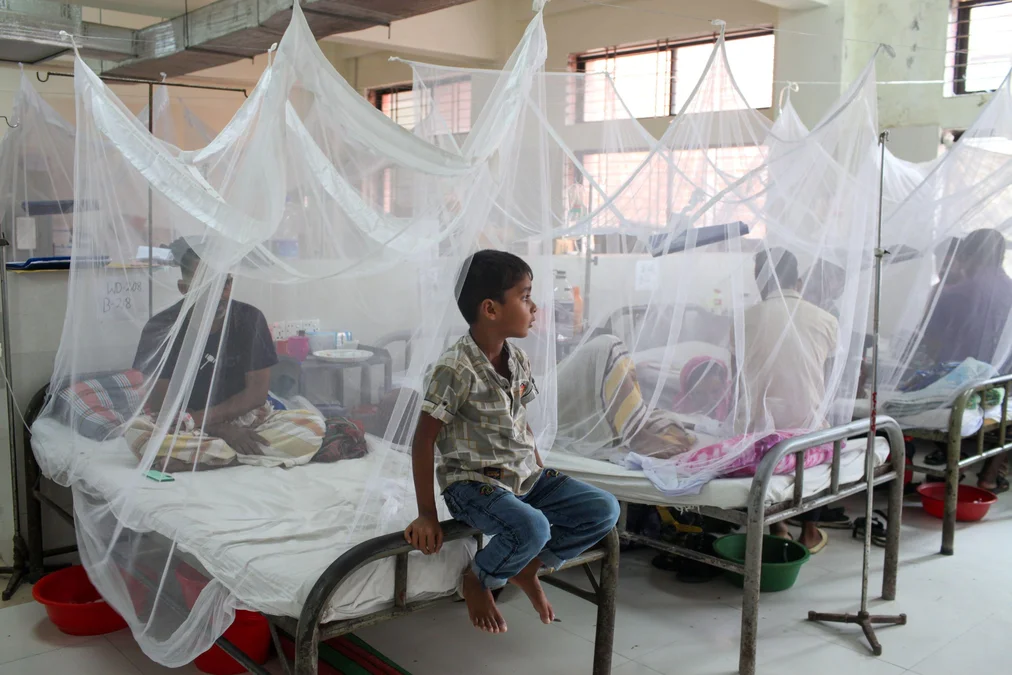
October has turned out to be the deadliest month for dengue in Bangladesh this year, with at least 80 deaths and 22,520 hospitalisations, according to official data. Health experts have warned that the dengue surge could extend into November as favorable weather conditions continue for Aedes mosquito breeding.
The Directorate General of Health Services (DGHS) reported that October’s figures surpassed those of September, which saw 76 deaths and 15,866 admissions — making October the most devastating month of the year in terms of dengue fatalities and infections.
Fresh DGHS data released on Saturday show that the total number of dengue deaths in 2025 has climbed to 278, while hospitalisations have reached 70,513 since January.
DGHS statistics indicate that dengue-related deaths occurred throughout the year — 10 in January, 3 in February, 7 in April, 3 in May, 19 in June, 41 in July, and 76 in September. No deaths were reported in March.
Hospitalisation numbers also reflect a continuous upward trend: 1,161 in January, 374 in February, 336 in March, 701 in April, 1,773 in May, 5,951 in June, 10,684 in July, 10,496 in August, and 15,866 in September.
Dhaka and Barishal Worst Hit
Of the deaths recorded this year, 134 occurred in Dhaka South City, 41 in Dhaka North City, 40 in Barishal, 25 in Chattogram, 12 in Mymensingh, 8 in Khulna, 3 in greater Dhaka (outside city areas), and one in Sylhet.
Barishal continues to be the worst-hit division, with 17,224 cases, followed by Dhaka division with 11,548, Chattogram division with 10,092, Dhaka South City with 10,192, Dhaka North City with 9,112, and Khulna with 3,543 reported infections.
Experts Warn of Continued Risk
Public health specialists said that inadequate vector control, poor waste management, and fragmented mosquito-eradication campaigns have allowed dengue to become endemic in both urban and semi-urban areas.
Professor Md Golam Sharower, head of the entomology department at the National Institute of Preventive and Social Medicine, warned that November rainfall has created new breeding grounds for Aedes mosquitoes.
Epidemiologist Dr. AM Zakir Hussain, former director of the Institute of Epidemiology, Disease Control and Research (IEDCR), said dengue transmission depends entirely on temperature and humidity.
“If this is the last rain before winter, Aedes mosquitoes will continue to spread for another two weeks,” he cautioned.
Entomologists further noted that the current temperature and humidity levels remain favorable for Aedes mosquito breeding, and without a national-level integrated mosquito management system, reversing this trend will be extremely difficult.
Comparative Data and Historical Context
According to DGHS data, Bangladesh recorded 134 deaths and 30,879 cases in October 2024, followed by 173 deaths and 29,652 cases in November 2024.
Dengue has been a recurring public health crisis in Bangladesh since 2000, when official records began — claiming 93 lives and hospitalising 5,551 people that year.
The outbreak has worsened over the years: dengue claimed 1,705 lives and caused 321,179 hospitalisations in 2023 alone, compared to 853 deaths and 244,246 cases recorded between 2000 and 2022 combined.
Last year, Bangladesh endured yet another severe wave, with 575 deaths and over 101,000 infections, marking dengue as a persistent year-round threat.