



Why Bangladesh’s Human Rights Commission Requires True Autonomy
While the NHRC Ordinance 2025 strengthens legal powers and aligns with global norms, its success hinges on the Interim Government granting the Commission independence, adequate resources, and protection to probe state and security agencies without political interference.
According to Odhikar's Annual Human Rights Report 2020, between 2009 and 2020, political violence claimed 2,221 lives and left more than 127,000 people injured. The report also documented around 2,000 extrajudicial killings, nearly 3,817 cases of dowry-related violence against women, and 9,593 rapes during the same period. Subsequent years saw even higher numbers, as recorded in later reports (2020–2023).
These violent incidents occurred despite the establishment of the National Human Rights Commission (NHRC) in 2009. The large number of human rights violations documented by Odhikar (2009–2024), and consistently echoed by international watchdogs, are more than mere statistics; they represent lives lost, families shattered, and a country struggling under the weight of systemic repression. Continued criminal activities by ruling party affiliates generated widespread unrest, paving the way for the July Uprising that ultimately toppled the regime.
The uprising, resulting from years of repression and violence, exposed deep institutional failures and sparked debates on accountability and reform. In this climate of unresolved oppression, the Interim Government promulgated the National Human Rights Commission Ordinance, 2025 (Ordinance No. 62 of 2025), on 9 November 2025, promising to replace the Human Rights Commission Act of 2009 (Act No. 53 of 2009).
With this new ordinance, an old question becomes pertinent: will this legal framework truly grant the National Human Rights Commission (NHRC) autonomy?
However, the failure of the old National Human Rights Commission was not accidental but structural. Its paralysis began with the 2009 Act, which allowed the government to appoint loyalists lacking the independence or expertise to challenge senior members of the executive branch, relevant ministries, or the cabinet secretary.
Human rights violations were used as a tool of political control during the tenure of the previous government. As mentioned earlier, nearly 2,000 people were killed in so-called 'gunfights.' Torture, custodial abuse, and arbitrary detention were routine. Civil liberties were curtailed, free journalism was criminalised, and critics were imprisoned under cybersecurity laws. Yet, in the face of such grave realities, the NHRC has been accused of ignoring these abuses and instead focusing on petty disputes. In 2020, even the High Court condemned the Commission for 'sleeping with eyes wide open.
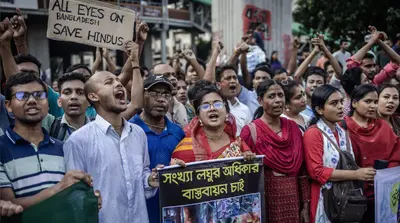
During the July 2024 uprising, peaceful students protesting the discriminatory quota system faced deadly attacks by the police, RAB, and ruling party allies. The Ministry of Liberation War Affairs published a gazette listing 834 individuals who were killed during the July–August mass uprising.
The former police chief later stated that the Prime Minister's Office had ordered the attacks. However, the former government denied responsibility and blamed the protesters. Meanwhile, the NHRC limited its response to describing the violence as 'unfortunate,' conducting no investigation and issuing no recommendations or action. This silence reflected its structural weakness. Amid widespread rebellion and public outrage, the Commission's leadership resigned in November 2024, admitting that the institution had collapsed.
As the old Commission collapsed, the 2025 ordinance granted the NHRC new powers to address past failures. The new Ordinance extends its jurisdiction to investigate complaints against the military and other disciplinary forces. Article 15 enhances accountability by abolishing the 'superior orders' excuse, meaning liability cannot be avoided on the pretext of following orders. This change curbs impunity within the army, police, BGB, and RAB, and empowers the NHRC to investigate violations even when classified orders are involved. The Commission can now initiate cases, intervene in court, and seek redress for victims.
Besides, there is an obligation to provide victims with treatment, rehabilitation, and compensation. The protection of defenders, whistleblowers, and witnesses has also been mandated. These reforms give the NHRC new tools, but their effectiveness will depend on whether the Commission can operate independently.
To be credible, the NHRC must adhere to the UN Paris Principles (UN General Assembly Resolution 48/134, 1993), which call for independence, investigative powers, pluralistic representation, transparent recruitment, and adequate resources. Bangladesh's NHRC has long lagged behind these standards.
The 2025 ordinance brings the framework closer to international norms, but experience shows that laws alone are not enough. The involvement of the Embassy of Switzerland and UNDP in the national consultation on the draft NHRC Ordinance 2025—under the SIPS project, a joint initiative to enhance citizen-centric governance and oversight institutions in line with SDG 16 and SDG 5—suggests that the institution is being technically strengthened to counter previous weaknesses and political influence.
We may think that complete autonomy is not possible in Bangladesh's political reality, and the alternative—a weak and subordinate commission—would only increase impunity. However, even partial independence, with transparent recruitment, financial autonomy, and the power to investigate security forces, would provide far greater protection than the 2009 Act.
Therefore, the Interim Government must provide the NHRC with genuine autonomy and the necessary resources. A credible commission must be able to investigate state institutions, publish uncomfortable findings, and protect victims and whistleblowers. Its legitimacy in the coming months will depend on conducting impartial investigations, disclosing information, and refraining from suppressing cases.
Equally important is the protection of victims, witnesses, and whistleblowers from retaliation, as well as ensuring a transparent appointment process for new commissioners. These are not aspirational ideals but minimum standards, as reflected in OHCHR and EUAA reports. If the NHRC meets these standards, it will mark a real turning point; otherwise, it will be nothing more than old wine in a new bottle.
Rafsan Jany Rahat is a governance and politics intern at BRAC Institute of Governance and Development (BIGD)
Source: TBS