
Human Rights Watch Warns
South Asian Leaders Fuel Hate to Mask Economic Insecurity

Political leaders across South Asia are increasingly promoting hatred and division to divert public attention from economic hardship and governance failures, Human Rights Watch’s Deputy Asia Director Meenakshi Ganguly has warned.
In an opinion article published by India-based news portal Scroll.in, Ganguly said that leaders who fail to ensure justice without bias and undermine human rights risk triggering public anger that could ultimately threaten their own hold on power.
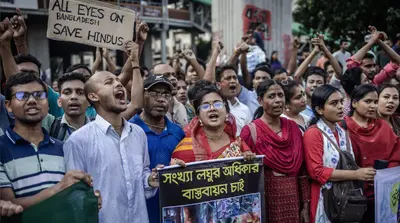
The article highlights a series of recent violent incidents across the region as evidence of a breakdown in the rule of law. These include the killing of a Hindu man in Bangladesh by a mob over false blasphemy allegations, an Indian ruling party official attacking a Christmas lunch for children with disabilities on unfounded claims of forced religious conversion, and the death of a Dalit man in Nepal after being beaten on suspicion of theft.
According to Ganguly, such violence often follows political strategies that mobilize resentment against minorities, refugees, and marginalized communities. Leaders, she argues, seek to deflect attention from unemployment, rising living costs, and uncertain economic futures by encouraging hostility toward perceived enemies.
The rhetoric frequently spills across borders. Indians have protested attacks on Hindus in Bangladesh, while Bangladeshis have condemned violence against Muslims in India. Sports and culture have also been affected, with tensions influencing international cricket and cultural exchanges.
Ganguly warns that in the age of social media, political ideologues deliberately manipulate algorithms to inflame anger and discredit human rights protections as unnecessary concessions. When such tactics fail, governments often resort to repression after weakening the institutions meant to restrain abuse.
The article examines recent political upheavals in Bangladesh, Nepal, and Sri Lanka. In Bangladesh, the 2024 protest that toppled the then Awami League government was followed by an interim government that, according to Ganguly, soon lost direction under mob pressure. The decision to bar the Awami League from contesting upcoming elections has again left voters without genuine political choice.
In Nepal, “Gen Z” protests toppled a government in 2025, but disillusionment has returned as the same political elites prepare to contest elections. In Sri Lanka, despite promises of reform, the new government has continued to use harsh counterterrorism laws and suppress minority communities.
India, the article says, remains deeply affected by majoritarian politics, with hate speech during elections and heavy-handed responses to protests becoming routine.
Ganguly concludes that hatred and repression are ultimately self-defeating. Instead, leaders should focus on job creation, healthcare, education, equality, and the protection of rights. Genuine improvements in people’s lives, she argues, are the only sustainable measure of political success.