

Denied Parole After Family Deaths: 39 Citizens Condemn ‘Inhumane’ State Conduct
Thirty-nine eminent citizens of the country have expressed strong anger and condemnation over the incident in which Jewel Hossain Saddam was not granted parole, as provided by law, to attend the funeral of his wife and infant child, and instead was forced to see their bodies at the prison gate. At the same time, they have demanded strict action through a high-level, impartial investigation to identify the responsible government officials and concerned authorities.
In a joint statement issued on Monday (26 January), they said that Jewel Hossain Saddam, former president of Subarnadanga Upazila Chhatra League in Bagerhat, has been incarcerated for nearly 11 months in connection with several cases filed following the July uprising. He was initially held at Bagerhat District Jail and was transferred to Jessore Central Jail in December 2025.
The statement noted that on 23 January, Saddam’s wife, Subarna Swarnali, was found hanging from a ceiling fan in her home, while their nine-month-old infant son was found dead on the floor. According to family members, Subarna had been suffering from severe mental distress due to her husband’s prolonged detention and failure to secure bail. In addition, Saddam himself had been deeply distressed as he had not been able to see his child since the child’s birth.
Following the deaths of Saddam’s wife and child, his family reportedly ran from the Bagerhat District Administration to the office of the Jessore District Magistrate seeking parole, but no effective steps were taken due to bureaucratic complexity, indifference, and the excuse of weekly holidays.
The statement further said that, according to reports published in various media outlets, the police Special Branch (DSB) submitted a report claiming that releasing Saddam on parole could lead to a deterioration of the law and order situation, with the possibility of thousands of people gathering. On that basis, the district administration was advised not to consider the application positively.
Meanwhile, the Bagerhat Deputy Commissioner told the media that the parole application had not been submitted to the appropriate authority and that the family had been advised to approach the Jessore District Administration. In contrast, the Ministry of Home Affairs stated in a press release that no application had been submitted to the Jessore District Administration on behalf of Saddam’s family; rather, considering humanitarian grounds, Saddam was allowed to see the bodies of his wife and child at the prison gate.
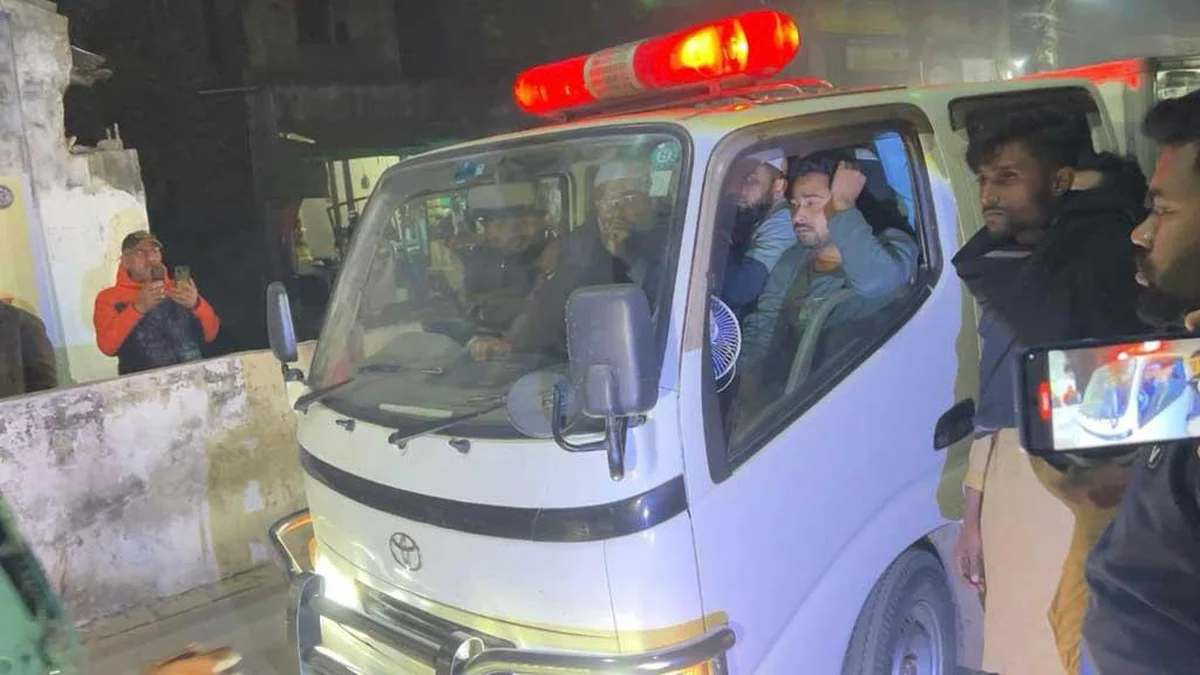
Regarding this, the signatories said, “When a son is in prison and the daughter-in-law and grandson lie dead at home, expecting a grieving family to know which office to approach, on which day, and through which procedure, is inhumane.” Eventually, being left with no alternative, the bodies of Saddam’s wife and child were brought in a hearse from Bagerhat to Jessore Central Jail, where Saddam was allowed to see his beloved wife and unseen infant child for only five minutes.
The statement said that Saddam was not a death-row convict and that, under the law, he was entitled to parole to attend the funeral of close relatives. The signatories added that Saddam’s political views or alleged involvement in any offence were entirely irrelevant in this context.
Representatives of civil society stated that those associated with the interim government cannot evade responsibility for such negligence, vindictiveness, and inhumane conduct carried out in the name of the justice process. They further alleged that the government’s commitment to end injustice and impunity, declared at the time it assumed office, is increasingly proving to be merely rhetorical.
The statement was signed by 39 representatives of civil society, including Advocate Sultana Kamal, Dr Iftekharuzzaman, Barrister Sara Hossain, Advocate Z I Khan Panna, Dr Shahidul Alam, along with other human rights activists, lawyers, academics, and professionals.