
UNHRC Event Highlights Severe Rights Violations Under Bangladesh’s Interim Rule
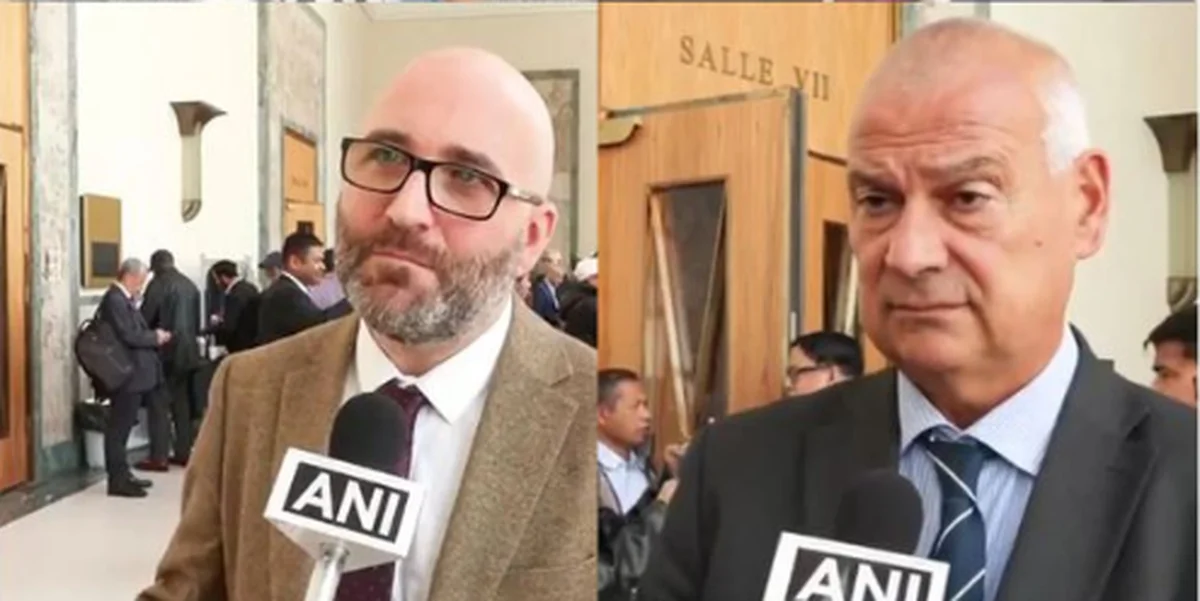
Human rights activists and international experts have expressed deep concern over what they describe as the worst human rights crisis in Bangladesh in over five decades, during a side event held at the 60th session of the United Nations Human Rights Council (UNHRC) in Geneva.
The event, organised by the Centre for Gender Justice, was titled “Violations of Fundamental Human Rights, Rule of Law, and Democracy in Bangladesh.” It focused on the deteriorating state of governance, law, and civil liberties under the interim regime led by Chief Advisor Mohammad Yunus, which came to power following the ousting of elected Prime Minister Sheikh Hasina on August 5, 2024.
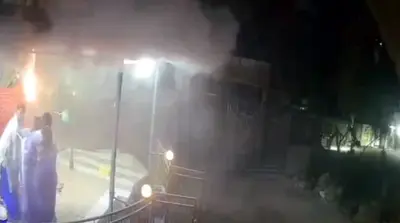
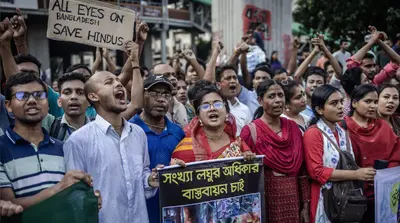
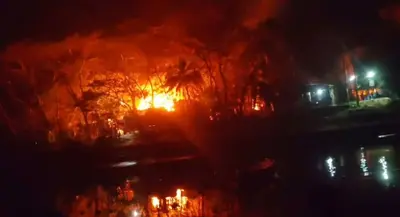
A short documentary screened during the session presented harrowing visuals of extrajudicial killings, attacks on religious minorities, the destruction of temples and Sufi shrines, and violent assaults on media houses. It also documented how radical Islamist groups have allegedly lynched members of the Awami League and openly threatened journalists and political activists.
Alarming Statistics and Testimonies
Addressing the event, Prof. Md Habibe Millat, President of the Global Center for Democratic Governance (Canada), revealed that at least 213 leaders and activists of the Awami League have been killed since the interim government assumed power. He also reported 637 mob lynching deaths, the killing of 30 individuals from minority communities, and the burning of 17 churches on Christmas Day in 2024.
“Human rights violations in Bangladesh are at the highest level in the last 54 years,” Prof. Millat said. “Nobody has been spared. More than 2,500 cases of torture have been documented.”
He warned that the upcoming election process, being conducted under the current regime, is highly likely to be fraudulent and unrepresentative.
Experts Warn of Democratic Collapse
Former Member of the European Parliament and Executive Director of the South Asia Democratic Forum (Belgium), Paulo Casaca, described the situation as a “humanitarian crisis,” alleging that the interim government has fabricated over 50,000 legal cases to dismantle opposition forces.
“People thought it was a movement for change, but it has been hijacked by radical Islamist forces who are bent on destroying the country,” Casaca said. “They begin with minorities, but they go on to target the general population. What we are seeing is not a transition — it is a complete breakdown of democracy.”
Casaca also cited estimates of 15 million internally displaced people, saying they are fleeing persecution, imprisonment, or false accusations.
“This is the worst nightmare in Bangladesh. No election held under these conditions can be considered legitimate,” he added.
“A Government of Lies”
Suhas Chakma, Director of India-based Rights and Risks Analysis Group, called the leadership of Mohammad Yunus an “act of fraud,” stating that the regime’s primary objective is to manufacture false narratives and mislead the global community.
“The human rights situation is rapidly deteriorating. The international community must not be fooled,” Chakma said.
Polish human rights advocate Natalia Sineaeva-Pankowska, of the NEVER AGAIN Association, compared the scale of persecution in Bangladesh to the Holocaust, describing it as the worst crisis since the country’s independence in 1971.
Concerns About Rise of Extremism
UK-based political analyst Chris Blackburn stated that any movement that fails to protect basic rights cannot be called a revolution.
“A revolution without the protection of human rights is not a revolution,” he said. “There is a sense of fear among the people. Both minorities and journalists are under constant threat.”
Blackburn criticised Yunus’s failure to initiate reforms, arguing that his government is clearing the path for a regime dominated by radical Islamist groups. “It’s an absolute shame for Bangladesh,” he said.
“Proxy War Against India”
UK-based Bangladeshi activist Barrister Nijhoom Majumder described the current crisis as part of a larger geopolitical struggle.
“Western powers have captured Bangladesh indirectly. What’s happening is a proxy war against India — and Bangladesh is the battlefield,” he said.
He warned that state-sponsored terrorism is rising in Bangladesh and urged the global community not to allow the country to become a staging ground for conflicts involving India, China, or any other power.
Collective Call for International Action
Speakers at the event issued a joint call for immediate global intervention, arguing that the situation in Bangladesh represents one of the gravest human rights challenges in South Asia today. They urged the UN and the international community to take urgent action to restore democracy, uphold rule of law, and protect vulnerable communities.
Source: ANI