

Amnesty Warns Bangladesh Falling Short on Human Rights Ahead of 2026 Election
Amnesty International has called on political parties to place human rights reform at the core of their political agendas ahead of Bangladesh’s upcoming national election. In a 10-page report titled “Human Rights Priorities Ahead of National Election”, the organization urges all contesting political parties to take concrete steps to ensure the protection and promotion of human rights during the pre-election, election-period, and post-election phases.
The report states that ahead of the national election scheduled for 12 February 2026, Bangladesh is lagging behind in fulfilling its international obligations in areas such as freedom of expression, judicial accountability, Indigenous and minority rights, women’s rights, labor protection, climate justice, refugee protection, and the death penalty.
Freedom of Expression and the Media
The report notes that although the interim government has pledged to amend the Cyber Security Act, the Cyber Security Ordinance issued in May 2025 still contains vague and overly broad provisions. These provisions grant sweeping powers to law enforcement agencies and create a high risk of abuse. According to Amnesty, not only cyber laws but also other laws are being used to target journalists, particularly those perceived as supporters of the Awami League.
The organization cites several recent arrests. On 15 December 2025, journalist Anis Alamgir was arrested under the Anti-Terrorism Act on allegations of campaigning in favor of the Awami League. Similarly, on 28 August 2025, journalist Manjurul Alam Panna was detained under the same law on charges of conspiring to overthrow the interim government. The day before his arrest, he had spoken at a roundtable discussion on the Liberation War and the Constitution.
Amnesty has also documented attacks by non-state actors. Following the death of July Movement leader Sharif Osman Hadi on 18 December 2025, the offices of The Daily Star and Prothom Alo were attacked and set on fire, and the editor of New Age was harassed. Amnesty stated that regardless of which government comes to power, it must ensure that freedom of expression and independent media are not only protected but actively encouraged and allowed to flourish.
Accountability and Justice
Referring to the July riots following the 2024 quota reform movement, the report cites data from the Office of the United Nations High Commissioner for Human Rights, stating that at least 1,400 people were killed between 1 July and 15 August 2024, including an estimated 168 to 182 children. During the same period, more than 11,700 people were arrested.
Following Sheikh Hasina’s resignation, at least another 250 people were killed in retaliatory violence, including police officers. In this context, Amnesty has called for cases related to the 2024 movement to be referred to the International Criminal Court, for UN Special Rapporteurs to be allowed to visit Bangladesh, and for the restoration of public trust in the judiciary by ensuring fair trials free from vengeance.
Indigenous Peoples’ and Religious Minority Rights
The report states that successive governments have failed to implement the Chittagong Hill Tracts Peace Accord, resulting in continued discrimination and marginalization of Indigenous communities. Amnesty highlights several recent incidents. Following an incident related to the Kuki-Chin National Front on 7 April 2024, 142 people from the Bawm community were arrested, including children.
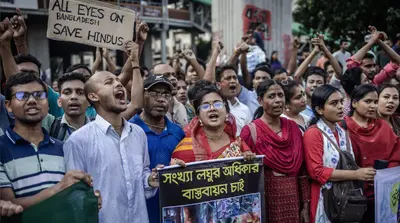
In addition, on 18 December 2025, garment worker Dipu Chandra Das was beaten to death on allegations of blasphemy; 18 people have been arrested in connection with the incident. Similarly, between 19 and 23 December 2025, seven houses were attacked and set on fire over five days in Raozan upazila of Chattogram. Amnesty has called for impartial investigations into attacks on minorities, an end to indiscriminate targeting of the Bawm community, and increased minority representation in public service and higher education.
Women’s Rights
Amnesty’s report states that despite existing legal protections, women continue to face violence, discrimination, and political exclusion. According to government survey data, a survey conducted in 2023 found that 8.2 percent of women were married before the age of 15, and 41.6 percent before the age of 18.
Electoral statistics are also described as alarming. As of 6 January 2026, 30 out of 51 contesting political parties did not nominate a single female candidate. Women account for only 4.24 percent of total candidates. By comparison, the figure was 4.86 percent in the 2024 election and 3.67 percent in 2018. Amnesty states that this continued exclusion of women from political decision-making will cause long-term harm to society and democracy.
Labor, Climate, and Refugees
The report notes that labor rights violations persist, particularly in the ready-made garment sector. Amnesty has called for a revision of the minimum wage in line with the cost of living, ratification of ILO Convention 190, and the provision of legal protections for temporary and home-based workers.
In terms of climate justice, the report recommends establishing decentralized adaptation funds for coastal regions including Khulna and Satkhira, and recognizing Dalit and Harijan sanitation workers as at-risk communities. Regarding Rohingya refugees, Amnesty has recommended halting forced repatriation, expanding access to education and livelihoods, and strengthening security in the camps.
Death Penalty
The report states that Bangladesh continues to retain the death penalty for a wide range of crimes, outside international standards. Although the country is a party to the International Covenant on Civil and Political Rights, it has not yet signed or ratified the First and Second Optional Protocols concerning the abolition of the death penalty.
Highlighting an important fact, Amnesty noted that no executions were carried out in Bangladesh in 2024. According to the organization, this presents a significant opportunity for the government to declare an official moratorium, which could serve as the first step toward full abolition in the future.
Call to Political Parties
In the conclusion of the report, Amnesty stated that human rights must not be treated merely as a commitment of the next government; rather, all contesting political parties must include them as a central priority in their election manifestos. According to the Election Commission, voting will take place on 12 February. The government has not yet issued any official response to Amnesty’s recommendations.