



Washington Post: Rising Attacks on Hindu Minorities in Bangladesh Ahead of Election
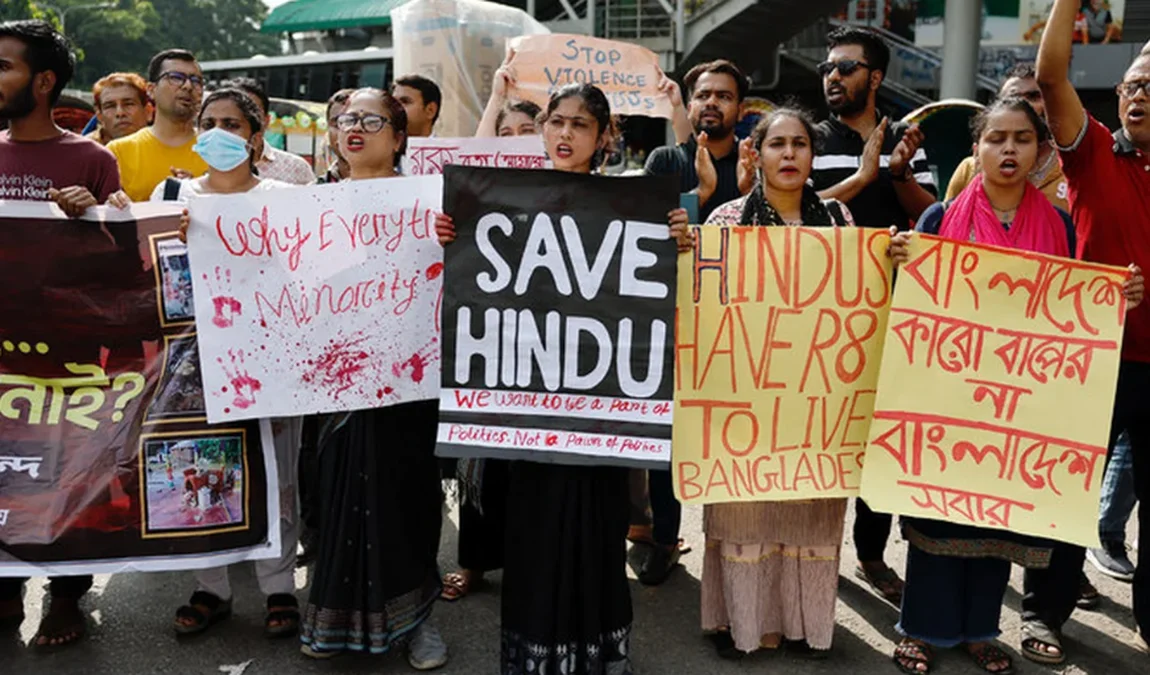
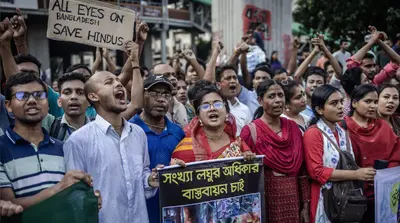
As the national election draws closer, attacks, killings, and vandalism of places of worship targeting the Hindu minority in Bangladesh have increased at an alarming rate, according to a report by the U.S. newspaper The Washington Post. The report states that political instability, polarization, the resurgence of Islamist groups, and a culture of impunity are deepening fear and uncertainty among minority communities.
The report mentions that in December, 27-year-old Hindu garment worker Dipu Chandra Das was targeted by some of his colleagues following allegations of religious blasphemy. After the accusation, an angry mob attacked his workplace. He was beaten to death, after which his body was hung from a tree and set on fire. Videos of the incident spread on social media, triggering widespread panic among the Hindu community across the country.
As protests erupted in Dhaka and other areas, interim government chief Muhammad Yunus ordered an investigation, and police said at least a dozen people had been arrested in connection with the incident. However, human rights activists say the killing was not an isolated incident.
Pattern of Violence
According to The Washington Post, in a country of approximately 170 million people, the Hindu population stands at around 13.1 million, or about 8 percent of the total population.
The Bangladesh Hindu-Buddhist-Christian Unity Council reported that more than 2,000 incidents of communal violence have occurred since the ouster of former Prime Minister Sheikh Hasina in August 2024.
According to the organization, over the past one and a half years at least 61 people have been killed, 28 cases of violence against women (including rape and gang rape) have taken place, and 95 temples or places of worship have been attacked, vandalized, looted, or set on fire. Minority leaders allege that the administration often downplays these incidents or presents them as personal disputes.
Dhaka-based Hindu human rights activist Ranjan Karmakar told The Washington Post, “No one feels safe anymore. Everyone is afraid. Because perpetrators are not being punished, it feels like the violence will continue.”
Heightened Risk Ahead of the Election
The report notes that Bangladesh has a history of election-related violence, in which religious minorities are often the most affected. This year, the situation has become more sensitive as the Awami League is not participating in the election and Sheikh Hasina is currently in India. Since Hindus have long been perceived as supporters of the Awami League, the risk of them being politically targeted has increased.
Analysts say there are signs in some areas of efforts to create fear among minorities to suppress voter turnout.
Resurgence of Islamist Groups
The Washington Post reports that Jamaat-e-Islami and its student wing, which had long been banned, have become active again. Although they advocate a Sharia-based state system, they are attempting to broaden public support by engaging minorities—allowing Hindu participation in some rallies and nominating Hindu candidates.
However, political analyst Altaf Parvez told the newspaper that these steps are largely symbolic and do not ensure real protection. According to him, minorities are being deliberately intimidated in rural areas, which could affect their participation in the election.
India-Bangladesh Tensions
The report also notes that attacks on Hindus have heightened diplomatic tensions with neighboring India. India’s Ministry of External Affairs has described the incidents as a “disturbing pattern of attacks.” Bangladesh, in turn, views this as interference in its internal affairs. This tension has reportedly affected visa services and even the T20 Cricket World Cup.
Grieving Family Demands Justice
Dipu Chandra Das was the sole breadwinner of his family. His death has left his wife and mother in deep uncertainty. His mother, Shefali Rani Das, said: “They killed my son, hung him from a tree, and set him on fire. I want justice.”
The Washington Post report concludes that amid impunity and political uncertainty, Bangladesh’s Hindu minority community is deeply worried about its future.