

Bangladesh: Rape Sparks Deadly Violence in CHT, Rights Groups Urge UN Intervention
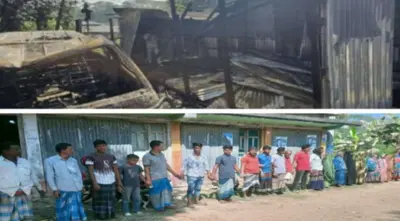
A brutal wave of violence has engulfed parts of Khagrachhari district in Bangladesh’s Chittagong Hill Tracts (CHT), leaving at least three Indigenous youths dead, several others injured, and dozens of homes and businesses destroyed. The unrest was triggered by protests following the reported gang rape of a Marma schoolgirl by three Bengali youths on 23 September in the Guimara area.
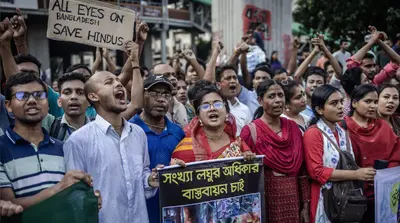
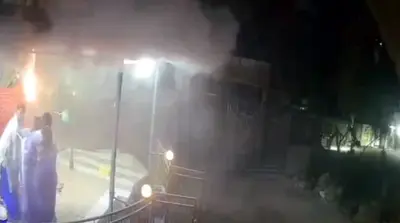
According to eyewitnesses and multiple human rights sources, the Indigenous Jumma community began organizing peaceful protests, rallies, and road blockades from 27 September, demanding the arrest of the rapists and justice for the victim. A massive protest was held in Khagrachhari town that morning. While the demonstration remained peaceful during the early hours, tensions began to escalate in the afternoon when Bengali settlers allegedly backed by military forces launched attacks on Indigenous residential areas.
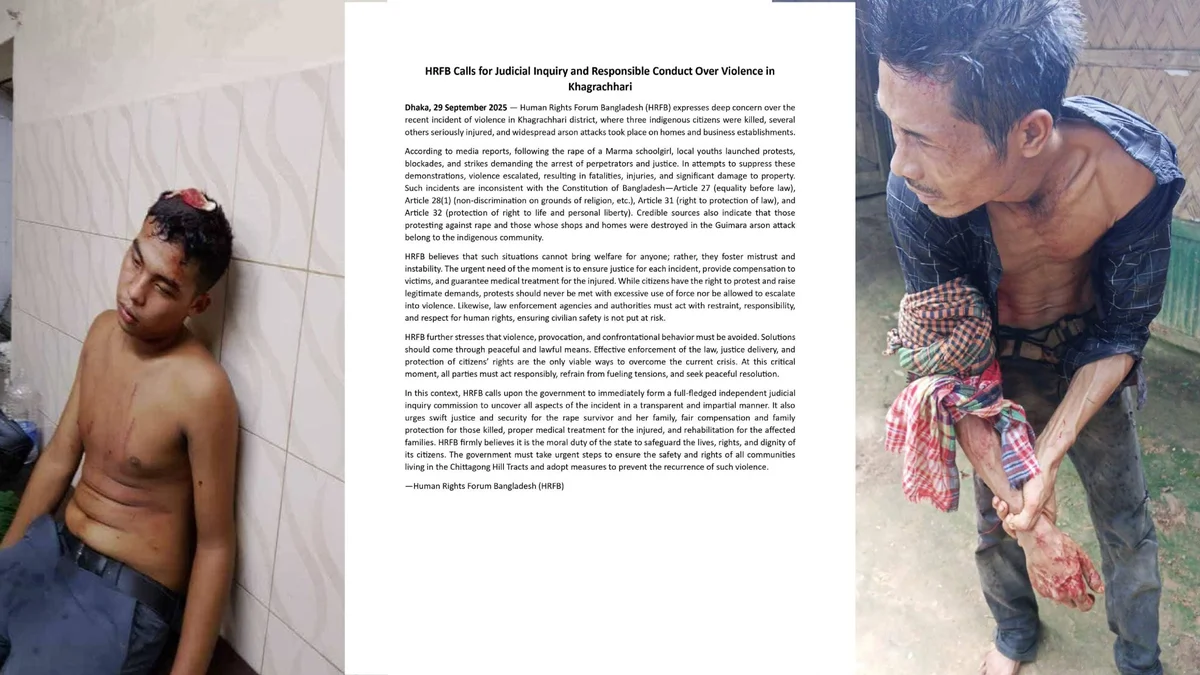
Reports indicate that during the clashes, law enforcement authorities imposed Section 144 to prevent public gatherings. However, the imposition of this restriction created conditions that allegedly enabled settler groups, with military protection, to carry out violent attacks on Indigenous-inhabited neighborhoods such as Narankhya and Mohajan Para. Local witnesses stated that the settlers threw bricks and used slingshots while military personnel stood behind them, offering protection and support. In the ensuing violence, several Indigenous residents were injured, including Rikan Chakma (29), Kumia Tripura (25), and Kongsai Marma (22).
The situation deteriorated further on 28 September in Guimara, a small township located about 30 kilometers from Khagrachhari municipality.
Indigenous communities there had also organized a peaceful road blockade in protest of the rape. However, the protest turned deadly when military personnel and Bengali settlers allegedly opened fire on the demonstrators and launched arson attacks on surrounding villages.
Three Indigenous youths were killed in the violence: Akhrau Marma (22), Teiching Marma (20), and Athuiprue Marma (21). At least 15 others were injured, and five individuals remain missing. The attackers reportedly burned down 15 homes, 60 shops, and 13 motorbikes, and looted at least seven shops.
In a press release issued on 29 September, the Human Rights Forum Bangladesh (HRFB) expressed grave concern over the escalation of violence and loss of life. Citing Articles 27, 28(1), 31, and 32 of the Constitution of Bangladesh, the organization condemned the apparent disregard for legal protections afforded to all citizens. HRFB emphasized that the right to protest cannot be met with excessive force and that the state has a moral duty to protect all its citizens equally.
HRFB called for the formation of a full-fledged independent judicial inquiry commission to investigate all aspects of the incident transparently and impartially. The organization also demanded swift justice for the rape survivor, proper medical care for the injured, fair compensation for the families of those killed, and immediate rehabilitation for all affected families. “This type of situation brings no benefit to anyone. Instead, it sows mistrust, deepens division, and undermines peace,” HRFB stated.
International condemnation also followed. On 29 September, the CHT Indigenous Peoples’ Council of Canada (CHTIPCC) submitted a memorandum to Volker Türk, United Nations High Commissioner for Human Rights, and Peter N. Due, Director of the Asia and the Pacific Division of the UN’s Department of Political and Peacebuilding Affairs. Signed by CHTIPCC President Preeti B. Chakma, the memorandum urged the UN to press the Government of Bangladesh for an impartial investigation, justice for the rape survivor, and compensation for those injured or affected by the attacks.
The CHTIPCC also demanded full implementation of the long-stalled 1997 Chittagong Hill Tracts (CHT) Accord, including the removal of all military camps from the CHT, transfer of administrative powers to regional authorities, operationalization of the Land Commission, and relocation of Bengali settlers outside Indigenous territories. In a separate appeal, the group urged the United Nations peacekeeping mission to suspend Bangladesh military personnel from peacekeeping duties until they demonstrate commitment to peace and accountability in their own country.
The memorandum highlighted that instead of protecting civilians or apprehending the rapists, the military took part in the attacks against Indigenous communities. This, according to the organization, is a recurring pattern in the CHT and a root cause of ongoing human rights violations.
The two days of violence in Khagrachhari have once again drawn national and international attention to the persistent insecurity and marginalization faced by Indigenous peoples in the CHT. Human rights groups argue that until meaningful action is taken—including justice delivery, full implementation of the CHT Accord, and protection of Indigenous rights—such violence will continue to undermine peace and coexistence in the region.