
Interim Government Has Turned Minorities into Second-Class Citizens: Robayet Ferdous
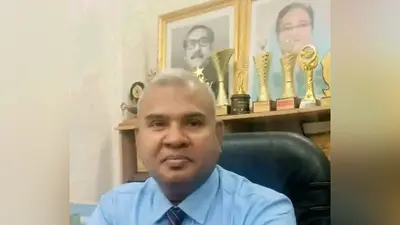
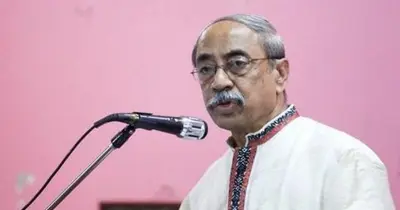
The interim government has turned religious and ethnic minorities into “second-class citizens” over the past one and a half years, commented Robayet Ferdous, a professor of the Department of Mass Communication and Journalism at the University of Dhaka.
He said, “The achievement of the 18-month interim government is that Hindus, Buddhists, and Christians of Bangladesh have been permanently turned into second-class citizens. They have been permanently reduced to second-class citizens.”
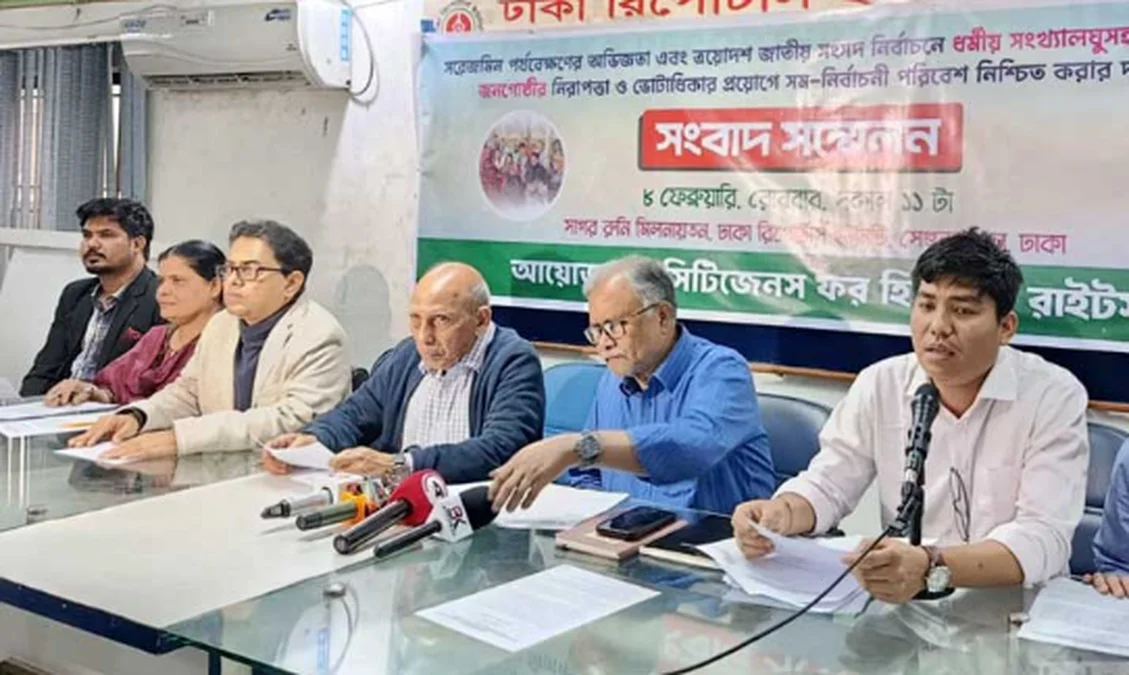
He made these remarks on Sunday at a press conference held at the Sagar-Runi Auditorium of the Dhaka Reporters Unity. The press conference was organised by ‘Citizens of Human Rights’ after visiting the burnt houses of minority communities in Raozan and Mirsharai of Chattogram.
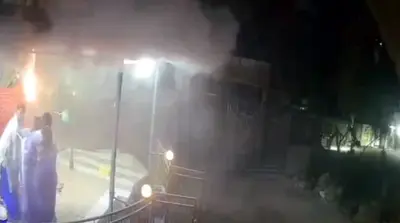
Recently, at least 19 houses belonging to followers of the Sanatan religion were set on fire in Raozan and Mirsharai of Chattogram. It was stated at the press conference that these arson attacks were carried out at night after locking the houses from outside.
Referring to such “brutal incidents” against minorities ahead of the election, Robayet Ferdous said, “We saw that in Mirsharai there was no robbery, nothing was taken away. The houses were set on fire by fastening the latches from outside. That means panic was created. An attempt to burn people alive again. Creating fear so that they do not go to vote.”
He added, “If they do not go to vote, they will again be linked to a particular political party and it will be said that they boycotted the election for that reason. Again, defeated candidates say, ‘Because of you, I could not win.’”
Commenting that minorities are trapped in this “dual paradox,” Professor Robayet Ferdous said, “You are talking about voting, but the person who goes to vote must be given security, and it must be ensured whether he can return and stay in his home safely.”
He said that the failure of the administration—from maintaining law and order to stopping bribery and lobbying culture—has further intensified the insecurity of minorities. When the state, law, and administration distance themselves from marginalised people, helpless individuals are left with no option other than entrusting justice to God.
“Islam is the state religion of Bangladesh, but other religions could not be practiced peacefully during these 18 months. We have seen that other religions cannot be practiced peacefully.”
In a written statement, Zakir Hossain, Chief Executive of Citizens of Human Rights, detailed the incidents of arson targeting the homes of followers of the Sanatan religion in Raozan and Mirsharai.
He said, “These incidents make it evident that the intention of the arsonists was to burn all members of these families alive. People of the Sanatan religion in these areas are now staying awake at night, taking turns to sleep, and monitoring the area by installing CCTV cameras for security.”
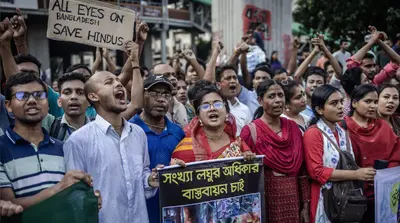
“The primary objective of such violence against minority communities ahead of the election is to spread fear in different areas and deprive minorities of exercising their voting rights.”
On behalf of his organisation, Zakir placed five demands, including
Issuing specific instructions to law enforcement agencies to take special and effective initiatives and measures to ensure voter security in minority-dominated electoral areas, and forming a high-level special central administrative cell to regularly monitor this issue;
Investigating all forms of violence committed against minorities in Raozan, Mirsharai, and other parts of the country, arresting the perpetrators swiftly, and taking legal action;
Ensuring adequate compensation and rehabilitation for the victims;
Taking appropriate measures to address the psychological trauma of the victims;
Ensuring that the Human Rights Commission prioritises monitoring the issue and takes necessary actions.
In his statement, Zakir Hossain also called upon all election-oriented political parties to play an active role in ensuring the voting rights of religious and ethnic minorities and providing post-election security.