
Bangladesh Sees Over 100 Killed in Mob Attacks in Past Year; Experts Demand Human Rights Reform
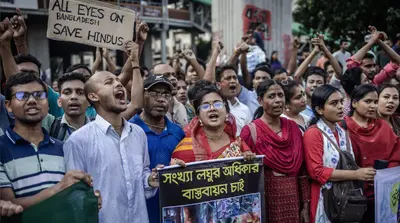
At least 111 people have died in mob attacks across Bangladesh over the past year, signaling a deepening human rights crisis, experts warned on Wednesday.
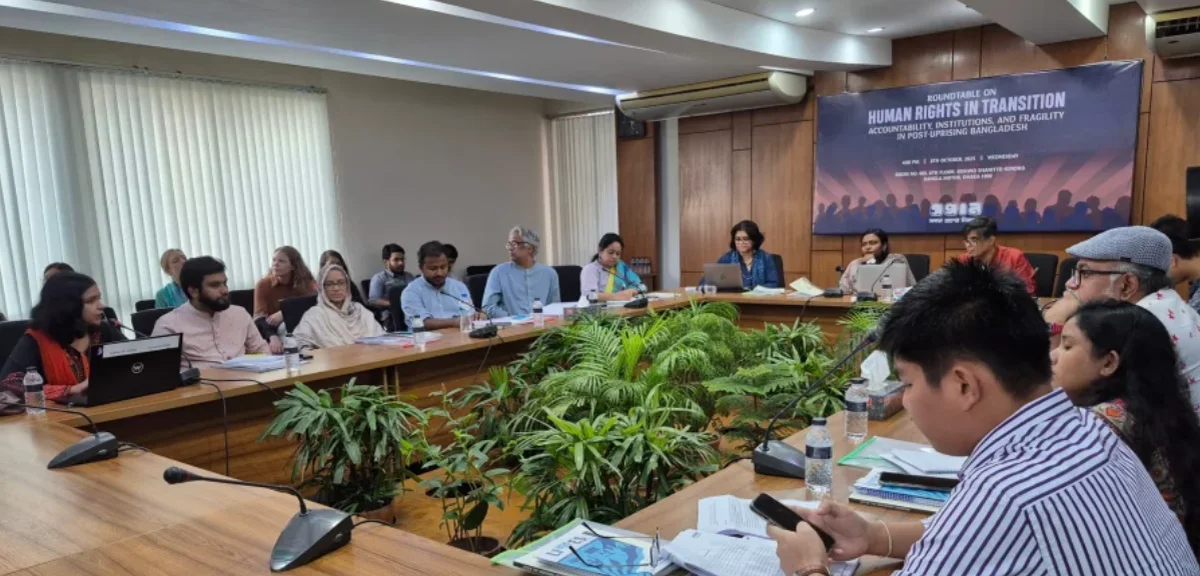
During a roundtable discussion titled “Human Rights in Transition: Accountability, Institutions, and Fragility in Post‑Uprising Bangladesh” at Bishwo Shahitto Kendro, scholars, civil society representatives, and rights defenders urged urgent institutional reform and stronger mechanisms of accountability.
Organized by Sapran (Shokol Praner Nirapotta)—a research‑driven human rights think tank established after the 2024 mass uprising—the event highlighted findings from Sapran’s new report: “After the Monsoon Rebellion: Assessing the State of Human Rights in Transitional Bangladesh (Aug 2024 – July 2025).”
The report documents a disturbing escalation in violations and violence:
- 496 attacks on journalists
- 195 mob lynchings
- 640 cases of violence against children
- 35 extrajudicial killings
- 45 deaths and 300 injuries from labor rights abuses
- 24 attacks on indigenous people
- 2,878 murders nationwide
- 34 persons killed and over 2,000 pushed across borders
Speakers argued that the rise in mob violence, digital vigilantism, and declining public confidence in justice institutions stems in large part from the lack of effective justice and accountability systems.
Digital misinformation and hate speech were singled out as significant drivers of this violence. Shafiqul Alam, press secretary to the chief adviser, noted: “Every day, thousands of fake posts are spread online, while only a handful are fact‑checked. Facebook has fueled hatred, including violence against minorities. These platforms must be held accountable.”
Activist Mosfiqur Rahman Johan voiced concerns over extrajudicial killings and the death penalty, citing many occur without proper legal documentation. “The state’s role is to protect life, not to end it,” he declared.
Ethnic and minority voices also expressed deep frustration about exclusion in policymaking. Satej Chakma of IP NEWS BD asked how an inclusive state can be built when women and Indigenous communities are absent from consensus commissions. Sanjida Islam Tulee of Mayer Daak criticized the National Human Rights Commission’s inaction despite repeated appeals: “Over 3,500 extrajudicial killings have taken place in recent years. Of the 1,850 people reportedly disappeared, 335 never returned. We need a truth commission to uncover what really happened.”
Sara Hossain, senior advocate of the Supreme Court, reminded the audience that many citizens are unaware even of the constitution, law, or basic human rights—and that marginalized voices remain unheard though essential to meaningful reform.
The roundtable concluded with a common consensus: for Bangladesh’s democratic transition to succeed, the restoration of public trust, comprehensive accountability, and respect for human rights must form the foundation of governance.