


Lemkin Institute Urges Immediate Release of Shahriar Kabir Over Rights Concerns
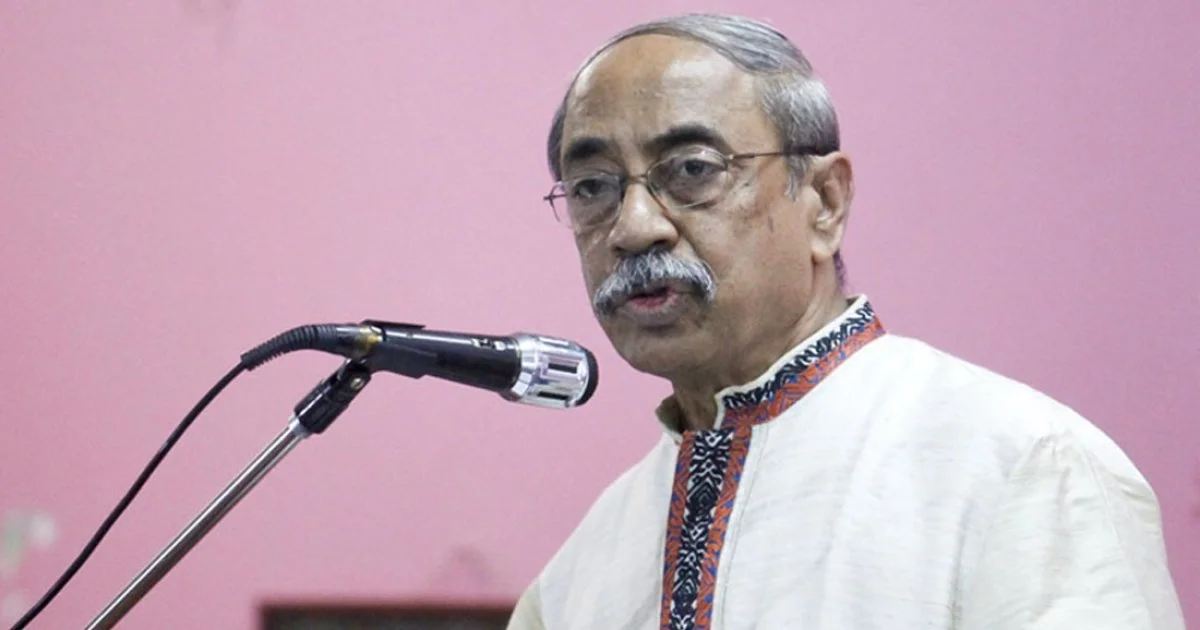
The Lemkin Institute for Genocide Prevention and Human Security views the detention of writer, researcher, and internationally recognized human rights activist Shahriar Kabir known as a close associate of the ousted Awami League government as a violation of fundamental civil and political rights.
The organization also considers the process of arresting Shahriar Kabir, who serves as the president of the advisory council of the Ekattorer Ghatak Dalal Nirmul Committee, to be in conflict with Bangladesh’s obligations under international law.
The Belarus-based Lemkin Institute has called on the Bangladesh government to immediately release the 75-year-old journalist.
In a statement issued on January 5, the Lemkin Institute alleged serious procedural “irregularities” in the arrest and subsequent detention of Shahriar Kabir.
Earlier, in November, the United Nations Human Rights Council (UNHRC) stated that “legal standards were violated” in the process of his arrest. The UNHRC had demanded not only his release but also compensation.
Following the July uprising, Shahriar Kabir was detained on the night of September 17 from the Banani area of Dhaka. Later, police showed him arrested in multiple cases related to the July movement. Since then, the human rights activist and filmmaker has remained in prison.
He has been interrogated multiple times after being placed on remand in these cases. Despite applying for bail, it has not been granted.
In its statement, the Lemkin Institute also highlighted Bangladesh’s failure to follow the mandatory directives of the Supreme Court regarding arrest, remand, and due legal process.
The organization stated that while Shahriar Kabir was already in custody in other cases, he was shown arrested in a case at the International Crimes Tribunal (ICT).
This tribunal, established to try crimes against humanity committed in 1971, has brought charges of “crimes against humanity and genocide” against Shahriar Kabir. These charges relate to casualties that occurred during a law enforcement operation against a Hefazat-e-Islam program in Dhaka on May 5, 2013.
However, Shahriar Kabir has never held any position in the Bangladesh government, nor did he have any role in the law enforcement operation against the Hefazat-e-Islam program.
The case also names the ousted Prime Minister Sheikh Hasina and several others.
In its statement, the Lemkin Institute said that Shahriar Kabir is scheduled to be produced before the tribunal on January 12, and an order framing charges against him may be issued on that day.
The statement added that considering the “conduct” of the interim government and the courts since August 2024, the organization has no expectation that Shahriar Kabir’s trial will be conducted in accordance with the legal provisions of the Bangladesh Constitution or international standards.
The organization fears that a verdict may be delivered against Shahriar Kabir without evidence or due process, and that he could be sentenced to death.
According to the Lemkin Institute, Shahriar Kabir’s deprivation of liberty is linked to his long-standing stance in favor of secularism, his vocal opposition to religious extremism, and his criticism of Jamaat-e-Islami over its role in 1971. In addition, he enjoys wide acceptance among young people.
The statement also refers to a bail hearing in a murder case, where the prosecution directly cited a televised debate between Shahriar Kabir and a religious leader. At that time, the prosecution openly stated that his detention was not due to any “proven criminal activity,” but rather because of his “political position.”
The statement said that Shahriar Kabir has been detained to prevent him from criticizing the interim government led by Muhammad Yunus and from being vocal in favor of secularism. He has also been deprived of the opportunity to travel abroad and speak about the current crisis of democracy in Bangladesh.
Pointing out that the researcher cannot move without a wheelchair, the Lemkin Institute said Shahriar Kabir suffers from various age-related ailments and other illnesses. At the time of his arrest, he was not allowed to take his necessary medications, and since then he has been detained in conditions that do not meet even the minimum standards of humane treatment.
The organization said that despite the deterioration of Shahriar Kabir’s physical condition, he has been repeatedly placed on remand. Requests for adequate medical care and specialized treatment while in detention have also been repeatedly denied. Various reports have stated that he did not receive necessary medication or proper medical services, which constitutes a violation of international human rights standards.
The Lemkin Institute stated that while being produced before court wearing a helmet and handcuffs, Shahriar Kabir was subjected to a “mob” attack and verbal abuse. A video circulated on social media shows that during the mob attack, police were more focused on ensuring their own safety than protecting Shahriar Kabir. Court authorities did not allow him to use a wheelchair; he was prevented from using the elevator to access the courtroom; and he was denied the opportunity to sit during court proceedings. In addition, by failing to ensure a safe environment, authorities made it nearly impossible for him to appoint a lawyer of his choice.
Through these actions, the authorities failed to protect Shahriar Kabir’s safety and dignity and did not ensure effective legal defense, the Lemkin Institute said.
The genocide prevention and human security organization stated that, according to the findings of a UN working group, Shahriar Kabir’s arrest falls under the category of “arbitrary detention.”
While cases against him were ongoing in Bangladesh, a complaint was filed early last year with the UNHRC on behalf of liberation war researcher Shahriar Kabir, raising multiple allegations of violations of legal process.
Later, the UNHRC Working Group presented its position on those allegations under the heading of “arbitrary detention.”