Human Rights Bodies Raise Alarm Over Eroding Democratic Space in Bangladesh
Global human rights organisations have voiced grave concern over what they describe as an alarming deterioration of the rule of law in Bangladesh, citing the targeting of politicians, activists, major media outlets, and cultural institutions amid rising political tensions ahead of the 2026 national election.
In a joint statement shared by Human Rights Watch on Monday, the organisations said the recent developments signal a shrinking space for free expression, civic engagement, and democratic participation.
“We stand in solidarity with Bangladesh’s journalists, media workers, artists, and diverse communities,” the statement said, reaffirming the groups’ commitment to defending freedom of expression, accountability, and the right of all communities to participate safely and freely in civic and cultural life, both online and offline.
The statement was signed by Access Now, Article 19, the Committee to Protect Journalists, Human Rights Watch, the International Truth and Justice Project, Journalists for Democracy in Sri Lanka, and the Tech Global Institute.
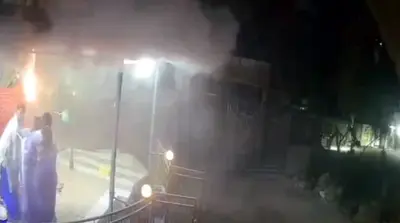
The organisations strongly condemned the violent attacks carried out on December 18, 2025, on the offices of Prothom Alo and The Daily Star—two of South Asia’s most established and respected media outlets—as well as the vandalism of Chhayanaut, one of Bangladesh’s most prominent cultural and educational institutions.
According to the rights groups, these apparently coordinated attacks represent a serious escalation in violence against independent media, journalists, activists, and cultural spaces in the country.
They also expressed deep alarm over credible reports that Dipu Chandra Das was publicly beaten to death and burned in Bhaluka Upazila of Mymensingh on the same night, following allegations that he had made “derogatory remarks” about religion.
The statement noted that these incidents came shortly after the killing of Sharif Osman Hadi, a political activist and prominent figure in Bangladesh’s July 2024 uprising, who was shot in broad daylight in Dhaka on December 12 and died six days later.
The organisations said they were particularly disturbed by verified reports indicating that journalists and staff members were trapped inside the burning premises of the two media houses, facing immediate threats to their lives. Any failure by the authorities to respond swiftly and effectively in such situations, they said, constitutes a breach of the state’s fundamental duty to protect life.
They further highlighted that the forced temporary suspension of both print and online editions of the newspapers marked an unprecedented disruption to Bangladesh’s media environment, underscoring the severity of the threats faced by independent journalism. The harassment and physical intimidation of journalists at the scene, they added, reflects the growing confidence of those seeking to undermine media freedom in the absence of effective state protection.
The attack on Chhayanaut, the organisations said, points to a broader pattern of hostility toward cultural institutions and practitioners, creating an increasingly unsafe environment for artistic expression and diversity of opinion.
“These developments reflect a dangerous convergence of online and offline violence, reinforced by long-standing patterns of coordinated harassment and state-sanctioned surveillance that have fostered a culture of impunity,” the statement said.
The groups noted a documented pattern throughout the year of attacks on freedom of thought and expression, including the misuse of legal mechanisms, intimidation, and violence targeting bauls, journalists, media workers, and artists.
Several of these attacks, they said, appear to have been fueled by hate speech and explicit calls to violence circulating online, allegedly posted by prominent individuals with large social media followings and amplified by their networks.
The continued spread of such content, the organisations said, highlights the technology sector’s failure to meet its human rights responsibilities and its chronic underinvestment in user safety in the Global Majority.
They also pointed to the state’s failure to respond effectively to online hate and incitement, despite well-documented patterns of violent mobilisation. While the interim government has proposed wide-ranging cyber law reforms, which have drawn criticism from civil society for lacking substance, practicality, and meaningful consultation, the persistent incitement to violence online raises serious doubts about the government’s commitment to online safety.
Bangladesh, the organisations said, has binding obligations under international human rights law, including the International Covenant on Civil and Political Rights (ICCPR), as well as constitutional guarantees protecting freedom of expression, media freedom, cultural life, political participation, and personal security.
They called on the interim government to take immediate and effective steps to protect journalists, media workers, media organisations, and cultural and intellectual institutions nationwide, including deploying adequate security measures where credible threats exist.
The groups also urged swift, independent, and transparent investigations into the attacks on Prothom Alo, The Daily Star, Chhayanaut, and other journalists and artists, ensuring that all perpetrators, planners, and instigators are held accountable through due process of law and that victims and their families receive effective remedies.
Additionally, they called on the government to engage technology companies and social media platforms to implement timely and proportionate measures against hate speech and incitement to violence, and to work with civil society and human rights organisations to safeguard free expression and user safety during the election period.
Finally, the organisations urged the government to publicly and unequivocally condemn all acts of violence, intimidation, and harassment against media and cultural institutions, and to align national laws, policies, and practices with Bangladesh’s constitutional and international human rights obligations ahead of the 2026 national election.