



The UK Parliament’s Motion and Its Impact on Bangladesh’s Political Crisis

History is rarely forgiving toward interim governments that mistake moral symbolism for governing capacity. Bangladesh’s current situation under the interim administration led by Muhammad Yunus increasingly reflects this pattern. What began as a temporary corrective phase following the resignation of the previous government—welcomed both domestically and internationally—now appears to be drifting into a troubling exercise of power without accountability.
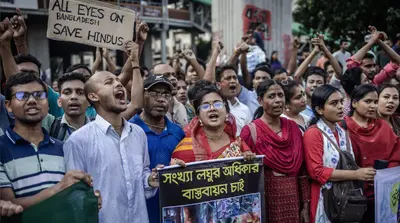
Against this backdrop, the UK Parliament’s Early Day Motion (EDM) 2428, tabled in December 2025, should not be dismissed as routine parliamentary symbolism. It represents a clear diplomatic signal. The motion documents prolonged detentions without charge of former lawmakers, journalists, and judges; a renewed pattern of human rights violations; over forty reported extrajudicial killings in just over a year; and serious concerns about minority protection and judicial due process. These are not fringe allegations. They are concerns formally recorded by British MPs spanning the political spectrum—from Labour and Conservatives to Greens, Liberal Democrats, regional parties, and independents. Such consensus rarely forms without substantial cause.
At the heart of the Yunus administration’s challenge lies a structural contradiction. It derives legitimacy from international respect and moral standing, yet lacks an electoral mandate and effective domestic checks. Interim governments are designed to stabilize transitions, not to govern expansively or indefinitely. Their purpose is to facilitate credible elections, not to normalize prolonged detentions, opaque legal processes, or coercive enforcement.
The principle that justice delayed is justice denied resonates sharply in today’s Bangladesh. Detention without charge undermines the rule of law more corrosively than flawed judicial outcomes ever could. When journalists and judges themselves are subjected to incarceration, the message is unmistakable: no institution is insulated from state power.
What deepens concern is the absence of extraordinary circumstances. These developments are not unfolding amid civil war or systemic collapse. They are occurring under an administration that presents itself as ethical, reformist, and internationally respectable. This dissonance explains why scrutiny—both domestic and international—is intensifying.
Internally, the consequences are destabilizing. Political detentions have hardened polarization rather than easing tensions. Judicial credibility is strained not only by politicization but by enforced inertia. Law enforcement agencies, already burdened by past controversies, are once again associated with extrajudicial practices, undoing years of reputational repair.
Minority communities, explicitly referenced in the EDM, face renewed vulnerability. In transitional systems reliant on coercion, minorities often become pressure points—politically exposed and symbolically expendable. The interim government’s inability to provide unequivocal reassurance to these groups is not a marginal issue; it is a strategic miscalculation with long-term societal costs.
Economic implications follow swiftly. Investors assess governance risk as closely as financial indicators. Persistent political detentions and rising international scrutiny raise doubts about regulatory stability, contract enforcement, and reputational exposure. Bangladesh’s development narrative, carefully built over decades, now risks being eclipsed by governance concerns.
Internationally, the shift in perception has been notable. Muhammad Yunus once commanded near-universal admiration in Western capitals as a symbol of ethical leadership. That moral capital is eroding. While the EDM carries no direct penalties, it places Bangladesh firmly within the human rights focus of Western legislatures—and that matters.
Early Day Motions are often underestimated. In reality, they shape parliamentary agendas, influence media discourse, and inform executive decision-making. When lawmakers across parties publicly urge respect for due process, it signals diminishing patience.
The most serious risk for the interim government is not foreign criticism, but domestic delegitimization amplified by international concern. Interim administrations rely on trust—the belief that they will neither overstay nor overreach. Each detention without charge weakens that trust. Each extrajudicial killing accelerates its erosion.
History offers cautionary parallels. Transitional arrangements in other countries have faltered when coercion replaced restraint. Bangladesh is not predetermined to follow those paths—but denial is often their first step.
The solution is neither confrontation nor capitulation. Bangladesh does not require rescue from chaos; it requires restraint, legality, and a credible roadmap back to democratic normalcy. The UK Parliament’s motion should be read not as hostility, but as an early warning. History suggests that governments ignore such signals at their own peril—not because external critics are always right, but because legitimacy, once lost, is rarely recovered on one’s own terms.
Source: BLiTZ