



From Executioner to Activist: The Hypocrisy of Lt. Colonel Hasinur Rahman’s Justice Campaign
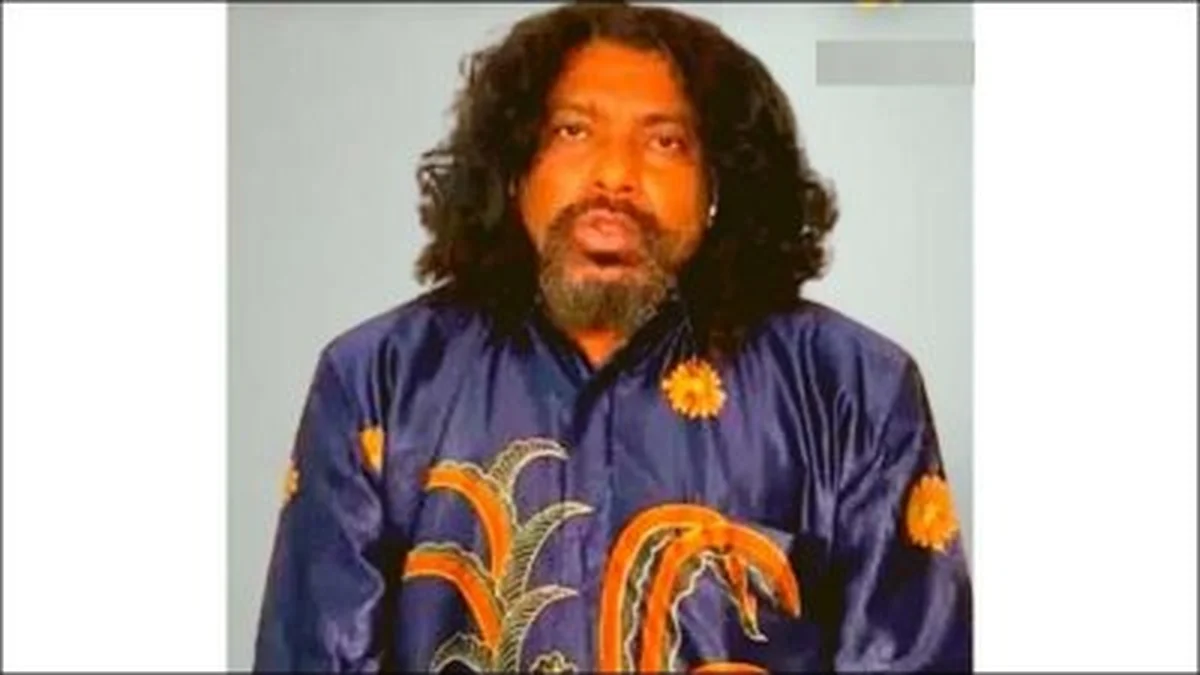
In Bangladesh, political theatrics staged under the banner of “human rights” are not uncommon. Yet when the protagonist of such a performance is a dismissed army officer accused of treason, rebellion, and extrajudicial killings, the spectacle becomes an outright insult to the nation’s conscience.
Lt. Colonel (Dismissed) Hasinur Rahman, once a commanding officer in the elite Rapid Action Battalion (RAB), now publicly presents himself as a victim of enforced disappearance—ironically demanding justice for the very crimes he once oversaw. To many in Bangladesh, this is nothing less than a parody of morality — a self-proclaimed human rights defender whose own record is marred by bloodshed.
Between 2004 and 2006, Hasinur held several command positions across RAB units, including as Commanding Officer of RAB-7 in Chittagong. During that period, RAB earned international infamy for a series of so-called “crossfire” killings—a euphemism for extrajudicial executions.
According to Human Rights Watch (HRW), RAB-7 under Hasinur’s leadership was responsible for 57 crossfire killings, accounting for nearly 15.5% of all RAB killings nationwide during those two years.
In September 2004, ten individuals suspected of criminal activity were shot dead near a police station in Chittagong. Just two months later, Mohiuddin Mohim, a Bangladesh Chhatra League leader, and Iqbal Bahar Chowdhury, a Chhatra Dal leader, were arrested and later killed in alleged “crossfire” incidents—both operations carried out under Hasinur’s command.
Contemporaneous media archives and human rights documentation point to RAB’s systematic campaign of state-sanctioned violence during that era. Officers like Hasinur were not bystanders—they were key architects of the policy of execution without trial.
Following years of service marred by controversy, Hasinur was dismissed from the Bangladesh Army on charges of anti-state activities and insubordination. His expulsion marked the culmination of a career defined by betrayal of both military discipline and moral duty.
Yet, years later, the same man now presents himself as a victim of state injustice, speaking before international forums and media outlets about enforced disappearances and extrajudicial killings — issues he once enabled and executed from within the system.
To the public and victims’ families, this spectacle reeks of hypocrisy. A man whose own command left a trail of human suffering cannot credibly posture as a champion of human rights. His new rhetoric, they say, is not driven by repentance or reform but by personal vendetta and opportunism.
Bangladeshis who remember the early years of RAB operations recall the fear and silence that gripped ordinary citizens. The memory of those “crossfire” years is still fresh — families torn apart, young men disappearing without explanation, and justice denied.
For those who lived through that time, Hasinur’s newfound activism feels like a cruel mockery. He speaks of justice for others, yet has never accounted for his own complicity in the same crimes.
“It is like a butcher preaching about compassion,” one Dhaka-based rights activist told local media. “Before he talks about justice, he should first face it himself.”
Human rights, observers note, cannot be selectively invoked. True accountability requires honesty about one’s own actions. Hasinur Rahman’s attempt to reposition himself as a moral crusader only exposes the fragility of Bangladesh’s political discourse, where perpetrators often reinvent themselves as victims when the winds of power shift.
While the debate over enforced disappearances remains a legitimate and urgent issue in Bangladesh, its credibility is undermined when figures like Hasinur attempt to weaponize it for personal rehabilitation.
Bangladesh’s human rights narrative deserves better than to be hijacked by those with a bloodstained past. Justice cannot be selective — and it must apply equally to those who once held power and to those who suffered under it.
The time has come not for Lt. Colonel Hasinur Rahman to demand justice, but to face it.