Bangladesh Faces Human Rights Crisis as Interim Government Falters, HRW Warns
Bangladesh has failed to achieve the expected improvement in its human rights situation under the leadership of the interim government headed by Professor Muhammad Yunus, according to a new assessment by New York–based international human rights organization Human Rights Watch (HRW).
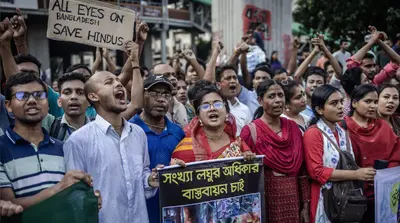
In its World Report 2026, published on February 4, HRW states that more than a year after assuming power, the interim government has struggled to control the law and order situation, uphold the rule of law, and implement the promised human rights reforms. Instead, the report highlights the continued prevalence of arbitrary arrests, mass detentions, custodial deaths, and restrictions on freedom of expression.
HRW warns that these ongoing practices pose a serious threat to Bangladesh’s democratic future and the protection of fundamental rights.
Arbitrary Detention and Denial of Due Process
According to HRW, the long-criticized practice of naming hundreds of unidentified individuals as suspects in criminal cases has continued under the interim government. The organization reports that hundreds of political leaders, activists, and supporters remain in custody as suspects in murder cases without trial, with bail applications routinely denied.
Among those detained are individuals from diverse professional backgrounds, including actors, lawyers, musicians, and civic activists. HRW notes that such practices violate both international human rights law and the fundamental principles of due process enshrined in Bangladesh’s Constitution.
‘Operation Devil Hunt’ and Allegations of Mass Arrests
Following violent clashes in February, the interim government launched a special security operation named “Operation Devil Hunt.” According to HRW, at least 8,600 people were arrested during the operation. In many cases, authorities reportedly used provisions of the Special Powers Act and counterterrorism laws—legal tools that have historically been criticized for being used to suppress dissent.
HRW also describes the filing of multiple murder cases against thousands of unidentified individuals after incidents of violence in districts such as Gopalganj as arbitrary and politically motivated. Although the government has denied carrying out mass arrests, the organization says the scale and pattern of detentions remain deeply concerning.
Custodial Deaths and Deteriorating Law and Order
Citing data from the Bangladeshi human rights organization Odhikar, HRW reports that at least 40 people have been killed by law enforcement agencies since the interim government took office. Of these, at least 14 are alleged to have died as a result of torture while in custody.
The report further notes that nearly 8,000 people have been injured and at least 81 killed in incidents of political violence. At the same time, mob violence has surged across the country. According to figures from Ain o Salish Kendra, at least 124 people were killed in mob lynchings between June and August 2025 alone.
HRW states that the government has failed to take effective measures to curb the activities of extremist religious groups and organized criminal networks, leaving ordinary citizens increasingly vulnerable.
Limited Progress on Accountability
The report acknowledges that the interim government has taken some steps to address past serious human rights violations but emphasizes that progress toward holding perpetrators accountable has been extremely limited. HRW highlights allegations that members of the security forces have obstructed investigations, destroyed evidence, and failed to cooperate with accountability mechanisms.
According to the organization, without meaningful accountability, the cycle of human rights abuses is likely to continue.
Reform Commissions Without Implementation
After assuming power, the interim government formed several commissions to recommend reforms in areas including the judiciary, electoral system, policing, women’s rights, labor rights, and the Constitution. An additional consensus commission chaired by Professor Yunus was later established to finalize reform proposals.
However, HRW notes that deep political disagreements and a lack of decisive leadership have prevented most recommendations from being implemented. Despite the announcement of the “July Declaration” and the more detailed “July Charter,” the government has failed to present a clear and actionable reform roadmap to the public.
Failure to Protect Women and Minority Rights
The report finds that sexual and gender-based violence against women and girls remains widespread, with victims facing severe barriers to justice. HRW criticizes the government for failing to take a firm stance in support of women’s rights reforms amid pressure from conservative and extremist groups.
The situation for ethnic and religious minorities has also deteriorated. HRW documents attacks on minority communities in Rangpur and the Chittagong Hill Tracts, including the destruction of homes, sexual violence, and other forms of abuse. The lack of effective action against perpetrators has contributed to a climate of impunity.
Shrinking Space for Freedom of Expression
HRW states that amended provisions of the Cyber Security Act and counterterrorism laws continue to allow undue restrictions on freedom of expression. Throughout 2025, journalists faced numerous attacks, often perpetrated by political actors or violent mobs, while accountability for these attacks remained rare.
Writers and online activists have also faced criminal cases, including charges related to “hurting religious sentiments,” further chilling free speech.
Economic and Social Rights Under Pressure
The report notes that high inflation, unemployment, and deepening inequality have placed significant strain on living conditions, particularly for low-income communities. Youth unemployment remains alarmingly high, while labor protections especially in the informal sector remain weak, exacerbating social instability.
HRW’s Warning
In its concluding remarks, Human Rights Watch warns that unless the interim government immediately ends arbitrary detentions, ensures due process, establishes accountability for abuses, and implements meaningful reforms, Bangladesh’s human rights situation is likely to deteriorate further.
The organization also urges the international community to maintain close scrutiny of developments in Bangladesh and to prioritize human rights in their engagement with the country.