Machado or Rodriguez: Who Will Lose to Whom in Trump’s High-Stakes Gamble?
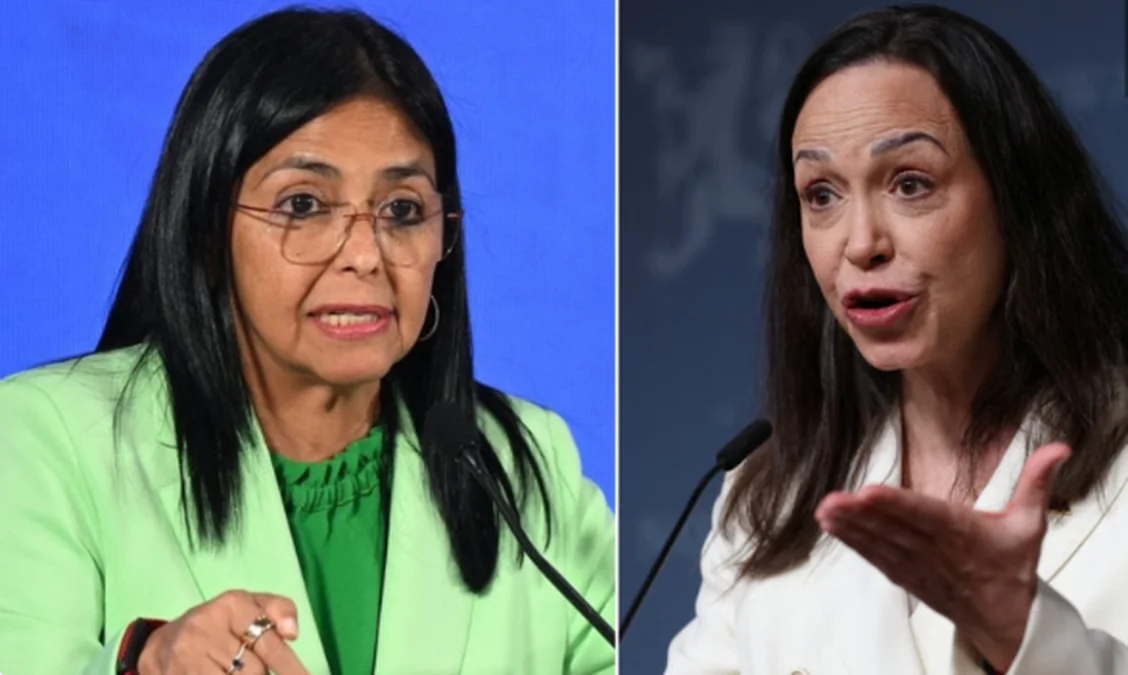
After the arrest of Venezuelan President Nicolas Maduro by the US military, extreme confusion, fear, and uncertainty have spread across Venezuela.
People in the capital Caracas and other cities are still struggling to understand who is actually running the country now and who is in power.
Various explanations regarding these questions are coming from the Trump administration, Maduro supporters, and opposition groups, each explaining their own positions.
The Associated Press (AP) has detailed these developments in a report.
What the United States Says
Following the arrest of Nicolás Maduro, US President Donald Trump said at a press conference that the United States is now taking control of Venezuela.
However, Trump did not clarify how the US would govern Venezuela, what the legal basis would be, or whether American military or civilian personnel would be deployed there. The US State Department has also remained silent on these issues.
According to Venezuela’s constitution, Maduro’s vice president, Delcy Rodríguez, is the next in line to assume power.
The country’s Supreme Court has already instructed her to take charge as interim president.
US President Trump has also expressed support for Rodríguez. According to Trump, Rodríguez is willing to work with Washington to begin a new chapter for Venezuela.
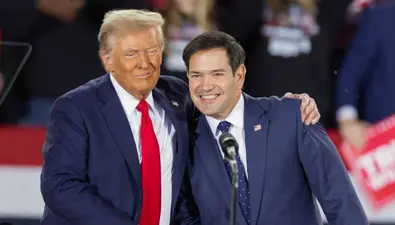
Trump told the media that Rodríguez had extensive discussions with US Secretary of State Marco Rubio, saying, “She said, ‘We will do whatever you want.’ I think she was quite humble. We will handle this properly.”
AP reported that Trump’s remarks surprised many analysts, who believe Rodríguez is unlikely to make major concessions to the United States.
Controversy Surrounding Rodríguez
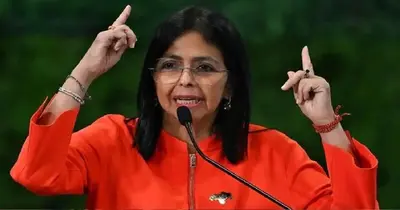
After assuming the role of acting president on Saturday afternoon, Delcy Rodríguez said in a televised address, “There is only one president in this country, and his name is Nicolás Maduro.”
She strongly condemned the US operation, demanded the release of Maduro and his wife Cilia Flores, and described the action as a violation of the United Nations Charter.
Despite assuming office, her oath-taking ceremony was not broadcast on state television.
She is also serving simultaneously as finance minister and oil minister.
Although she publicly opposes the United States, questions remain about Rodríguez’s actual role and which side she is working for.
AP analysis noted that Rodríguez and her brother Jorge Rodríguez have strong ties to Wall Street.
Educated in law in the United Kingdom and France, Delcy Rodríguez has been continuously part of the government from the era of Hugo Chávez through Maduro.
Unlike many within Maduro’s inner circle, the Rodríguez siblings have repeatedly avoided criminal charges.
AP reported that she has strong connections with US Republicans in the oil industry and on Wall Street.
In the past, intermediaries linked to Rodríguez included Blackwater founder Erik Prince and Trump’s current special envoy Richard Grenell.
Position of the Military and Government Officials
Venezuela’s Defense Minister General Vladimir Padrino López said in a video message, “We have been attacked, but they will not break us.”
Interior Minister Diosdado Cabello called on the public to take to the streets against the United States.
Following his call, people gathered in some areas, holding demonstrations and burning US flags.
However, AP reported that most Venezuelans stayed indoors out of fear.
Caracas resident Yanire Lucas told AP, “We are terrified. We don’t know what to do.”
What Machado and the Opposition Say
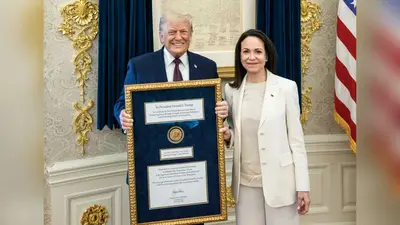
Venezuelan opposition leader and 2025 Nobel Peace Prize winner María Corina Machado wants to assume power with her allies.
Machado, who had remained mostly in hiding over the past year, said after Maduro and his wife were detained in the US operation on Saturday night, “Maduro will face international justice for brutal crimes committed against the people of Venezuela and other countries.”
She has already claimed that opposition candidate Edmundo González was the true winner of the 2024 election and insisted that he should be recognized as president.
However, although the Trump administration previously supported Machado and González and even recognized González as president, a shift in stance is now evident.
Trump told the media, “It would be very difficult for Machado to run the country. She does not have enough support or respect inside Venezuela.”
Political Transition and the Future
According to Venezuela’s constitution, if the president is absent, a new election should be held within one month.
However, experts say there are serious doubts about whether this provision can be implemented under the current circumstances, especially due to foreign military intervention.
Analysts warn that Venezuela’s future largely depends on the unity and strength of the armed forces.
They caution that if internal divisions deepen, the situation could become even more unstable and move toward greater conflict.