
Joint Declaration Passed Despite Trump’s Boycott, China’s Prominent Presence Noted
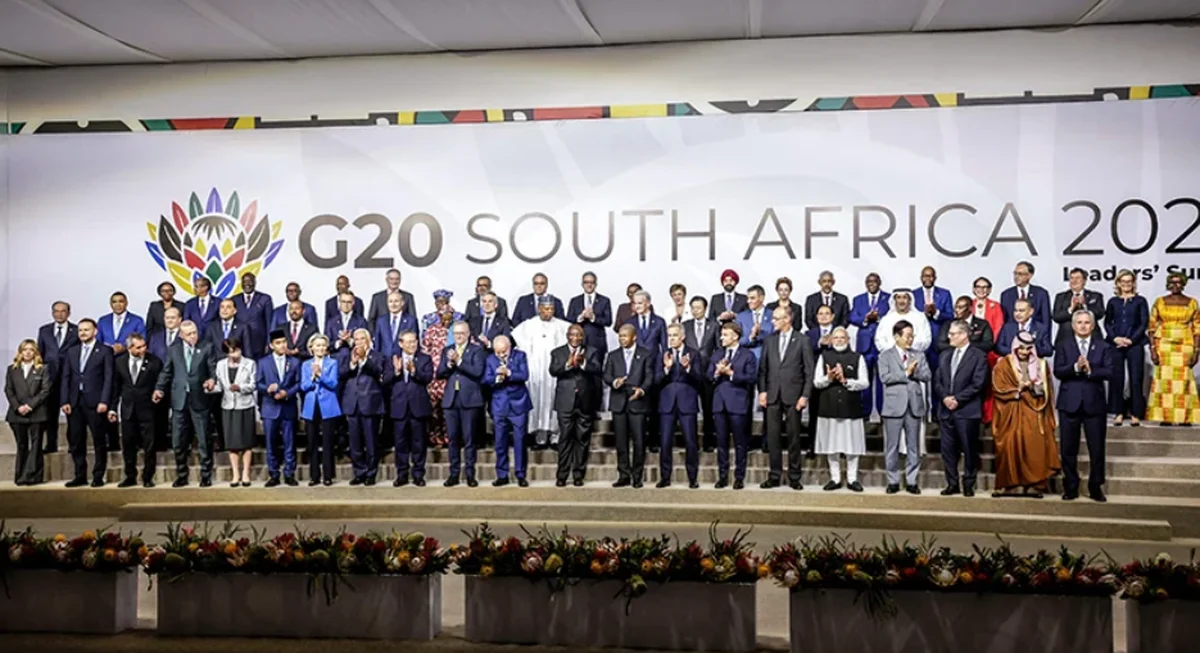
One of the world’s most important economic alliances, the G-20 Summit, has been held in Johannesburg, South Africa. The two-day (22–23 November) summit was boycotted by U.S. President Donald Trump. Even so, the leaders issued the “Johannesburg Declaration.” The major reason behind Trump’s absence was South Africa.
The host country has long been accused by Trump of persecution and oppression of white people. He had also urged countries not to sign the joint declaration. However, the joint declaration was eventually adopted. In the declaration, the leaders agreed on taking steps to combat the climate crisis and global inequality. They made a strong call for establishing peace in Palestine.
Due to Trump’s boycott, uncertainty also arose over the drafting of the declaration. However, European countries stated that such uncertainty would severely impact the alliance. “We must continue our operations in any circumstance,” they said.
Concerns Over the Future of the Alliance
The Financial Times reports that France’s President Emmanuel Macron expressed frustration over the U.S. boycott. He feared the alliance could collapse. He said, “We are living in a moment of complex geopolitics. At a time when big crises must be solved collectively, we are not finding a country like the United States on our side. It is disappointing.”
UK Prime Minister Keir Starmer agreed with Macron’s concern. He said, “There is no doubt the road ahead is difficult. We must find ways to play a constructive role amid multiple challenges.”
Instead of China’s President, the country’s Prime Minister Li Qiang attended the summit. He said unilateralism and protectionism are spreading globally. People around the world are worried about the crisis of solidarity among nations.
Crisis Over Transferring Leadership to the United States
South Africa faced a crisis regarding the handover of the G-20 presidency to the United States. Typically, the successor for the alliance’s leadership is announced at the end of the summit. But this summit presented a contrasting picture. The presidency was supposed to be transferred to the United States; however, the country’s withdrawal from the summit created complications.
A representative from the U.S. Embassy was supposed to attend the leadership-handover ceremony. But South Africa described handing over the presidency to a junior diplomatic official as insulting. The ceremony was therefore cancelled. South African President Cyril Ramaphosa’s spokesperson Vincent Magwenya said it had never happened before and would not happen again.
In his opening speech, Ramaphosa said, “We are holding the chairmanship for the first time. We will not allow any form of disrespect.”
Last August, Ramaphosa visited the United States. Trump accused him of genocide against white farmers in South Africa. Ramaphosa strongly rejected the claim. At that time, Trump showed his anger by announcing he would not attend the G-20 summit.
South Africa’s Foreign Minister Ronald Lamola said, “A multilateral platform cannot be paralyzed because of Trump’s absence. This alliance is not anyone’s personal property. Decisions will be made by the participating countries.”
The United States is scheduled to assume the presidency in 2026. It has announced that the summit will be held at Trump’s golf club in Doral, Florida. Although the United States boycotted this year’s G-20 Summit, countries including China, Russia, France, Germany, the United Kingdom, Japan, and Canada supported the declaration.
This year’s summit is considered significant for poor countries. International nonprofit organization Oxfam, which works on poverty alleviation, said, “This is the first summit in history where the rights of disadvantaged poor countries have been placed at the center of the agenda.”
122-Point Declaration Adopted — Key Areas of Consensus
The G-20 Summit adopted a 122-point declaration. The leaders agreed on stepping up global efforts to tackle climate impacts. On the day the global climate summit ended in Brazil, the leaders announced that climate financing must be increased from all global sources—rising from billions to trillions of dollars.
The G-20 declaration also called for reforming the international financial system to help low-income countries address their debt burdens. The leaders urged for just, comprehensive, and lasting peace in Ukraine, Sudan, the Democratic Republic of Congo, and Palestine, based on the UN Charter. However, Ukraine’s crisis was mentioned only once in the 30-page declaration.
Reuters reports that the declaration praised ambitious targets for increasing renewable energy. It also highlighted the suffering of poor countries.
China’s Presence at the Summit Was Striking
Xinhua reports that after the G-20 Summit began, Chinese vehicles dominated airports, hotels, and event venues, adding a distinct dimension to the event.
Chinese automakers such as Jetour, BAIC, and Chery supplied hundreds of vehicles for the summit’s shuttle fleet. Among them, Jetour contributed 70 units. The sponsorship arrangement with South Africa’s Department of International Relations and Cooperation was finalized early February.
In recent years, Chinese cars have become increasingly common on South African roads. Particularly among young consumers, brands like BYD and Jetour are gaining popularity. Ke Chuandang, President of Jetour International, reminded that South Africa has placed its trust in Chinese auto brands.
Source: Reuters, Financial Times, Xinhua