




US Eases Confusion Over H-1B Visa Fee, Major Relief for Students and IT Professionals
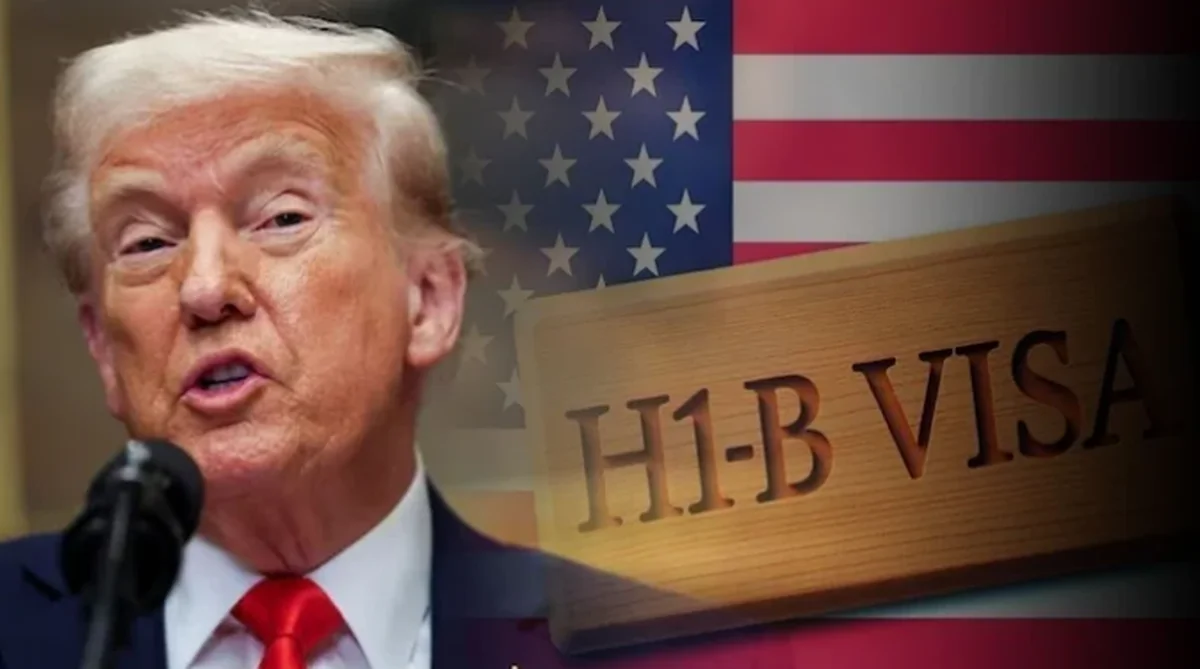
In a significant policy clarification that brings major relief to thousands of Indian students and technology professionals, the United States Citizenship and Immigration Services (USCIS) has officially narrowed the scope of the controversial $100,000 H-1B visa fee introduced last month by former President Donald Trump’s proclamation.
The agency stated that the hefty fee will apply only to new H-1B petitions filed on or after 12:01 a.m. EDT on September 21, 2025, for individuals who are outside the United States and do not already hold a valid H-1B visa. The clarification puts to rest weeks of confusion for employers and visa applicants, particularly international students and IT workers from India.
The fee—equivalent to roughly 89 lakh Bangladeshi taka—sparked outrage when first announced in September through a presidential proclamation. With vague language and little procedural guidance, it left businesses and prospective visa holders in uncertainty over how, when, and to whom the new rule applied.
Now, the USCIS has clarified that the proclamation also applies to petitions filed within the United States that request consular or port of entry processing—in other words, cases where the beneficiary intends to leave the U.S. and return after visa stamping at a consulate or inspection at a border or airport.
However, in what is being seen as the most consequential exemption, the agency confirmed that the $100,000 fee does not apply to “change of status” cases—such as when an international student on an F-1 visa transitions to an H-1B work visa without leaving the country. This is a significant win for Indian nationals, who made up 70% of all H-1B recipients in 2024, and Indian students, who represent 27% of the international student population in the U.S., according to ICE's SEVP report.
In a further relief, the USCIS also clarified that the fee is not applicable to existing visa holders, nor to petitions for amendments, status changes, or extensions filed from within the United States—even if the beneficiary later departs the country and reenters.
“The Proclamation does not apply to any previously issued and currently valid H-1B visas, or any petitions submitted prior to 12:01 a.m. EDT on September 21, 2025,” said the USCIS statement. “It also does not apply to petitions requesting amendment, change of status, or extension of stay for aliens inside the United States.”
That means a student who has legally changed status from F-1 to H-1B inside the U.S. will not be charged the fee—even if they later leave the country and return using the same petition or an approved H-1B visa.
For those seeking clarity on rare exemptions, the USCIS added that the Secretary of Homeland Security—currently Kristi Noem—may waive the fee in “extraordinarily rare circumstances.” These may include cases where no U.S. worker is available to fill the role, or where the beneficiary’s employment is deemed to be in the national interest.
All applicable fees must be paid in advance via Pay.gov, the agency confirmed, and any petition submitted without proof of payment or exemption will be rejected outright. This procedural tightening is expected to help USCIS handle petitions more efficiently and avoid case backlogs.
The clarification comes amid legal pressure, as the U.S. Chamber of Commerce filed a lawsuit against the administration’s move, calling the fee “unlawful” and “damaging to small and mid-sized businesses.”
For now, however, the USCIS update provides a lifeline to international students, particularly those from India, who often transition to H-1B visas after completing their studies in STEM fields.
With the 2025 H-1B petition season looming and a U.S. presidential election on the horizon, immigration policy continues to be a heated topic — but for thousands of hopeful professionals and their employers, this announcement offers some much-needed certainty.
Source: India Today