

Surprise in Nepal Election: Rastriya Swatantra Party (RSP) Leading by a Large Margin
The Rastriya Swatantra Party (RSP), which led the recent mass uprising in Nepal, is showing a major surprise in the country’s parliamentary elections. According to preliminary results released on Friday, the new political party is leading by a large margin.
According to the early results, the RSP has already secured victory in one seat and is leading in around 105 more seats. Political analysts in the country believe the party is now moving toward forming the government with a clear majority.
Meanwhile, the long-established political force Nepali Congress (NC) has so far won one seat and is leading in 10 others. At the same time, CPN-UML is leading in 12 seats and the Communist Party of Nepal is ahead in 10 seats.
Among other smaller parties, the Labor Culture Party is leading in four seats, while the Rastriya Prajatantra Party and the Janata Samajbadi Party-Nepal are leading in one seat each. In addition, a few independent candidates are also ahead in their respective constituencies.
Voting for the House of Representatives, the lower house of Nepal’s parliament, was held on Thursday. In the 275-member legislature, 165 members will be elected through direct voting and 110 members through the proportional representation (PR) system.
Vote counting is still ongoing in several constituencies, so analysts believe the final results may still change.
According to political analysts, the election is showing signs of major political change driven by the younger generation demanding freedom from corruption, employment opportunities, and transparent politics. This is the first general election in Nepal since the government fell following youth-led protests in September last year.
Nepal has been facing political instability for decades. Since 1990, the country has seen at least 32 changes of government.
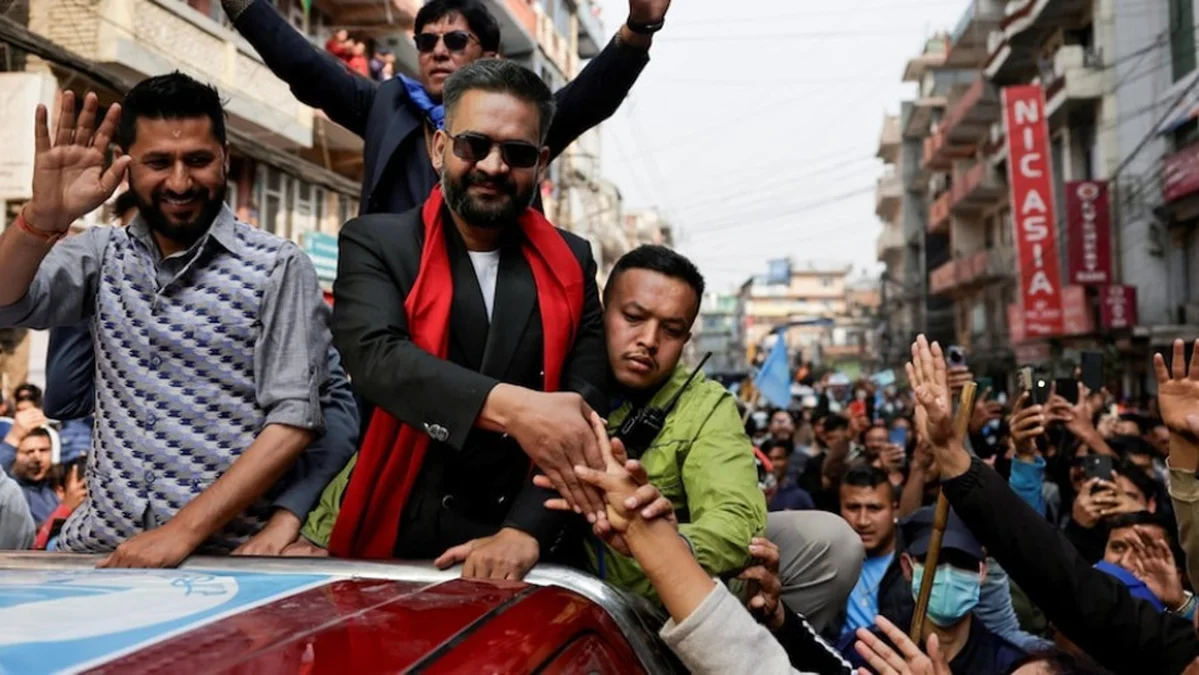
Alongside long-dominant parties such as Nepali Congress and CPN-UML, the Rastriya Swatantra Party has emerged as a new political force in the election. The party, formed three years ago, was joined in January by 35-year-old popular rap singer and former Kathmandu mayor Balen Shah, who is now the party’s candidate for prime minister.
Balen Shah was one of the key faces of the Gen-Z movement protests. He previously won the Kathmandu mayoral election in 2022 as an independent candidate. Later in December, he joined the RSP founded by former deputy prime minister Rabi Lamichhane and resigned from his mayoral position.
Under his leadership, the RSP is now leading by a huge margin in the election. Analysts say strong support from young voters could significantly change Nepal’s political landscape.
Out of Nepal’s population of about 30 million, nearly 19 million voters were eligible to vote in this election. After last year’s protests, around one million new voters were added to the voter list, most of whom are young. Analysts believe these young voters may bring major changes to Nepal’s political system.