
Balochistan's Critical Role in the New Global Order and Its Fight for Autonomy
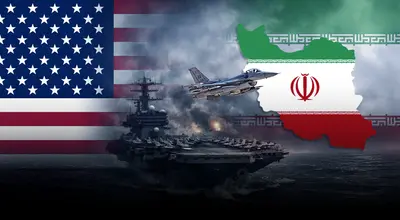
We are witnessing a profound shift in the global power structure. The unipolar world order that emerged after the Cold War—dominated by the United States—is gradually transforming into a multipolar landscape. At the forefront of this transition stands China, whose growing economic and strategic influence is reshaping regions across Asia and Africa. Through its ambitious Belt and Road Initiative (BRI), China has established a vast network of infrastructure projects and trade routes, from Pakistan’s Gwadar Port in Balochistan to key markets across the African continent. This expansion is not only altering global trade flows but also directly challenging U.S. dominance, prompting Washington to reassess its alliances and strategies to retain its global leadership.
India, a strategic partner in the Indo-Pacific, has become a central focus in this global realignment. Recently, the U.S. President Donald Trump reaffirmed India as “America’s best friend,” signalling Washington’s intention to keep India aligned with its interests, especially against the growing power of China and Russia. This move has been accompanied by fluctuating trade policies, such as the steep increase in tariffs on India, which forced India to pivot toward Russia and China. However, signs indicate that the U.S. may reduce those tariffs to retain India’s allegiance, highlighting the fluidity of global alliances in an era where economic and political interests can shift rapidly.
But beyond the headlines of U.S.-China rivalry, there is a significant regional dynamic at play, one that holds enormous implications for the future of Balochistan and its people. Balochistan, with its strategic location, is becoming an increasingly important focal point in global geopolitics. The Gwadar Port, strategically located at the confluence of the Middle East, Africa, and Asia, is a vital gateway for energy transit. Its importance is not lost on the global powers, which are competing for influence over this critical region. For China, maintaining its dominance over Balochistan is vital for its Belt and Road vision. The West, on the other hand, views Balochistan as a crucial node in its quest for energy security and trade routes.
This geopolitical struggle has profound implications for the Baloch people, who have long been engaged in a struggle to regain their independence. The growing international attention on Balochistan, particularly from Western powers, underscores its importance as a future strategic hub. Recently, China attempted to use its veto power at the United Nations to label the Baloch Liberation Army (BLA) as a terrorist organisation. However, the U.S., the UK, and France blocked this resolution on technical grounds, signalling their reluctance to be drawn into an open conflict with Baloch national freedom movement. This diplomatic tussle is a clear indication that the West sees Balochistan as a region with significant strategic value, and potentially as a flashpoint in the global order.
For the Baloch freedom movement, this moment represents a historic opportunity. The global shift in power dynamics has opened a window for a more robust and unified struggle for Baloch independence. Just as Afghanistan saw Western powers supporting resistance movements during the Cold War to counter the Soviet Union, Balochistan’s moment could come if its leaders manage to unify their voices and present a coherent and strategic case for independence. In recent years, Ukraine’s resistance to Russian aggression has been bolstered by Western support, and Balochistan, given its geopolitical significance, could well be the next cause for global attention and support.
However, this opportunity is not without its challenges. The Baloch leadership must overcome internal divisions and personal rivalries to forge a united front. This is a time for strategic clarity, where the vision of a “United Balochistan” must take precedence over individual ambitions. Only through a unified diplomatic and political effort can the Baloch cause gain the international recognition and support it needs to counter the overwhelming power of regional and global forces.
This is a pivotal moment for the Baloch people, and failing to seize this opportunity could result in another lost chance for self rule and freedom.
The power struggle between the U.S. and China, while often portrayed as a contest for global supremacy, is also about the control of critical regions like Balochistan. As the world becomes increasingly multipolar, regions that were once on the periphery of global politics are now at the centre of strategic calculations. Balochistan, with its rich resources and strategic location, will remain a key player in this global chessboard.
For the Baloch people, this geopolitical shift offers a unique opportunity to bring their cause to the international stage. By framing their struggle within the larger context of global power dynamics, Baloch leaders can secure the diplomatic, political, and moral support necessary to achieve their aspirations for independence. The struggle for Balochistan is not just a regional issue, it is a critical piece in the puzzle of global geopolitics. If the Baloch leadership can rise to the occasion, this moment in history could become the turning point in their long quest for justice and freedom.
The time is now for Baloch leaders to unite, set aside differences, and move forward with a shared vision of a free and independent Balochistan. The world’s strategic realignment is creating a rare opening, a moment that may never come again. It is up to the Baloch people to seize this opportunity and make their voices heard on the global stage.
Source: BW News