





U.S. Shutdown Increases Uncertainty in Global Economy
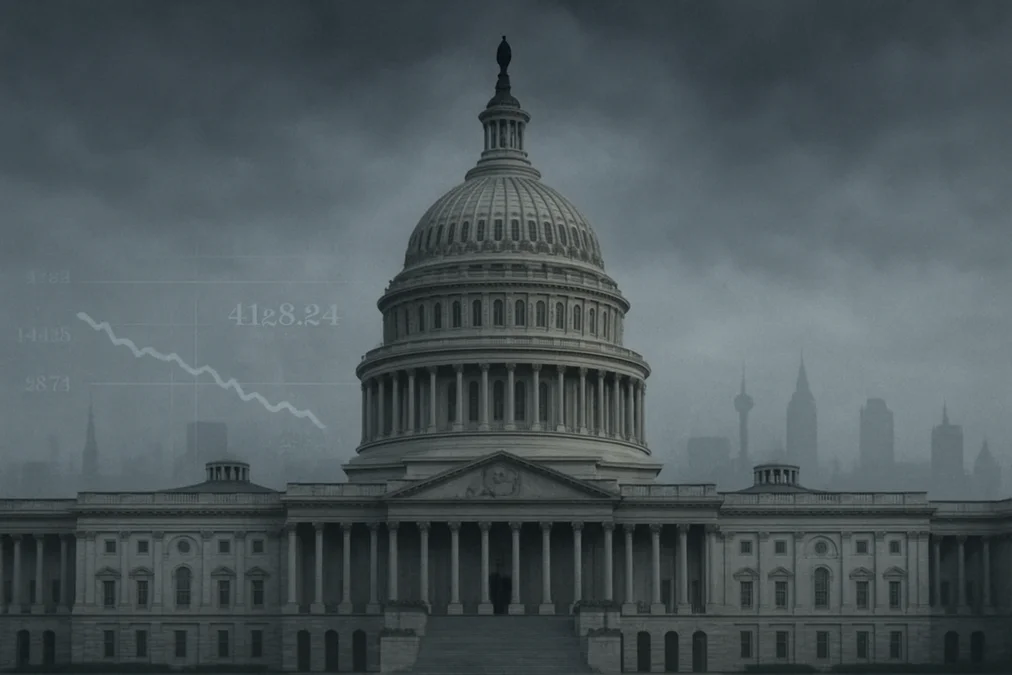
The ongoing shutdown in the United States has created risks not only for the country itself but also for the global economy. Due to the shutdown, the publication of key U.S. economic indicators has been halted. Major economies such as Japan, the United Kingdom, and others rely on this data. As a result, these countries are facing difficulties in formulating economic policies. (Source: Reuters)
On issues such as tariffs and trade, many countries depend on the world’s largest economy—the United States. With the U.S. data flow interrupted, uncertainty has arisen in decision-making related to exchange rates, trade, and inflation control in other countries.
Kazuo Ueda, Governor of Japan’s central bank, said, “This is a serious problem. We hope the crisis will be resolved quickly.”
He noted that the absence of U.S. economic data is complicating Japan’s ability to determine the timing of interest rate reassessments.
Criticizing the U.S. shutdown, a Japanese policymaker said, “It’s completely ridiculous. Federal Reserve Chair Jerome Powell always says that policy depends on data. But now, there is no data available!”
Catherine Mann, a member of the Bank of England, commented, “The data crisis in the U.S. or debates over the Fed’s independence don’t directly affect UK policy. However, in the long term, this crisis may weaken the dollar’s international standing—just as the pound gradually lost its central role. Small shifts like this could lead to a loss of strength for the dollar.”
Finance ministers and central bankers from around the world have gathered in Washington for the annual meetings of the World Bank and International Monetary Fund (IMF). Alongside discussions on the war in Ukraine, tensions in the Middle East, and the climate crisis, focus has turned to the Trump administration’s policies, the data blackout, and political pressure on the Federal Reserve.
Although the U.S. government may resume operations and data publication at any time, the current situation has raised serious concerns about the credibility of both the administration and its data systems. Meanwhile, Donald Trump’s attempts to expand his influence have raised concerns about the Fed’s independence. The resignation of the head of the U.S. Bureau of Labor Statistics under Trump’s pressure—following dissatisfaction with a jobs report—has also added to the anxiety.
The IMF has described the situation as a “potential downside risk to the global economy.” In a report, the organization warned that increasing political pressure on policymaking institutions could undermine public trust. Interference in the process of data collection and publication may reduce confidence in official statistics and increase the risk of poor decision-making.
However, not all data collection in the U.S. has been halted. In specific areas funded independently, the Federal Reserve continues to gather and analyze data. Alternative data is also being sourced from private institutions, although it is not always reliable.
Economist Adam Posen stated, “The disruption of data flow is creating doubts about the credibility of the U.S. administration. This will affect currency exchange rates and foreign reserve management in the future.”
According to the IMF’s latest World Economic Outlook, global economic growth in 2025 is projected to be 3.2 percent, slightly higher than previous estimates. However, the longer the U.S. data blackout continues, the more difficult it will become to analyze the state of the global economy.
Regarding risks and uncertainty, Robert Kahn of the Eurasia Group said, “Policymakers are still gathering information from various sources. But the longer it takes, the more uncertainty will grow—and with it, the risk of wrong decisions.”