
Iran War Sparks Fears of a Global Economic Nightmare

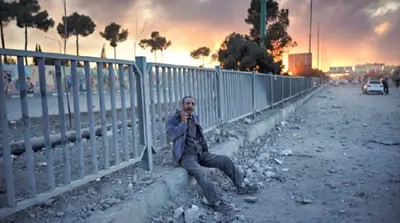
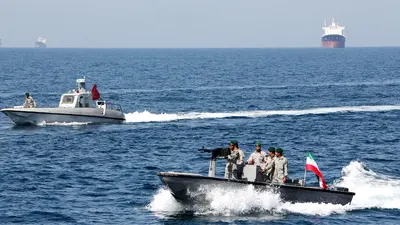
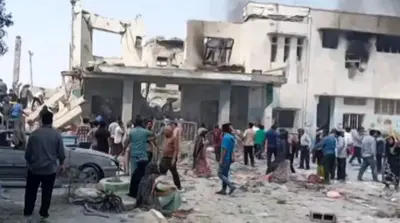
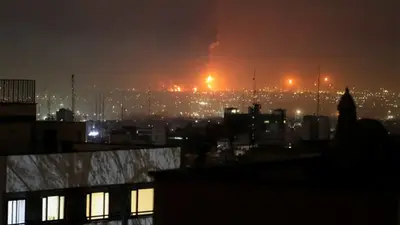
The war between the United States and Israel against Iran has turned into a terrible “nightmare” for the global economy. After Iranian leader Ali Khamenei was killed in a missile strike on February 28, Tehran closed the Strait of Hormuz, one of the world’s most important shipping routes. As a result, the prices of fuel and fertilizers in the global market have soared. This has created fears of a food crisis in poorer countries.
About one-fifth of the world’s total oil supply is transported through the Strait of Hormuz. Maurice Obstfeld, Senior Fellow at the Peterson Institute for International Economics and former chief economist of the International Monetary Fund, said that for a long time the United States refrained from attacking Iran and urged Israel to remain restrained precisely because of fears of this nightmare. Now we are living inside that nightmare.
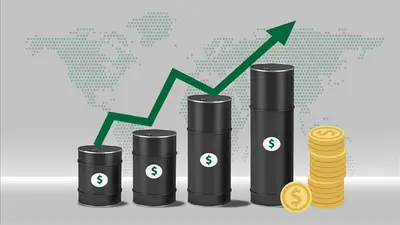
Before the war began, on February 27, the price of oil was below $70 per barrel. On Monday it jumped to nearly $120, although it later stabilized around $90. Due to the rise in oil prices, the price of gasoline in the United States increased from $3 per gallon to $3.48. However, since Asia and Europe rely more heavily on Middle Eastern oil, the impact could be even stronger there.
Kristalina Georgieva, Managing Director of the International Monetary Fund, warned that if oil prices rise by 10 percent, global inflation increases by 0.4 percent and the world economy shrinks by 0.2 percent. Simon Johnson, winner of the 2024 Nobel Prize in Economics, said that the Strait of Hormuz must be reopened. About 20 million barrels of oil pass through it every day. There is nowhere else in the world capable of replacing this supply.
According to Neil Shearing of Capital Economics, energy-importing countries will be the hardest hit by this war. These include most European countries as well as India, China, Japan, and South Korea.
However, Pakistan is facing the most critical situation. The country imports 40 percent of its energy and relies heavily on liquefied natural gas (LNG) from Qatar, which has been disrupted due to the war. To control inflation, the country’s central bank may have to raise interest rates further, which will make life even more difficult for ordinary people.
On the other hand, oil-producing countries such as Norway, Russia, and Canada are benefiting from this situation.
In addition to energy, 30 percent of the world’s fertilizer supply (urea, ammonia, and phosphate) also passes through the Strait of Hormuz. As this supply has been disrupted, fertilizer prices are rising worldwide. According to Maurice Obstfeld, the impact will be most severe in low-income countries, especially in places where agricultural production is already facing challenges. If fertilizer prices rise further, a major food crisis may occur.
According to analysts, although the global economy managed to withstand shocks such as Donald Trump’s tariff policies or the Russia–Ukraine War, there is deep uncertainty about how long this crisis will last. Simon Johnson said, “Everything now depends on President Trump. It is still not clear when he will declare victory.”