





Husbands Can Beat Wives ‘As Long As Bones Are Not Broken,’ New Law in Afghanistan
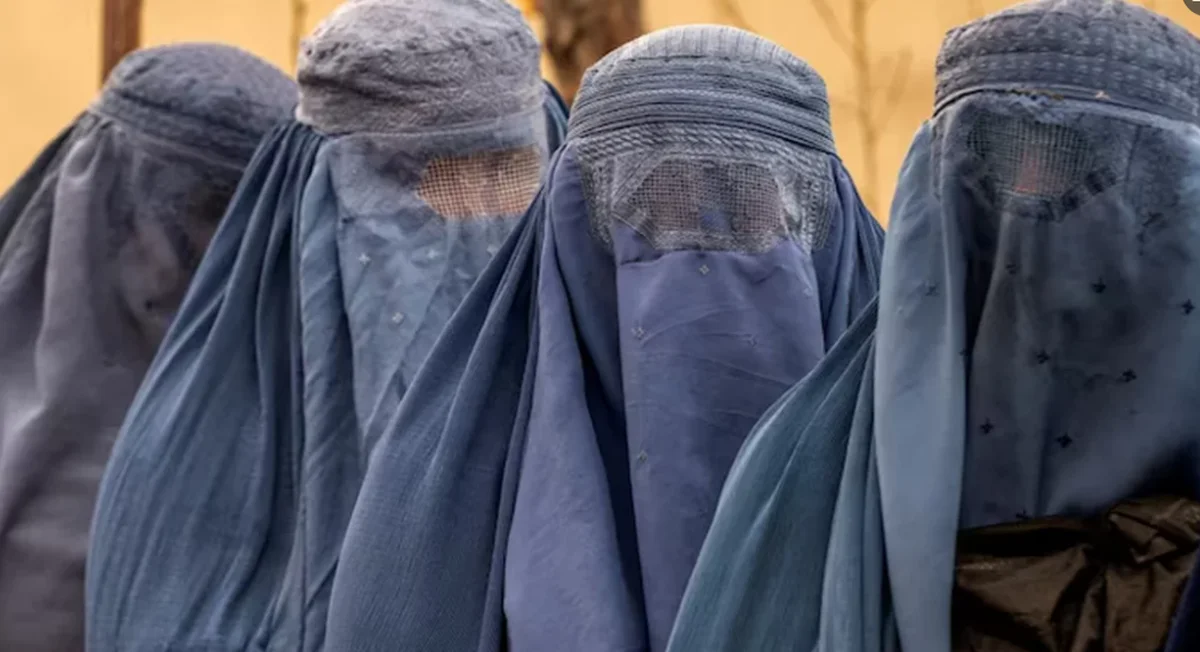
The Taliban government of Afghanistan has issued a new strict law against women. According to a report by the British online newspaper The Independent, the country’s government has given approval for husbands to physically punish their wives and children, effectively ‘legalizing’ domestic violence.
However, the new law states that if the beating results in a ‘broken bone’ or ‘injury,’ husbands will face punishment. The report says that the Taliban government has already enacted a new penal code in this regard.
It states that the supreme leader of Afghanistan’s ruling Islamist group, Hibatullah Akhundzada, has signed the new 90-page penal code.
The Independent reported that the penal code, named in Pashto as ‘The Mahakumu Jazai Usulnama’ or ‘Regulations on Court Criminal or Penal Procedures,’ has been distributed to courts across Afghanistan. The Independent has reviewed a copy of it.
The new penal code has created various forms of classification. Under this system, the severity of punishment will differ depending on whether the offender is ‘free’ or a ‘slave.’
According to the law, if a husband uses ‘excessive force’ causing visible injury or a broken bone to his wife, he may face up to 15 days of imprisonment. However, he will only be convicted if his wife can successfully prove the abuse in court.
In addition, the new law states that an abused woman may show her injuries to a judge while being fully covered in hijab. However, in such circumstances, her husband or an adult male must accompany her to court.
On the other hand, if a married woman visits a relative’s house without her husband’s permission, there is a provision for punishment. It states that for such an act, the wife may face up to three months in prison.
The report says that Afghanistan’s new penal code has divided the country’s society into four classes: religious scholars (Ulama), elites (Ashraf), middle class, and lower class.
Under this system, punishment for the same type of crime will not primarily be determined by the nature or severity of the offense, but by the social status of the accused.