Six Kurdish Armed Groups That May Join the War Against the Iranian Government
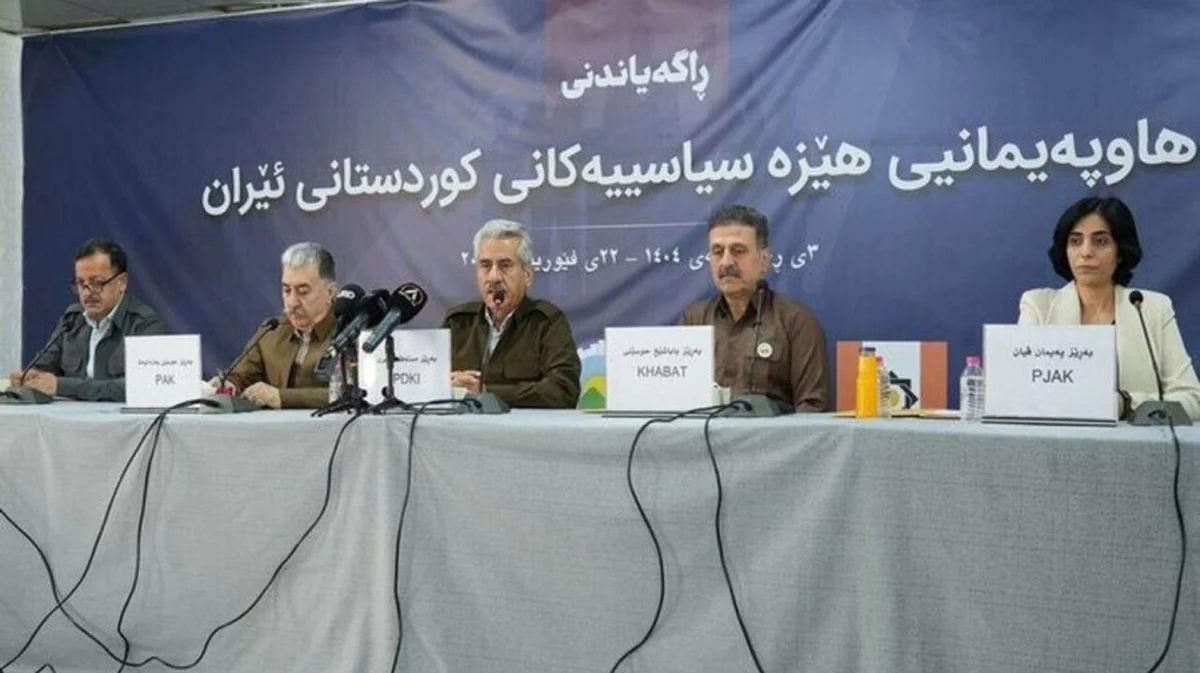
Several Kurdish armed groups are preparing to join the ongoing military campaign by the United States and Israel against Iran. According to Middle East–focused news outlet Al-Monitor, they are waiting to enter Iran from the Kurdistan region of Iraq under a recently formed coalition.
The alliance, named the Coalition of Political Forces of Iranian Kurdistan, was formed on February 22. Initially, it included five parties — the Democratic Party of Iranian Kurdistan (KDPI), the Kurdistan Free Life Party (PJAK), the Kurdistan Freedom Party (PAK), the Khabat Organization, and Komala of the Toilers. On Wednesday, a sixth group, the Komala Party of Iranian Kurdistan, announced that it would join the coalition.
According to the Al-Monitor report, the coalition has already been supplied with weapons and could enter Iran through the Iraqi Kurdistan border within the next few days. However, White House Press Secretary Karoline Leavitt on Wednesday denied that President Donald Trump had approved any plan to arm the Kurds. Meanwhile, U.S. Defense Secretary Pete Hegseth took a more cautious stance, saying that providing weapons to these groups is not an integral part of the U.S. military plan.
KDPI: It is known as the largest Kurdish opposition party in Iran. According to estimates from 2017, it has about 1,000 armed fighters. Just last Tuesday, Iran launched rocket and drone attacks on its facilities in the Iraqi city of Koya.
PJAK: This organization, affiliated with Turkey’s PKK, is considered the most militarily capable among the groups. It has around 3,000 fighters. In 2009, the United States designated it as a “terrorist organization.”
PAK: This is a secular nationalist group. In January, it announced attacks against the IRGC in protest against repression by Iranian security forces. Just last Wednesday, one of its members was killed in an Iranian drone strike.
Khabat Organization: Historically an Islamist group, it is relatively small. Very little information is available about its military capabilities.
Komala: These left-leaning groups have several factions. Their number of fighters is believed to be fewer than 1,000.
These groups maintain close relations with Kurdish parties in Iraq and Turkey. The coalition says it will fight to establish democracy in Iran and support the right to self-determination for Kurdish-inhabited regions. For years, the Iranian government has carried out attacks targeting these groups, and in 2023 the Iraqi government agreed to relocate them away from the border areas. However, amid the current war situation, they have once again become active.