Bangladesh’s Special Guest in Delhi on Victory Day: The Centenarian Rasgotra
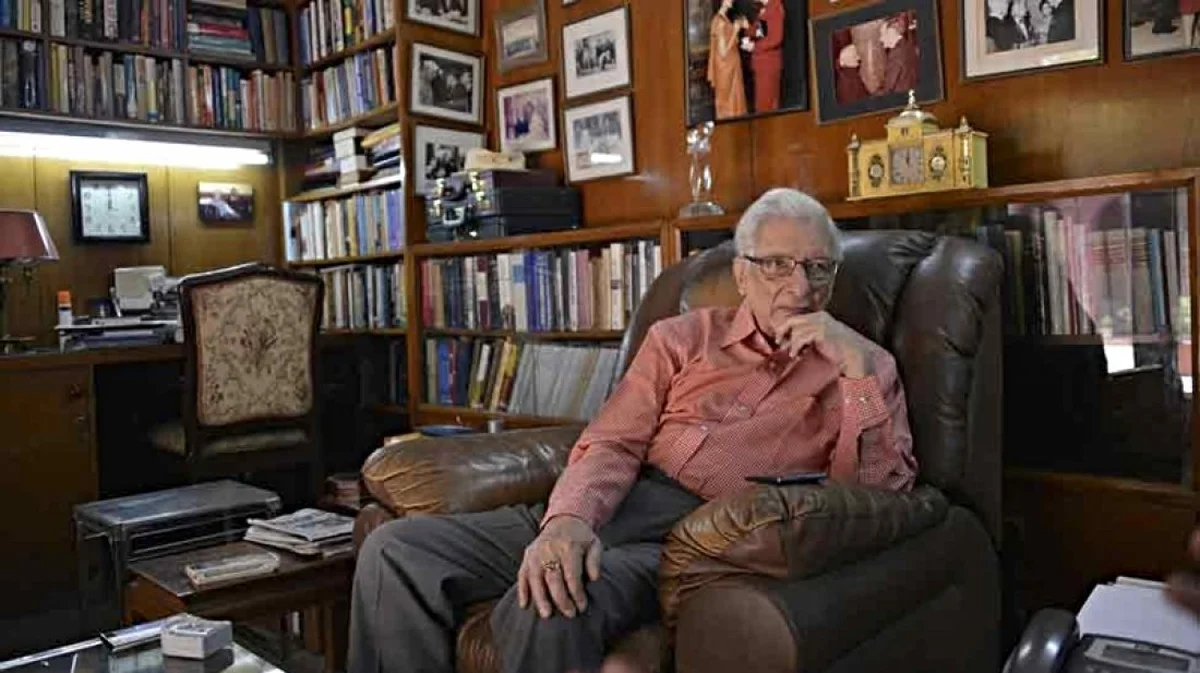
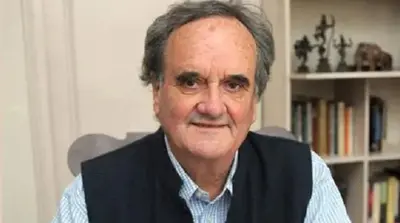
Maharaja Krishna Rasgotra, who is better known as M.K. Rasgotra, is a living legend of the Foreign Service of independent India. From India’s first Prime Minister Jawaharlal Nehru to his daughter Indira and grandson Rajiv Gandhi – Krishna Rasgotra worked as a close associate to all of them. In 1985 he retired as India’s Foreign Secretary.
This veteran diplomat completed one hundred years in September 2024. On the occasion of his hundredth birthday last year, India’s Foreign Secretary Vikram Misri organized a special ceremony in Delhi. Attending that ceremony, India’s External Affairs Minister S. Jaishankar described Rasgotra as a ‘legend’ and a ‘titan’ of India’s Ministry of External Affairs.
This legend will be seen as a special guest at the Victory Day (16 December) event at the Bangladesh High Commission in Delhi.
In the invitation letter sent by Bangladesh’s Ambassador to India, Riaz Hamidullah, to the guests of the Victory Day event, he wrote, “At the very beginning of the program, a distinguished Indian will reminisce about his own priceless experience of 16 December 1971.”
He did not reveal the name of this distinguished Indian. But Bangla Tribune has learned with certainty that this ‘distinguished Indian’ is none other than India’s iconic diplomat and one of the architects of Indian foreign policy, M.K. Rasgotra.
It is known that the Bangladeshi Ambassador recently went himself to Rasgotra’s residence in South Delhi to invite him to the event. Ignoring all age-related physical ailments, he has promised to come.
It is noteworthy that in December 1971, Rasgotra was appointed as a close associate of Prime Minister Indira Gandhi, and at that time he was also working with the Prime Minister’s trusted adviser P.N. Dhar. Both P.N. Dhar and Rasgotra were Kashmiri Hindu Pandits. In 1971, both of them played an active role in policy-making in Delhi.
It is assumed that in Rasgotra’s recollections, the history of what exactly was happening in Delhi on 16 December 1971—the day when in Dhaka the Pakistani army led by General Niazi surrendered to the Mukti Bahini and the Indian Army—will come alive.
But the noteworthy thing is that Bangladesh’s Interim Government’s Home Affairs Adviser Lt. Gen. (Retd.) Jahangir Alam Chowdhury has already announced that even this year the Victory Day parade will not be held in Dhaka for special reasons.
For two consecutive years now, the Victory Day parade has been cancelled in Dhaka. When the celebration of Victory Day is declining in Bangladesh’s own capital, that same Bangladesh government is preparing to celebrate Victory Day in Delhi with great fanfare. Not only that, there is also the special surprise of inviting a legend like M.K. Rasgotra.
It is worth mentioning that the Bangladesh embassy building located on Radhakrishnan Marg in Delhi and the entire diplomatic area around it is called Chanakyapuri. This Chanakyapuri was also named by Rasgotra.
In 1951, as a young officer of India’s Ministry of External Affairs, M.K. Rasgotra proposed naming the area ‘Chanakyapuri’.
Prime Minister Nehru enthusiastically accepted this proposal of naming it after Kautilya, the father of Indian diplomacy and adviser to Maurya Emperor Chandragupta in the fourth century. Nearly 75 years after that event, the Bangladesh Embassy is preparing to honor this legend on the soil of Chanakyapuri.
Source: Bangla Tribune