
Post-Soviet Bloc Defying Western Hegemony, Says Iranian Official
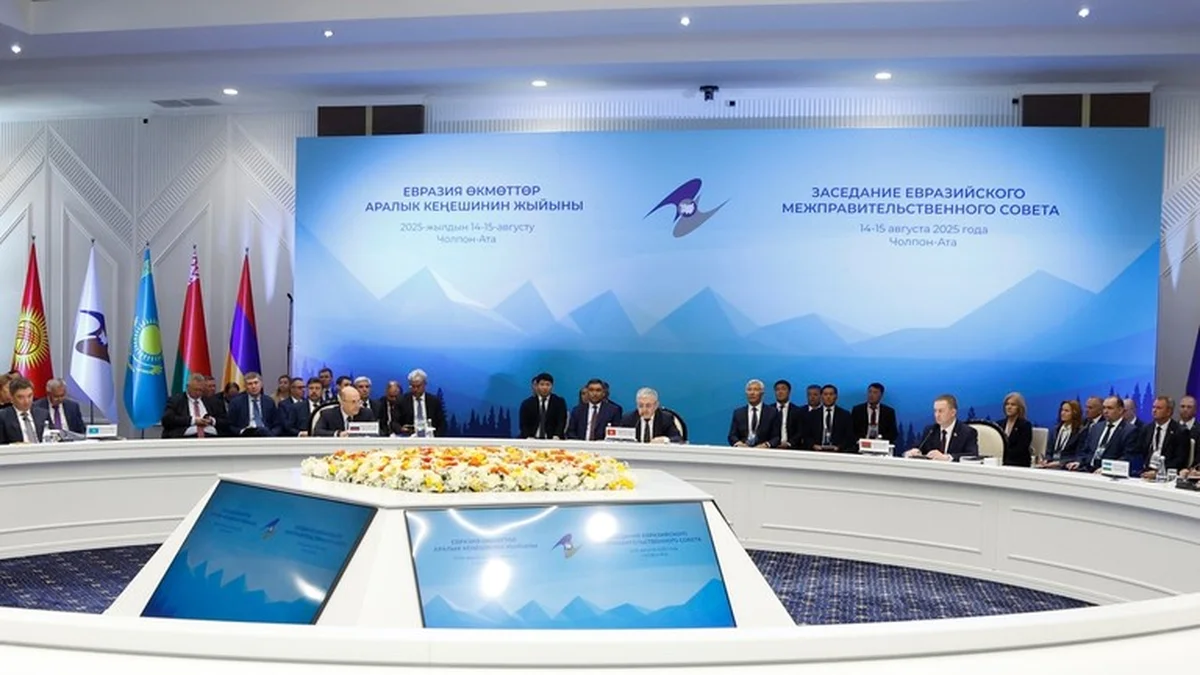
The Eurasian Economic Union (EAEU) is playing a pivotal role in challenging Western unilateralism and contributing to the creation of a multipolar global order, according to Iranian Minister of Industry, Mines and Trade Mohammad Atabak.
Speaking at a press conference in Moscow on Wednesday, Atabak emphasized that the era of Western dominance is coming to an end, and the international community is increasingly seeking alternatives through regional alliances.
"The world is no longer willing to accept the West's one-sided approach," Atabak said. He stressed the growing importance of regional cooperation bodies such as BRICS and the Shanghai Cooperation Organization, which he described as vital to resisting hegemonic pressures.
Atabak noted that commercial ties between Tehran and EAEU member countries have seen promising growth since the signing of a free trade agreement earlier this year in May. The EAEU, established in 2014, includes Russia, Belarus, Armenia, Kazakhstan, and Kyrgyzstan.
EAEU Trade Minister Andrey Slepnev, who also spoke at the event, echoed Atabak’s perspective. He forecast that trade between the bloc and Iran would double in the medium term, reaching an estimated $12 billion, based on the progress seen since 2024.
Slepnev added that the three-year roadmap between Iran and the EAEU focuses heavily on coordinating infrastructure projects to streamline bilateral trade. A key goal is to connect to the Indian Ocean via Iranian ports, significantly boosting regional connectivity.
Addressing the development of the International North-South Transport Corridor (INSTC), Slepnev said that the EAEU is actively fostering regional economic partnerships, particularly with India and Pakistan. He referred to Iran as the "golden link" within the INSTC, underscoring its strategic importance.
The INSTC, jointly developed by India, Iran, and Russia, serves as a viable alternative to the Suez Canal. The route connects Mumbai to Iranian ports such as Bandar Abbas, Chabahar, and Bandar-e-Anzali, and then crosses the Caspian Sea to Astrakhan in southern Russia. From there, it connects to Moscow and St. Petersburg via land routes.
Source: RT