
Tehran Falls Silent, Slowly Turning Into a Dead City
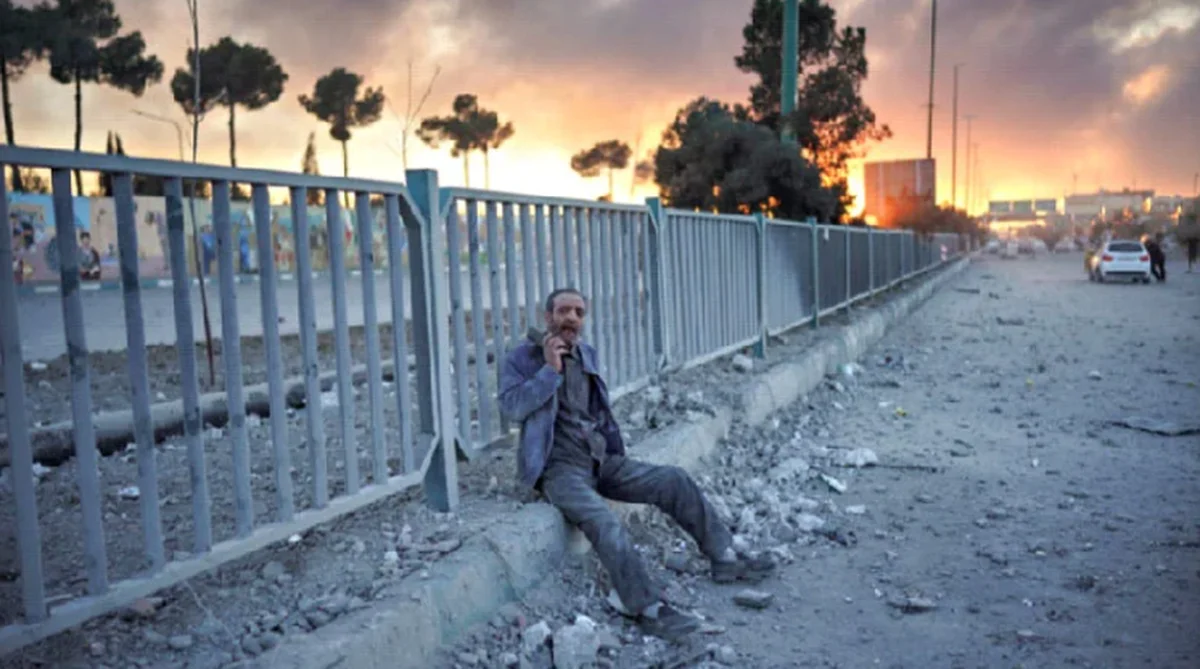
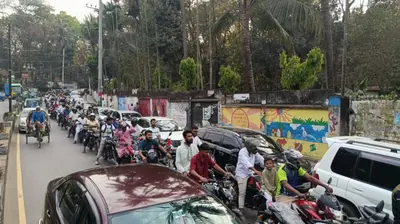
The capital of Iran, Tehran, has almost turned into a deserted city amid the ongoing conflict in the Middle East. Busy streets in the city are largely empty, most shops are closed, and fear and uncertainty dominate the lives of residents. With the internet nearly shut down across the country, many citizens are accessing the outside world using VPNs. One such resident told the BBC that Tehran’s busy Iranshahr Street now appears as silent as it was during the days of the pandemic.
The resident said, “It feels very strange. In many ways it’s like the days of the pandemic. Everyone is living with fear and uncertainty. No one knows what might happen next. But deep down we believe that sooner or later this will end and life will return to normal.”
He also mentioned that taking photos or videos has become risky. Still, he shared a snapshot of Iranshahr Street, the same place where a rock band went viral on social media a few months ago after performing there. Following that incident, the government banned the musicians from performing.
Another resident told the BBC that he left his house after five days and walked along Naft Street in Tehran. It is a residential area where the administrative building of the Expediency Discernment Council was targeted in an attack last Monday night. According to the resident, security forces have set up checkpoints on nearby roads. Fortunately, he was not stopped. He added that nearby Iranshahr Street looked completely lifeless.
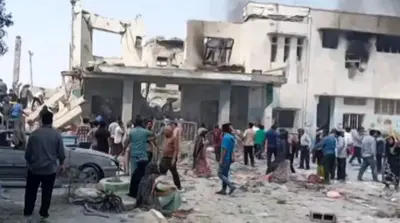
Meanwhile, massive explosions have been reported in Tehran and several Iranian provinces following joint strikes by the United States and Israel. On the sixth day of the conflict, Iran also launched retaliatory missile attacks toward Israel. Since the fighting began last Saturday, the total death toll across several countries has surpassed 1,300.
According to Reuters, more than 1,000 people have been killed in Iran alone, including 175 schoolgirls. In Israel, at least 10 civilians have been killed. Casualties have also been reported in Lebanon, Kuwait, Bahrain, the United Arab Emirates, Syria, and Iraq.
U.S. President Donald Trump has announced an escalation of military operations against Iran. A proposal in the U.S. Senate to block the military campaign failed with a vote of 53–47. Trump warned that Iran would see a “rain of missiles” and that Tehran would witness “only scenes of death and destruction.” He also claimed that Iran’s leadership is rapidly weakening.
Iran’s Health Ministry said that more than 1,000 people have been killed and over 6,000 injured in the ongoing attacks. Besides Tehran, several cities across the country have reported strikes targeting military headquarters and political centers.
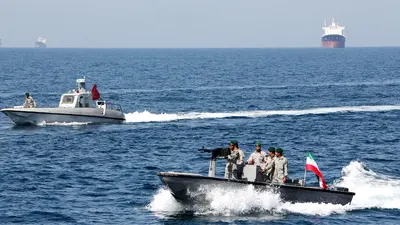
The White House said the United States has already conducted strikes on more than 2,000 targets inside Iran. Hundreds of ballistic missiles and drones have reportedly been destroyed in the operations. White House spokesperson Karoline Leavitt said the campaign would establish full air dominance for the United States and Israel over Iranian airspace. She added that at least 20 Iranian naval vessels have been destroyed during the operations.
Meanwhile, Iran’s Islamic Revolutionary Guard Corps (IRGC) stated that its retaliatory operations are continuing. The group claimed it had targeted Israel’s Ben Gurion International Airport and several advanced radar systems. It also said Iranian drones had struck a U.S. military base in Kuwait.
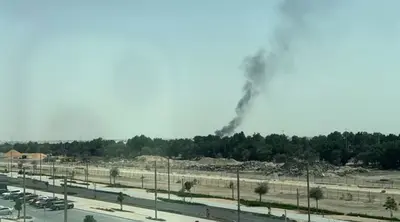
The conflict is now affecting the wider Middle East region. Explosions have been reported in several countries, and air raid sirens have been heard in multiple cities. In Abu Dhabi, debris from intercepted missiles and drones reportedly injured several people.
Iran’s Red Crescent Society said more than 1,300 attacks have been recorded in the country since last Saturday. Among them, at least 105 strikes targeted civilian locations, including medical facilities and buildings belonging to humanitarian organizations.
The war has also severely disrupted maritime trade in the Strait of Hormuz. Arsenio Dominguez, head of the United Nations’ International Maritime Organization, said around 20,000 sailors are currently stranded in the region. Additionally, nearly 15,000 passengers aboard cruise vessels are facing serious difficulties.
The conflict is also creating a growing humanitarian crisis in the Middle East. The United Nations refugee agency UNHCR reported that at least 330,000 people have been displaced due to the war so far. Among them are nearly 100,000 people who have fled Tehran in recent days.
Analysts warn that if the conflict between the United States, Israel, and Iran does not end soon, it could escalate into a much larger regional war. Such an escalation would have serious consequences for political stability and economic security across the Middle East.