



HRW: Trial of Sheikh Hasina and Asaduzzaman Kamal Trial Failed to Meet International Fair-Trial Standards
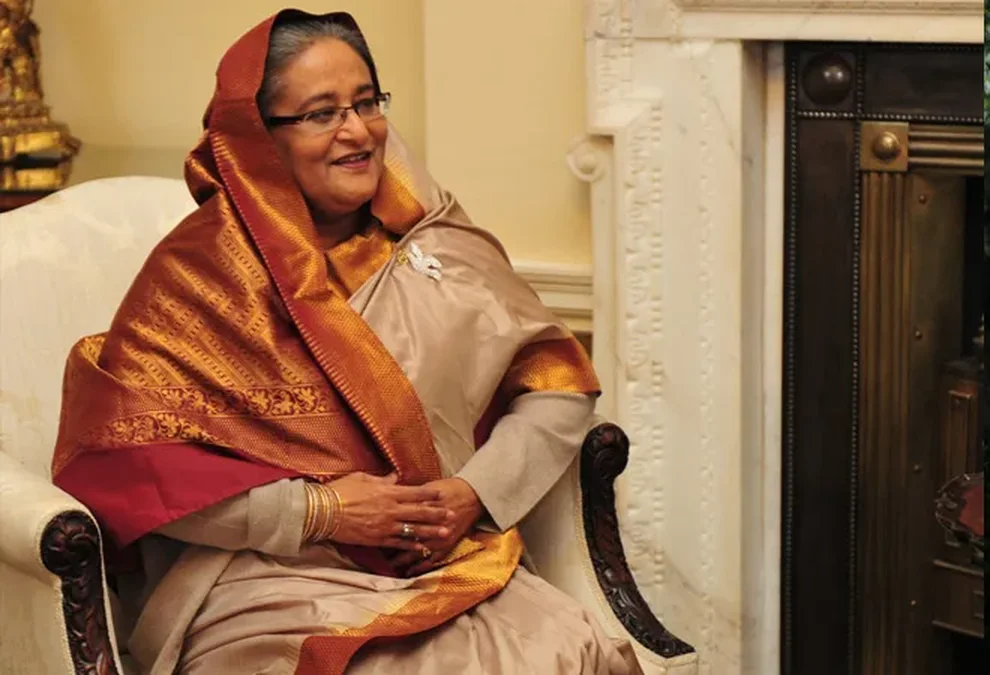
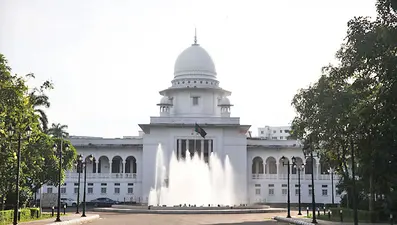
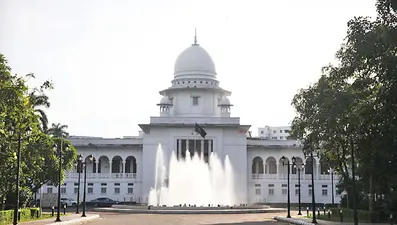
The International Crimes Tribunal of Bangladesh has sentenced ousted former prime minister Sheikh Hasina and former home minister Asaduzzaman Khan Kamal to death for crimes against humanity committed during the student-led July Uprising of 2024. The trial, conducted in their absence, failed to meet international standards of justice, Human Rights Watch (HRW) has expressed concern.
In a statement, HRW said both were tried in absentia and were not represented by lawyers of their own choosing, raising serious human rights concerns. The third defendant in the case, former police chief Chowdhury Abdullah Al-Mamun, received a reduced sentence of five years in prison after testifying as a state witness.
The organisation stated that during the three weeks of continuous protests in July–August 2024, serious human rights violations occurred, with nearly 1,400 people killed according to the United Nations—most of them protesters shot dead by security forces. HRW said that although deep resentment against Sheikh Hasina remains due to her long period of repressive rule, any trial must adhere to international standards.
The charges against the three defendants included orchestrated attacks on protesters, directing widespread repression through security forces and party supporters, approving the use of drones, helicopters, and lethal weapons, and failing to prevent or punish three killings committed by security forces. The prosecution presented 54 witnesses—half of them experts, and the rest victims or their families. Evidence included audio recordings of Sheikh Hasina’s conversations in which she was heard authorizing the use of lethal weapons.
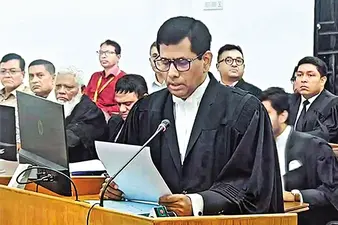
State-appointed lawyers cross-examined witnesses but did not produce any defense witnesses. HRW said that the right to defend oneself, to question witnesses, and to choose one’s own lawyer are all essential components of international fair-trial standards—and these were not upheld in this case. The imposition of the death penalty has deepened concerns about the fairness of the trial.
In their 453-page judgment, judges said the proceedings were based on Article 7 of the Rome Statute. Testimonies from victims played a crucial role in the verdict. The ruling noted that in a recent interview Sheikh Hasina mentioned “indiscipline” within the security forces but acknowledged her “leadership responsibility.”
HRW added that the International Crimes Tribunal in Bangladesh has a history of being used for political purposes. It stressed that while human rights violations such as enforced disappearances, extrajudicial killings, and torture under Sheikh Hasina’s rule demand justice, such justice must be ensured through an independent and impartial process.
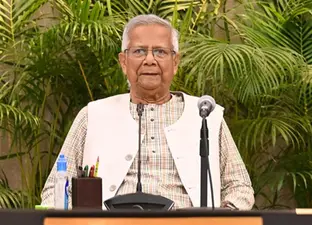
After Sheikh Hasina fled the country in 2024, interim government chief Muhammad Yunus assumed power. His administration amended international crimes laws in November to align the definition of crimes against humanity and command responsibility with the Rome Statute. Enforced disappearance was explicitly added as a crime. However, the 2025 amendment granting the tribunal authority to dissolve political parties raised concerns. Although the ruling did not include dissolving the Awami League, it recommended confiscating the properties of Sheikh Hasina and Asaduzzaman Khan for compensation. Sheikh Hasina faces three more cases—two involving enforced disappearance and one related to the 2013 massacre.
HRW noted that Articles 47(3) and 47A of the Constitution deprive individuals accused of international crimes of legal protection and the right to seek justice or remedy. The organisation urged that equal constitutional rights be ensured for all and called for the suspension and abolition of the death penalty.
In July 2025, the UN Human Rights Office and the Government of Bangladesh signed a three-year memorandum of understanding to strengthen human rights cooperation. The interim government has announced elections for February 2026. HRW said that suspending executions is essential for securing international cooperation.
Following the verdict, Bangladesh’s Ministry of Foreign Affairs requested India to extradite Sheikh Hasina and Asaduzzaman Khan. HRW stated that India must ensure due process in any extradition decision and should not extradite anyone to a country where there is a risk of the death penalty or an unfair trial.