



Operation Devil Hunt: Claims of Arrests Based on Political Identity, Not Crime
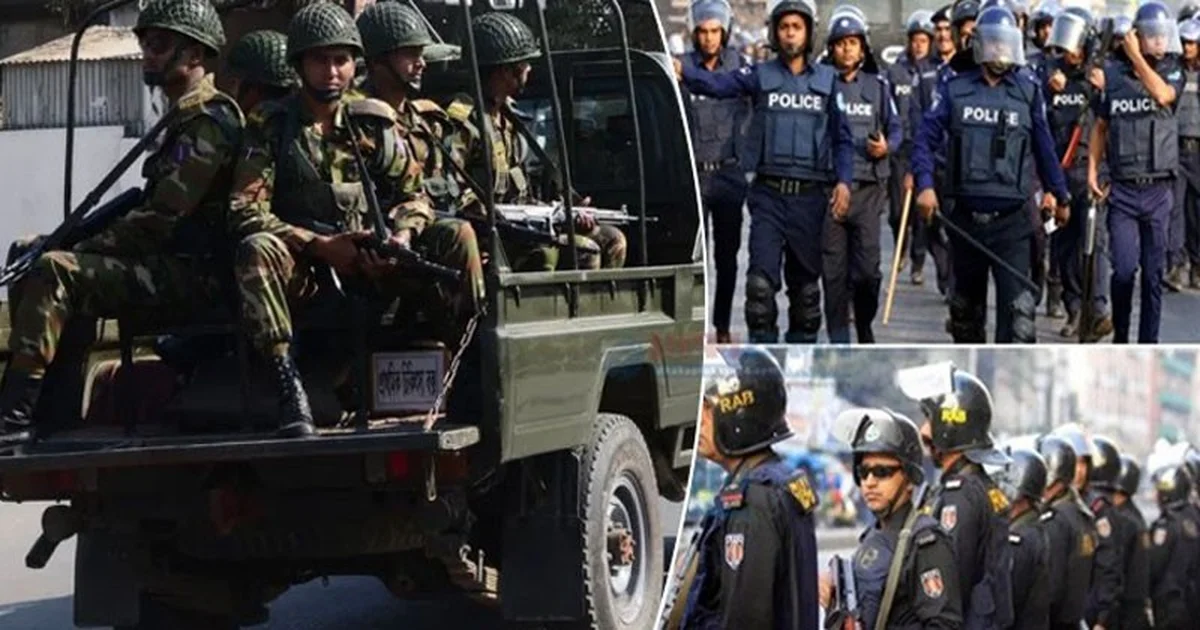
As Bangladesh approaches the 13th National Parliamentary Election, the government’s “Operation Devil Hunt” has drawn attention over claims that arrests are being carried out based on political identity rather than proven criminal activity.
Before the 13th National Parliamentary Election, allegations have emerged that the Ministry of Home Affairs is carrying out indiscriminate arrests across the country under the banner of “Operation Devil Hunt” in the name of restoring law and order. According to the Ministry, a total of 27,069 people were arrested in two phases—“Operation Devil Hunt” and “Devil Hunt Phase-2.” In addition to these special operations, 60,000 people were arrested in connection with various cases, warrants, and complaints filed after the July–August movement. Altogether, over the 520 days since August 5, around 87,000 people have been arrested, with critics claiming that political considerations played a significant role in many of these detentions.
There are allegations that arrests have not been limited to leaders and activists of the activities-banned Awami League and its affiliated organizations, but have also extended to supporters and individuals associated with other political parties. Many of those detained are described as people who had no involvement in criminal activities and were targeted primarily because of their political affiliation or perceived support. Rights observers argue that political support alone is being treated as sufficient grounds for arrest, which raises serious concerns about due process and democratic freedoms.
Dr. Touhidul Haque, Associate Professor at the Institute of Social Welfare and Research of the University of Dhaka and a social and crime expert, stated that law enforcement should arrest those who are truly criminals. He noted that despite the arrest of more than 27,000 people in two phases of the Devil Hunt operation, crimes such as murder, extortion, and land grabbing have not been effectively controlled. He warned that if ordinary people or political supporters are arrested under the name of a special operation, the process cannot be considered fair. He further cautioned that arrests motivated by commercial interests or case trading could generate mixed reactions among the general public.
The Ministry of Home Affairs has maintained that the arrest drive is an ongoing process. Law enforcement agencies initially launched Operation Devil Hunt across the country from February 8 to March 1 last year, during which 12,500 people were arrested, according to Police Headquarters. The operation continued afterward. Ministry sources said that following August 5, 2024, the operation was conducted in two phases, officially targeting leaders and activists of the activities-banned Awami League. However, allegations persist that individuals are being labeled as “fascists” after arrest and that such labeling is being used to harass people and provide advantages to local political actors.
Concerns have also been raised about the arrest of ordinary citizens with no political involvement. Reports from Dhaka and other districts indicate that non-political individuals have been detained without proper verification and later shown as accused under unidentified names in political cases. Specific incidents, such as the arrest of a 55-year veteran newspaper vendor in Chunarughat and a local journalist in Madhabpur, have drawn public criticism and contributed to negative perceptions of law enforcement at the community level.
After a recent law and order meeting, Home Affairs Adviser Lieutenant General (Retd.) Md. Jahangir Alam Chowdhury stated that law enforcement agencies have been instructed to act more strictly against any attempts to sabotage the election. Meanwhile, the Ministry reported that between December 13 and January 4, 14,569 people were arrested under Devil Hunt Phase-2. During this period, firearms, ammunition, explosives, and bomb-making materials were recovered, and including arrests made under cases and warrants, the total number of arrests reached 33,804.