

Election Uncertainty Grows as IPI Calls for Media Freedom and Journalist Safety
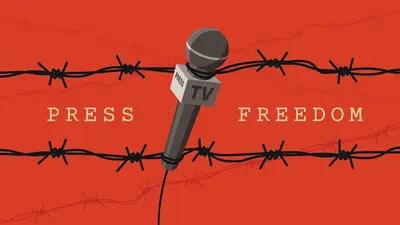
International media watchdog organisation the International Press Institute (IPI) has called for ensuring media freedom and the safety of journalists ahead of Bangladesh’s upcoming national parliamentary election. The organisation has issued a warning to political parties, the interim government and election-related authorities to ensure an environment where journalists can work freely and safely. According to IPI, a free and impartial election is not possible without a free media.
In a statement issued on 8 February, IPI said, “Without an independent media, a credible election in line with democratic standards is not possible. Journalists must be guaranteed the ability to work without fear, attacks or obstruction.”
The election, scheduled for 12 February, marks a critical political turning point for Bangladesh. After long-time Prime Minister Sheikh Hasina left the country in August 2024 following violent crackdowns on a student-led movement, an interim government led by Nobel laureate Dr Muhammad Yunus assumed office. The formation of the next government will be determined through this election.
However, political tension and violence have increased alarmingly ahead of the vote. In December, attacks, vandalism and arson were carried out on the offices of the country’s two leading dailies, The Daily Star and Prothom Alo, in Dhaka. According to local human rights organisations, journalists faced physical attacks or obstruction in their professional duties in at least 16 incidents between December and January. Many journalists are afraid to take part in election coverage.
IPI Global Advocacy Officer Rowan Humphreys said, “This is a critical moment for Bangladesh’s democracy. All political parties must respect media freedom and ensure a safe environment for journalists. The culture of democratic backsliding and attacks on the media that has developed over the years must be stopped now.”
There has also been criticism of the interim Yunus government for failing to take effective measures. Critics say that the current government has not shown visible initiatives to protect the media.
Meanwhile, political analyst and Commonwealth Journalists Association (CJA) executive committee member Syed Badrul Ahsan said that political uncertainty surrounding the election is intensifying. With the largest party, the Awami League, not participating in the election, public interest in voting has declined, raising questions about the credibility of the election.
According to him, although the BNP and Jamaat-e-Islami are competing with each other, the law and order situation is deteriorating and the risk of violence is increasing. Street clashes, political tension and administrative weakness are making the election environment more fragile.
Analysts fear that even if the election is held, political stability will not return quickly. If a weak government comes to power, further instability may arise in the future. They also opined that the election will not be inclusive if around 35–40 per cent of Awami League supporters do not participate in voting.
Overall, concerns surrounding the election, fears of violence and insecurity faced by the media across the country have posed a major challenge to the democratic process. Observers believe that a free and credible election will not be possible unless independent journalism and freedom of expression are ensured.