Bangladesh Hit by Restrictions Not Only from the United States, but Other Countries as Well
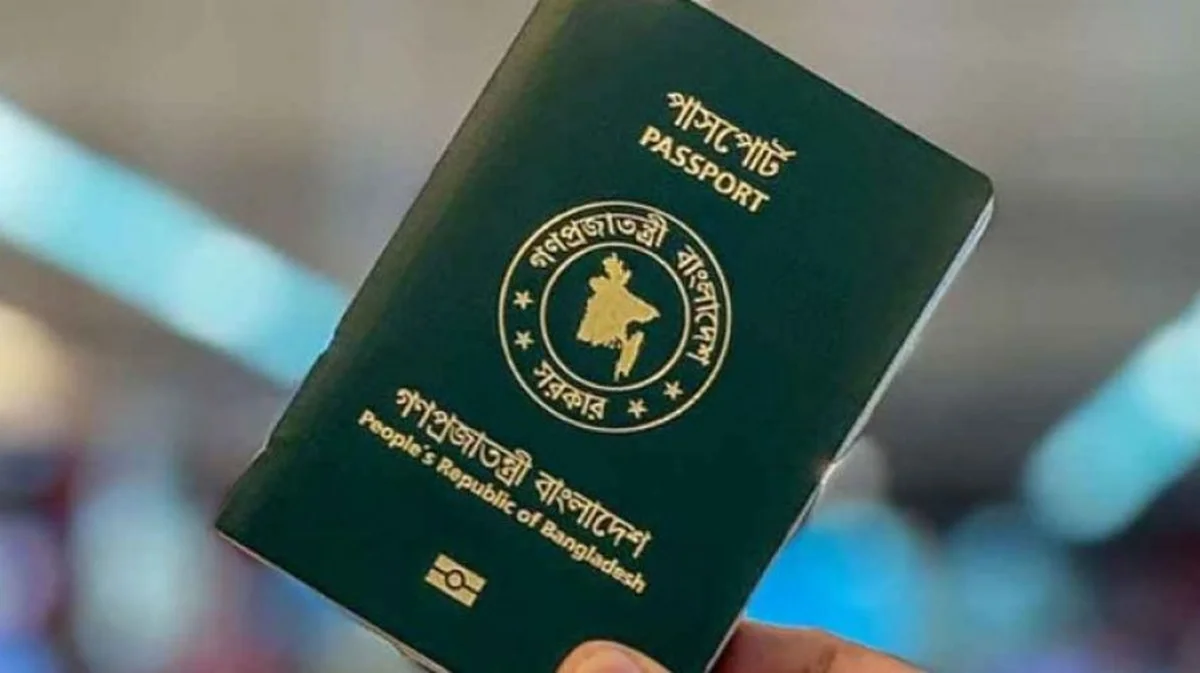
The U.S. administration has announced a suspension of immigrant visa issuance for citizens of 75 countries, including Bangladesh. This decision has shattered the dreams of many who hoped to permanently settle in the United States with their families—spouses, children, and siblings. Even the opportunity for Bangladeshis to settle in the U.S. through marriage to a U.S. citizen has been closed. In addition, applicants for business and tourist visas will now be required to provide security deposits of up to 15,000 U.S. dollars. With visa closures in multiple countries, stricter visa policies, added conditions for higher education, and shrinking overseas employment opportunities, Bangladesh is facing a serious crisis.
The reason cited for suspending U.S. immigrant visas is the financial dependency on the U.S. government—specifically, the effort aims to reduce the number of immigrants from countries whose citizens receive the highest levels of government assistance in the United States. Bangladesh ranks 19th on this list. According to a list titled “Immigrant Welfare Recipient Rates by Country of Origin,” 54.8 percent of Bangladeshi immigrant families living in the United States receive government benefits. The list also includes four other South Asian countries—Bhutan, Afghanistan, Pakistan, and Nepal—while India and Sri Lanka are absent.
Meanwhile, citizens of 38 countries, including Bangladesh, will be required to provide a deposit or visa bond to obtain U.S. tourist and business visas. The primary objective of this decision is to ensure that visa holders leave the United States within the stipulated time. Staying beyond the authorized period will be considered a violation of U.S. immigration law or the visa bond conditions.
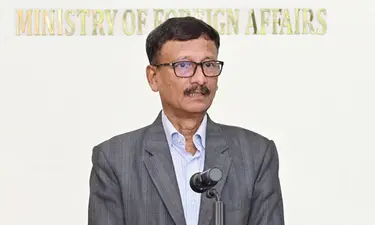
Foreign Affairs Adviser Md. Touhid Hossain said that the imposition of a “visa bond” or security deposit on Bangladeshi citizens is unfortunate, but not unusual. He stated, “Among those who take money from the U.S. social system, Bangladeshis are the most numerous. So if they impose restrictions on some countries, Bangladesh will be included. This does not seem very unusual to me.”
Harassment of Bangladeshi Passports at Foreign Immigration Points
Since the political context changed on 5 August 2024, Bangladeshi passports have been subjected to special scrutiny at immigration checkpoints in various countries. While such strict measures are not applied to passports from other countries, green passports have come under particular pressure. Travel bloggers who frequently visit different countries have also faced such harassment, encountering additional questioning at immigration. Bangladeshi travelers are often subjected to extra interrogation at airports in Nepal and the Maldives.
Many countries have also imposed additional conditions for issuing visas to Bangladeshi citizens. For example, although Egypt once offered conditional visas on arrival to Bangladeshis, it has now added several new requirements.
Visa Doors Gradually Closing
Discussions with frequent travelers and individuals involved in the tourism business reveal that Bangladeshi citizens have faced visa complications for the past two to two-and-a-half years. Over the past year, the visa rejection rate has increased significantly. Countries that reject Bangladeshi visa applications at particularly high rates include Singapore, Thailand, Malaysia, the United Arab Emirates, Turkey, Egypt, and several others. Uzbekistan, which previously issued visas easily to Bangladeshis, has now stopped doing so. Obtaining a Thai visa now takes more than a month. Vietnam has completely closed visas for Bangladeshis, while Indonesia has limited issuance. Australia has also seen a rise in visa rejection rates.
Additionally, since 5 August 2024, India has suspended tourist visas. India’s visa suspension has also affected access to many European countries. Several European countries do not have embassies in Dhaka; their visas are processed through embassies in Delhi.
Applicants must appear in person for interviews at these embassies, which requires an Indian double-entry visa. For higher education visas, some embassies require multiple interviews, forcing applicants to stay in India for several days. While most Western European visas are issued from Dhaka, most Eastern European visas must be obtained from Delhi. Due to limited Indian visas and a lack of alternatives, this has become a major obstacle for Bangladeshi students and job seekers. Although the Swedish Embassy in Dhaka previously processed visas for Belgium and the Netherlands, these visas are now handled separately through VFS centers.
Meanwhile, the Netherlands has announced stricter screening for higher education visas. Recently, the Dutch Ambassador to Bangladesh, Joris van Bommel, said, “Many applicants are trying to use education as an excuse to stay in the Netherlands, rather than genuinely intending to study.”
He added, “We receive many applicants who want to come to the Netherlands citing studies, but do not actually want to study there. Over the past few months, we have become stricter in our checks.”
Shariful Hasan, Associate Director at BRAC, said, “A negative perception has developed abroad about Bangladesh—that people from this country do not want to stay here, are crossing seas to reach Europe, and are applying for visas even when they are not students. Because of this, those who travel abroad legally with valid visas face harassment.”
No Response to Calls for Relocating European Visa Centers
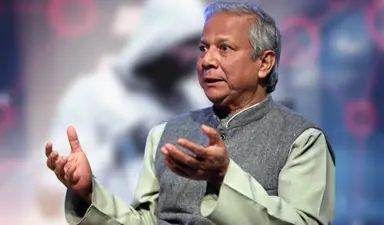
To address visa complications, Chief Adviser Muhammad Yunus met with ambassadors from 19 European Union countries in December 2024. At the meeting, he suggested that relocating visa centers from Delhi to Dhaka or a neighboring country would benefit both Bangladesh and the EU. However, establishing visa offices is time-consuming and costly, making the proposal unfeasible. Although there were discussions about accepting visa applications in three alternative countries, nations like Vietnam and Indonesia have restricted visas for Bangladeshis. Alongside South Asian countries, Western nations have also adopted stricter visa policies, leaving students seeking higher education in serious difficulty.
A Foreign Ministry official said that European countries were requested to relocate their visa centers to Bangladesh, but ambassadors responded that such relocation would take considerable time.
Rising Visa Complications in the United Arab Emirates
In 2012, citing rising “criminal tendencies” among citizens of several countries including Bangladesh, the UAE government suspended all types of visas. More than a decade later, visa complications persist, and work visas for Bangladeshis remain closed. After an increase in Bangladeshis entering the UAE on visit visas for employment purposes, visit visas were also restricted. Although transferring visa categories was once possible, this option has been closed for several years. Following protests by expatriate Bangladeshis in support of the July movement, the UAE suspended all visa issuance. Currently, only “skilled visas” or “high-profile visas” remain available. Despite two requests from the Chief Adviser to reopen visas, the UAE government has not responded. However, the UAE President has pardoned all Bangladeshis convicted for participating in protests and sent them back to Bangladesh.
Uncertainty in Overseas Higher Education, Sudden Tightening by Australia
Visa issuance has become a major obstacle for higher education in European countries. Slow visa processing and the absence of embassies in Dhaka have placed students in difficult situations. Amid these challenges, Australia offered significant opportunities to Bangladeshi students over the past year. However, this year Australia is imposing stricter measures on Bangladesh and several South Asian countries. Citing concerns over “declining document integrity,” Australia’s Department of Home Affairs included several South Asian countries in its highest risk category last Thursday (15 January). Last year, nearly one-third of all international student enrollments in Australia came from these countries. Their classification has been downgraded from “Evidence Level 2” to “Evidence Level 3,” resulting in stricter screening and visa approval processes for Bangladeshi students.
Closed Labor Markets Remain Unopened
A report by the Refugee and Migratory Movements Research Unit (RMMRU) stated that Bangladeshi workers migrated to 141 countries in 2025, but 90 percent went to just five countries, while only 8 percent went to 14 countries.
According to the Bureau of Manpower, Employment and Training, several major labor markets have closed over the past 12 years. Labor exports from Bangladesh to Oman, Bahrain, Iraq, Libya, Sudan, Malaysia, Egypt, Romania, and Brunei remain suspended. Work permit verification for Italy’s labor market is also slow. Due to visa suspension, workers are no longer going to the UAE. Although Bangladesh has an agreement with Libya, worker deployment has not officially begun. Mauritius is issuing very few visas to Bangladeshis.
However, Expatriate Welfare and Overseas Employment Adviser Asif Nazrul said that Bangladesh does not want to remain dependent solely on Middle Eastern labor markets and is working accordingly.
Migration sector stakeholders warn that failure to identify new promising markets could pose serious risks to the country’s migration sector.
Fakhrul Islam, a leader of the Bangladesh Association of International Recruiting Agencies (BAIRA), said expected improvements in labor markets have not materialized. He stated, “At present, the Middle East is Bangladesh’s largest labor market because other major markets are closed. Most workers are going to Saudi Arabia, where there are issues with iqama. Many become undocumented due to delays in obtaining iqama. Markets like the UAE, Bahrain, and Oman need to be reopened through increased diplomatic efforts. Attention must also be paid to preventing syndicates. Malaysia is one of our largest labor markets, but it has not reopened even after nearly one and a half years.”
Migration expert Dr. Md. Jalal Uddin Sikder said, “Research on Bangladesh’s labor market, both domestically and internationally, is far less than needed. As a result, we lack a clear understanding of the actual demand for skilled Bangladeshi workers in various European sectors and whether this demand will change in the future.”