

BGMEA Urges Government to Reconsider ‘Impractical’ Labour Ordinance
The Bangladesh Garment Manufacturers and Exporters Association (BGMEA) has called on the government to reconsider the recently approved Bangladesh Labour (Amendment) Ordinance 2025, terming the new provisions on trade union formation “imbalanced and impractical.”
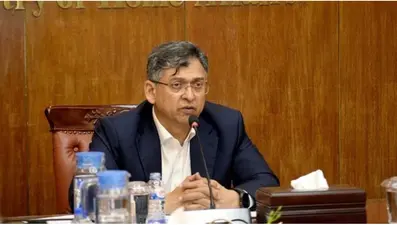
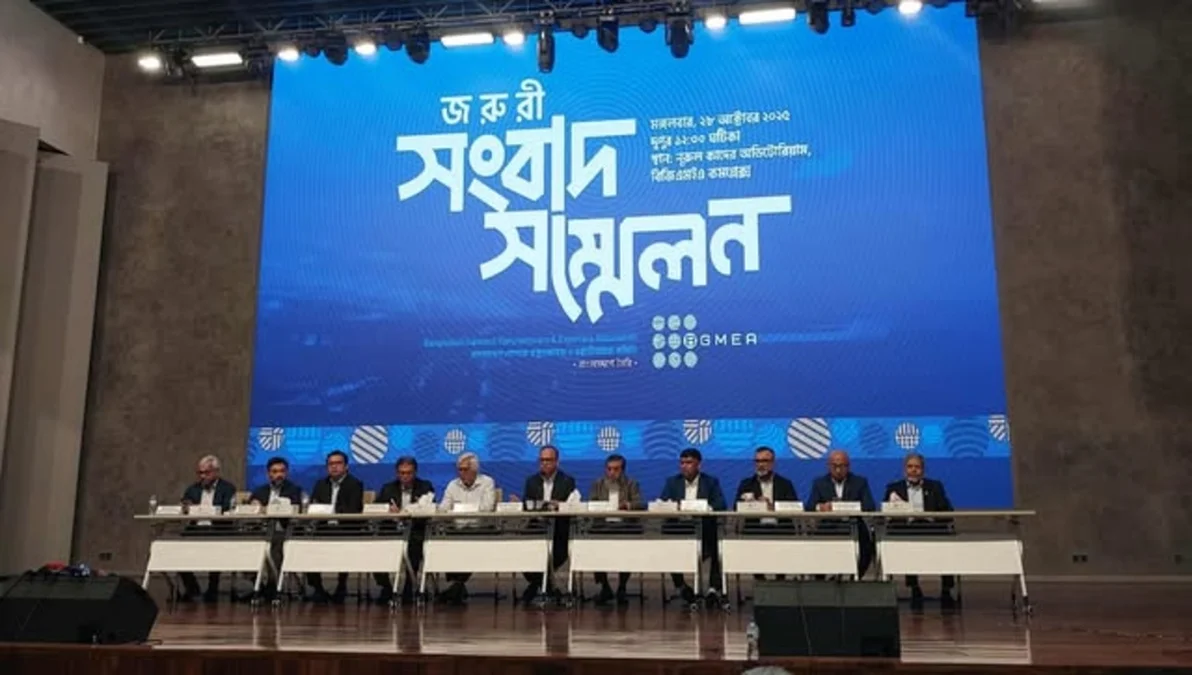
At a press conference held at the BGMEA office in Uttara on Tuesday, BGMEA President Mahmud Hasan Khan expressed deep concern over the revised ordinance, stating that the changes would undermine industrial stability, investor confidence, and export competitiveness.
He said that during extensive discussions in the Tripartite Consultative Committee (TCC) and the Working Committee, BGMEA had proposed a balanced system that would allow trade unions to form with the consent of at least 50 workers in factories employing between 50 and 500 workers.
However, this consensus was overturned during the Advisory Council’s final meeting, which revised the threshold to 20–300 workers and divided factories into five categories.
“This decision is unrealistic. If only 20 workers can form a union, people with no direct link to the industry may lead union activities, creating internal conflict and disrupting production,” said Khan.
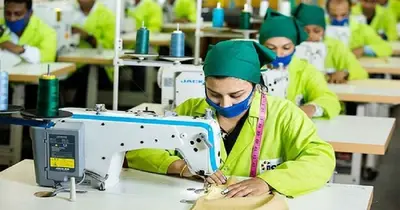
He warned that such provisions could erode investor confidence, discourage entrepreneurs from expanding operations, and ultimately harm the country’s export-oriented garment sector — which earns $42 billion annually.
Comparing regional practices, he noted that in India, a union requires the consent of at least 10% of workers or a minimum of 100 workers, while in Pakistan, 20% worker consent is required.
“This shows that Bangladesh’s new rule — allowing unions with only 20 workers — establishes the weakest and most unstable system in South Asia,” he said.
The BGMEA president also criticised the inclusion of “employees or officers” in the legal definition of “workers,” saying this change could blur administrative hierarchies within factories and create serious management challenges.
Khan further alleged that several key decisions, which had been unanimously approved in earlier committee meetings, were later altered without discussion in the final approval stage — an act he described as “procedurally unjust” and damaging to the mutual trust among workers, employers, and the government.
He cautioned that the ordinance, if implemented without revision, could make Bangladesh less competitive at a time when rival economies are adopting investment-friendly reforms and technological upgrades.
“If such impractical laws are enforced, foreign investment will decline, exports will suffer, industrial unrest will rise, and the economy will weaken,” he warned.
The BGMEA president also commented on other issues affecting the export sector. Responding to the shipping ministry’s claim that port charges had not been raised in 40 years, he said the matter “needs clarification,” noting that any sudden increase in fees would burden exporters already struggling with high operational costs.
Khan also urged the government to postpone Bangladesh’s LDC graduation for at least three years, citing the need for better preparedness, including the signing of Preferential Trade Agreements (PTA), Free Trade Agreements (FTA), and Economic Partnership Agreements (EPA).
Finally, he called on the government to prioritize a business-friendly environment by resolving the ongoing gas crisis, simplifying customs and NBR procedures, improving logistics and infrastructure, and ensuring access to low-cost financing for exporters.