
One Year On, Corruption Still Pervades State Institutions
Despite the passage of one year under the interim administration led by Nobel laureate Muhammad Yunus, people across Bangladesh continue to face persistent corruption while accessing public services. From land registration offices to the Bangladesh Road Transport Authority (BRTA), from water supply agencies to the judiciary, service seekers allege that bribes, speed money, and harassment remain routine.
Reports gathered from various districts reveal a grim picture of bribery, manipulation, and exploitation in government offices. Landowners in Dhaka complain of having to pay up to Tk 50,000 to complete a land mutation, even though the official fee is just Tk 1,170. “If you don't pay extra, your file won't move,” said Mujibur Rahman, a landowner in the Nandipara area of the capital.
The story is no different in utility services. Hasanuzzaman, a resident of Dakshingaon under Sabujbagh police station, alleged that Dhaka WASA forced him to replace a faulty water meter for Tk 12,000 instead of repairing it. He claimed that meters provided by WASA often become dysfunctional within a year or two, and officials use this as an opportunity to extract money from consumers in the name of replacements.
Even digital services have not eliminated corruption. Nasir Uddin, an official at a state-owned bank, described how, despite completing all formalities online, he faced obstruction at the land office in Ashulia when trying to pay land tax. Officials allegedly refused to accept the tax without a bribe. “Eventually, another staff member told me to pay extra to get the job done,” he said, adding that the office had several brokers who operated openly.
The Anti-Corruption Commission (ACC), which is mandated to address such irregularities, has carried out some operations, including simultaneous drives in 35 BRTA offices earlier this year. These operations exposed widespread collusion among BRTA officials, brokers, and nearby computer shop owners. In several districts, including Jashore, Sherpur, Nilphamari, Barishal, and Tangail, brokers were caught red-handed, and officials were found tampering with driving test results, inflating fees, and issuing licenses unethically.
At the BRTA office in Barishal, a broker demanded Tk 10,500 for a Category-2 driving license—almost three times the official fee of Tk 3,522. In Thakurgaon, the ACC found that candidates were marked as ‘passed’ in driving tests without even appearing. In Tangail, a motor vehicle inspector admitted that a man dealing with service seekers was not an employee but a broker.
Corruption is also rampant in the judiciary. In one notable case, a video went viral on social media in August showing Sub-Inspector Shahin Bhuiyan of Chattogram Metropolitan Police accepting a bribe from a lawyer inside a courtroom. He was later withdrawn from duty.
The Department of Immigration and Passports has also come under severe criticism. According to a national household survey published by Transparency International Bangladesh (TIB) in December 2024, 86 per cent of surveyed households experienced corruption while seeking passport services, making it the most corrupt public service provider. The BRTA followed closely with 85.2 per cent, while law enforcement agencies ranked third, with 74.5 per cent of respondents reporting bribery and harassment. The judiciary was ranked fourth, and land services fifth.
The TIB survey also revealed that in 2023 alone, service seekers paid over Tk 10,902 crore in bribes, amounting to 0.22 per cent of the national GDP. From 2009 to April 2024, the estimated total amount paid in bribes reached a staggering Tk 1.46 lakh crore during the tenure of successive governments, particularly under the Awami League.
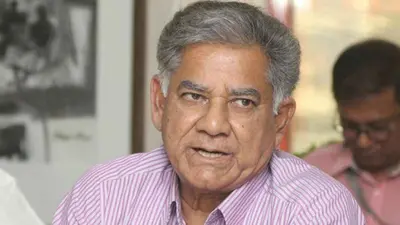
TIB Executive Director Dr. Iftekharuzzaman observed that mere changes in leadership cannot address the deep-rooted culture of corruption. “Rules and regulations are violated with impunity. The people responsible for oversight are often themselves involved in corruption,” he said. He added that the opportunities for reform created after the fall of the previous regime remained largely unutilized due to bureaucratic resistance, lack of political commitment, and institutional incapacity.
Former ACC Director General Moyeedul Islam echoed similar concerns, stating that the current government has failed to bring about any visible change. He blamed the lack of administrative enforcement and the failure to punish corrupt officials as key reasons behind the ongoing graft.
Meanwhile, ACC spokesperson and director general Md Akhtar Hossain claimed that the commission continues to carry out operations whenever allegations arise. However, critics argue that these occasional drives are insufficient to dismantle the entrenched networks of corruption operating inside government offices.
Observers fear that if the interim government fails to take stronger action and restore public confidence, the culture of corruption will further deepen. As things stand, for most citizens, navigating public services without paying bribes remains an exception rather than the rule.