


Bangladesh Garment Exporters in Trouble Over Shipments to Europe
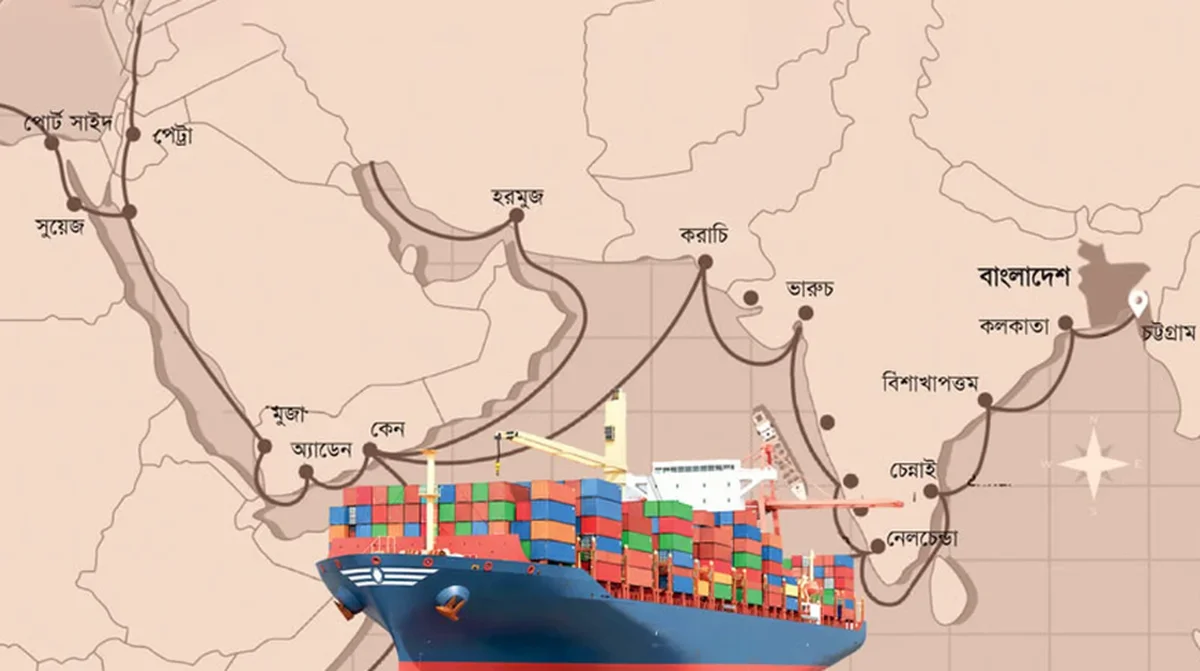
The ongoing conflict in the Middle East has caused major disruptions to important international maritime and air routes used for global trade. With key routes in the Gulf region, including the Red Sea and the Suez Canal, becoming effectively inoperative, Bangladeshi garment exporters are facing serious difficulties in sending goods to Europe. Other major South Asian manufacturing countries such as India and Pakistan are also encountering similar problems.
Industry stakeholders say the impact of the war is no longer limited to regional security; it is now directly affecting global supply chains. The fast-fashion industry, which relies heavily on quick delivery, is being particularly affected. In such circumstances, Bangladesh’s ready-made garment (RMG) sector—one of the country’s main export industries has come under new risks.
South Asia is one of the world’s most important apparel manufacturing hubs. Factories in Bangladesh, India and Pakistan regularly supply garments to major fashion brands in Europe. A significant portion of these products is shipped urgently to Europe by air. However, due to the recent conflict, much of the Middle Eastern airspace has been closed, severely disrupting that supply system.
After the conflict began, Dubai International Airport—one of the world’s busiest international hubs was forced to remain effectively closed for several days. At the same time, major Gulf airlines including Qatar Airways, Emirates and Etihad cancelled a large number of passenger and cargo flights. As a result, shipments of garments prepared for export to Europe and other markets have become stranded at airports across South Asia, including Dhaka.
South Asia relies heavily on Gulf-based airlines for cargo transportation. More than half of Bangladesh’s total air cargo is transported through Gulf hubs. In India’s case, the figure is about 41 percent. In particular, Emirates and Qatar Airways play a crucial role in transporting cargo bound for Europe.
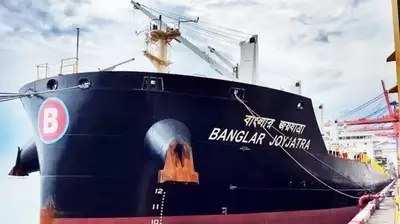
Not only air routes but also sea routes have become highly uncertain. Most container ships carrying goods from Bangladesh to Europe usually travel through the Red Sea and the Suez Canal. However, due to the conflict, those maritime routes have become risky. As a result, many ships are being forced to take longer alternative routes, increasing both shipping time and costs.
Because of growing security risks and rising insurance expenses, many shipping companies have taken a cautious stance in accepting new bookings. Some have temporarily suspended bookings, while others have raised freight charges due to the use of alternative routes. This has made it difficult for exporters to secure containers.
Shovon Islam, Managing Director of Sparrow Group, a Bangladeshi garment manufacturing company, said that about 10 percent of Bangladesh’s ready-made garments are transported by air and 40 to 50 percent are shipped by sea through Gulf routes. He noted that earlier exporters could send goods using India’s transit facilities, but as that option has been suspended, alternative routes have become limited. Currently, exporters are being forced to use the Pacific route, which is comparatively more expensive and time-consuming.
Meanwhile, the export sector is already under continuous pressure. In the first eight months of the fiscal year 2025-26, Bangladesh’s total merchandise exports declined by 3.15 percent compared to the same period of the previous year. During this period, ready-made garment exports totaled about $25.79 billion, which is 3.73 percent lower than the previous year.
Industry insiders warn that if the Middle East conflict continues for a long time, transportation costs will increase further and future purchase orders may also be negatively affected. As a result, the country’s export growth could face even greater pressure.
Mohammad Hatem, President of the Bangladesh Knitwear Manufacturers and Exporters Association (BKMEA), said that when a crisis previously occurred in the Red Sea, ships had to travel around Cape Town, which significantly increased transportation costs. He warned that a similar risk has emerged in the current situation.